Michael Kenna has been making photographs for 50 years. In that time he has stood in the dark, often alone, often in the cold, often for hours... waiting. Not for something to happen, but for everything to stop happening.
His camera sits on a tripod. The shutter stays open. The world blurs and dissolves. And what remains, stripped of its noise and clutter, is something closer to feeling than fact. This is not how most of us shoot. And that, largely, is why most of us don't shoot like Kenna.

His new book, Same Sun Same Moon, published by Prestel this April, is ostensibly a collaboration with writer Pico Iyer. And it is, genuinely, a beautiful one. But for me, it functions as something else: a clear, sustained argument for restraint. For emptiness. For the act of taking less out of a frame, not more.
The long game
Kenna's technique is deceptively simple. He shoots on medium format film, uses long exposures (sometimes minutes, sometimes longer), and works almost exclusively in black and white. The long exposure is the key. It smooths water into silk, dissolves clouds into pale washes, erases the tourists from the piazza. What you're left with is little more than architecture, light and time.


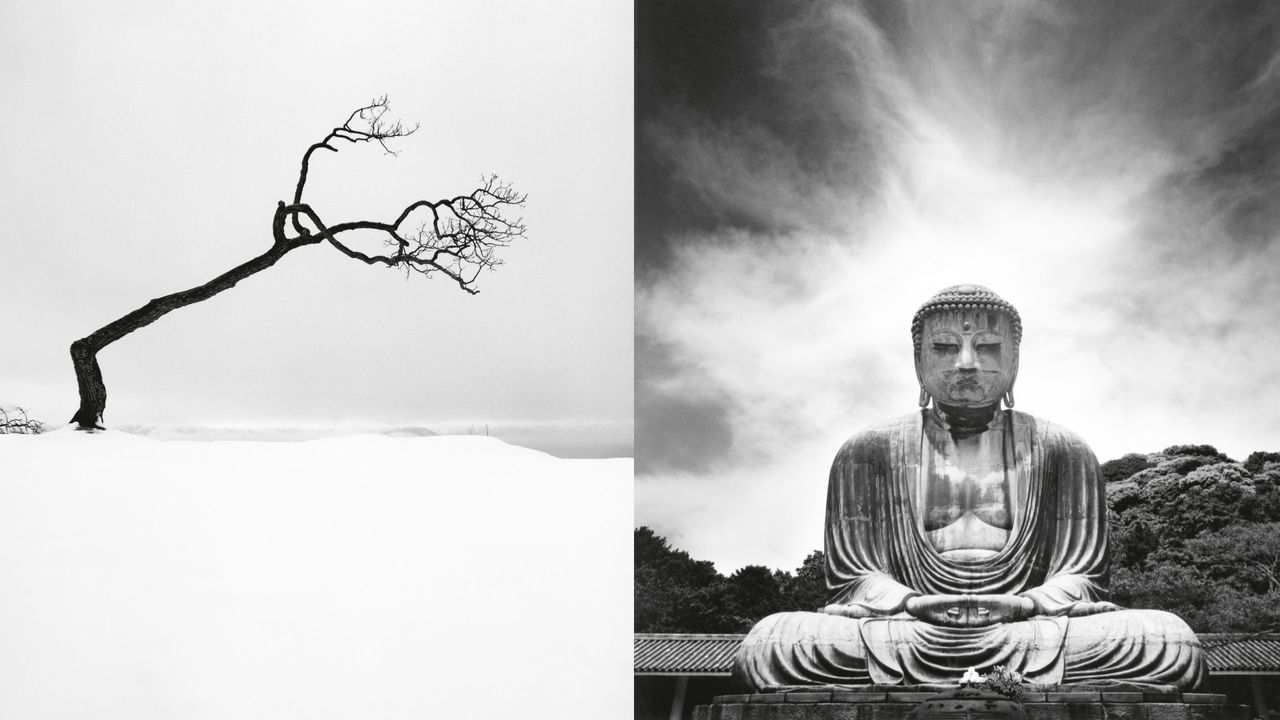
The 60-odd duotone images in this book span five decades and five continents. A fogbound canal in Venice, free of gondoliers and selfie sticks, becomes ancient and melancholy. A deserted jetty in Mallorca floats in silver. A line of trees in Hokkaido dissolves into white. These aren't places you'd recognise from a travel brochure, even if you've been there. They're places as they exist when no one is looking. Or, perhaps, when someone is looking for a very long time.
For digital shooters trained to fire ten frames a second, this method demands the opposite. Arrive early, set up slowly, wait longer than feels comfortable. Then, shoot fewer frames than feels safe. The discipline is its own education.
What photographers can learn
Overall, this book is an object lesson in black-and-white composition. Kenna builds his images around the same principles photographers have used for over for a century: tonal range, negative space, the tension between subject and ground. But he applies them with unusual rigour.
There are no happy accidents here. Every element earns its place. The horizon sits exactly where it should. The single tree, the lone figure, the isolated boat: each is placed with the precision of a haiku.


For photographers looking more to develop their eye than upgrade their gear, this is a book to study. Not in order to copy (Kenna's aesthetic is too distinct to borrow wholesale), but to understand why a frame can work with almost nothing in it, and why that requires more skill, not less.
Same Sun Same Moon is designed, as the publishers put it, for slow reading and close observation. It sounds like a sales pitch. It's actually an instruction.
Same Sun Same Moon by Michael Kenna and Pico Iyer is published by Prestel, $45/£35.