Get all your news in one place.
100's of premium titles.
One app.
Start reading
The Times of India
The Times of India
World

The art of being our best friend

The earliest traces of a dog, or early canid, that walked in companionship alongside a human, are about 26,000 years old: pawprints in France’s Chauvet cave. Going thousands of years further back, dogs were, if you will, the first “proof of concept” – for Paleolithic humans – that domestication is possible. This unique cross-species friendship has been recorded for as long as cave art, and then the written word, have existed. So what is left to be told? Ask cultural historian Thomas W Laqueur .

Get breaking news anytime, anywhere. Download the TOI app now!

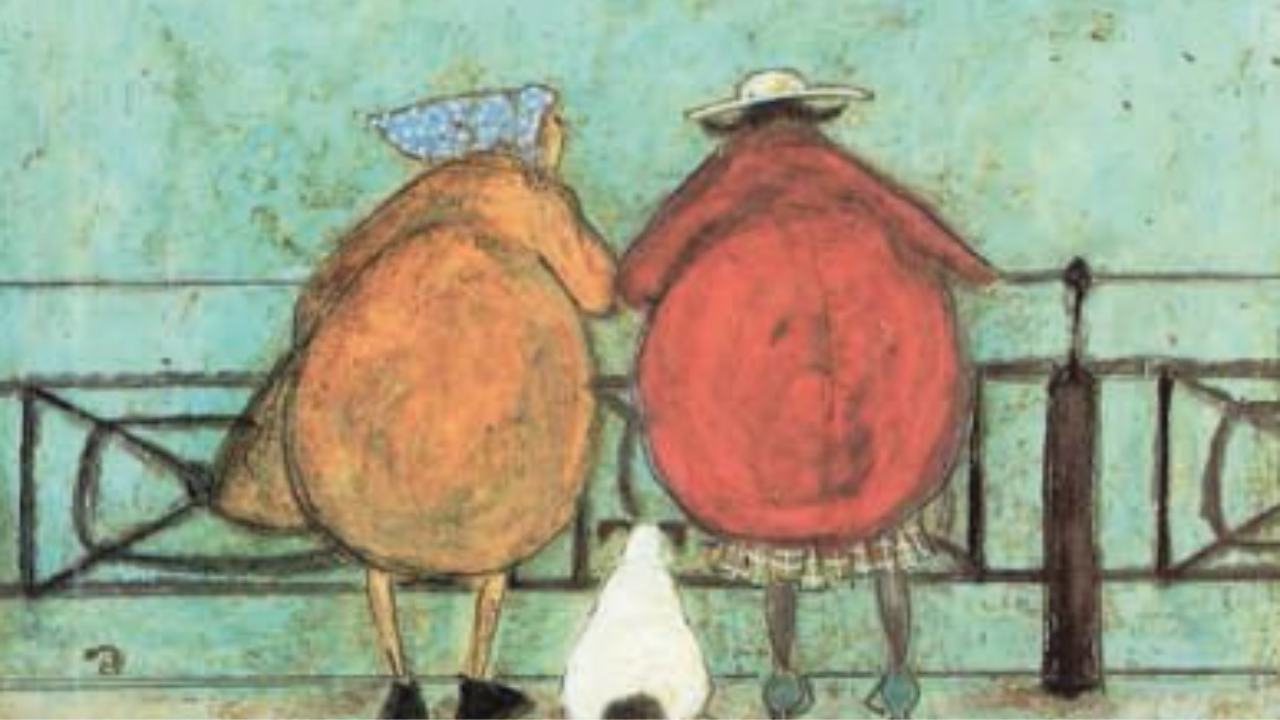
In The Dog’s Gaze: A Visual History , Laqueur saunters along, his book a museum, guiding us on 250 paintings, offering at once, both a philosophical and a ‘but-of-course’ take on the dog’s place in art, from Renaissance to Impressionist works and into the 20th century. Laqueur watches the dog watching its human, or looking away, pointing out a direction to its parent, and the viewer.

No matter where in the frame a dog sits – in the market square, next to a soldier, at a hunt, lying at parents’ feet, or under their chairs, even at a wedding altar, slouching, flopping, frisky, no matter whether it idles, chases, looks in or out, it is the dog’s gaze that speaks. Companion. Guide. Witness. Moral compass. In melancholy, mirth, abandonment, and solitude. Present everywhere with a purpose, dogs are a visual aid or a mirror to humans in the painting, on the artist’s behalf.

A dog in the frame can mean loyalty or justice, compassion, joyfulness, certainly one’s station in life: a hound for the soldier, lapdog for the duchess, much of which centres on breed. Then there’s revolutionary dog, family dog, vagrant’s dog, celebrity dog, and finally, in the 20th century, the dog alone.

Its gaze, everywhere, is intimate and distancing. Laqueur extends Adam Smith’s explanation for moral bonds between humans, to human-dog companionship: that “we act in a way that others, seeing us, would approve of what we do,”...“to be observed, to be attended to, to be taken notice of with sympathy, and approbation”. Perhaps, the book argues, “dogs act as they do toward humans because they feel the same way as us.”

Some will argue we cannot tell whether dogs empathise or judge, but Laqueur believes “their gift for seeing is essential to their ability to live with us.” The dog’s gaze, in sum, is human need – “to have someone bear witness to our lives.” As the book says, “If to be less alone is to be the object of the attention of someone who we think understands and accepts us, the dog is the creature above all others that saves us as individuals and as a species from loneliness.”

And yet, Laqueur writes, art has never depicted brutality of humans on dogs. And worse, humans of the lowest sort: degraded, aggressive, shameless, are called dogs, and enter the picture.

But for humankind, the dog’s gaze is a universal friend. It doesn’t matter what dogs do around us – what matters is that “what we do, we do around them.” German painter Franz Marc said, “I’d like to know what is going on in a dog’s head.” In that strain, Laqueur writes, “from the perspective of the dog my engagement with its gaze,” might seem “naively anthropocentric”, given a dog knows its world through smell. But, “we recognise our gaze in theirs”.

Sign up to read this article
Read news from 100's of titles, curated specifically for you.
Already a member? Sign in here
Related Stories
Top stories on inkl right now
One subscription that gives you access to news from hundreds of sites
Already a member? Sign in here
Our Picks
Fourteen days free
Download the app
One app. One membership.
100+ trusted global sources.