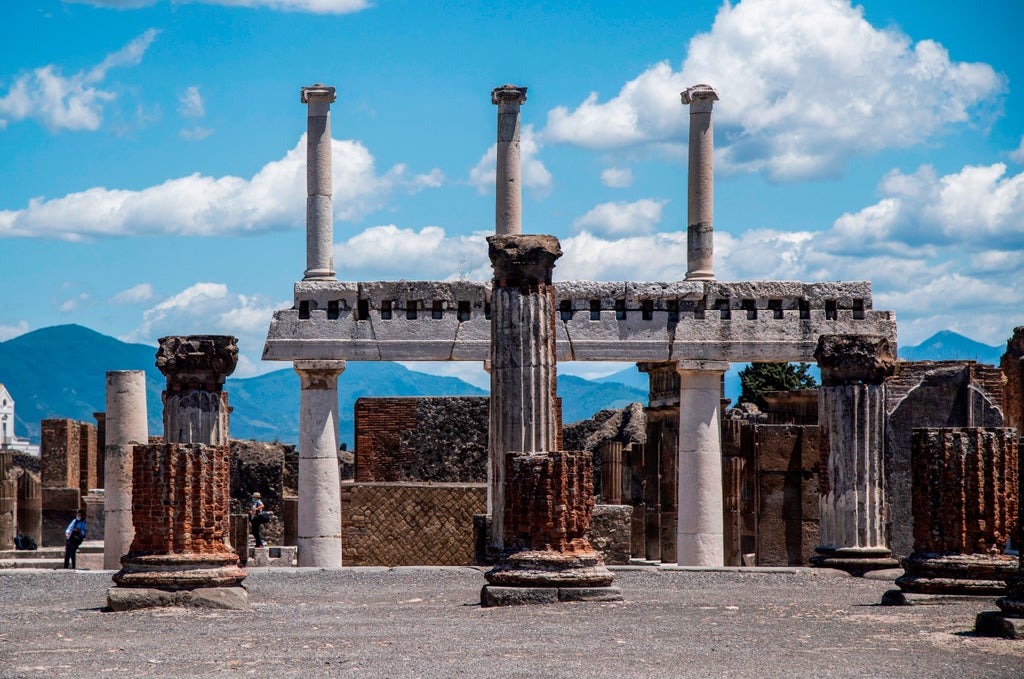
One morning at the necropolis of Porta Sarno, just outside Pompeii’s eastern edge, Mattia Buondonno gingerly raises a protective tarp covering a tomb discovered last year.
According to the inscription on the tomb’s pediment, its occupant was a freed slave named Marcus Venerius Secundio, who became rich and “organised performances in Greek and Latin that lasted four days,” Buondonno, a Pompeii tour guide, reads, translating from the Latin.