Get all your news in one place.
100's of premium titles.
One app.
Start reading
The Conversation
The Conversation
Anthony Clarke, PhD Student in Applied Geology, Curtin University

The Altar Stone of Stonehenge came from an unexpectedly distant place, new study reveals

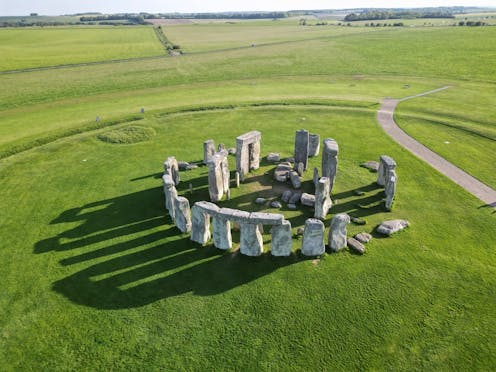
Alzay/Shutterstock

During the solstices, thousands gather at Stonehenge on the Salisbury Plain in England to celebrate the monument’s astronomical alignment. The focal point of these festivities is the Altar Stone – the six-tonne sandstone slab that lies flat at the centre of Stonehenge.

The ancient society that built this monument, from 3,100 to 1,600 BCE, left no written record. But Stonehenge’s building blocks themselves can help us understand it better. These blocks, or megaliths, are divided into two major categories: sarsen stones and bluestones. The Altar Stone is the largest bluestone.

Sign up to read this article
Read news from 100's of titles, curated specifically for you.
Already a member? Sign in here
Related Stories
Top stories on inkl right now
One subscription that gives you access to news from hundreds of sites
Already a member? Sign in here
Our Picks
Fourteen days free
Download the app
One app. One membership.
100+ trusted global sources.