Get all your news in one place.
100’s of premium titles.
One app.
Start reading
The Guardian - US
The Guardian - US
World
Amanda Ulrich

For this Catholic bishop, protecting immigrants is personal

people in religious vestments stand outside
Bishop Michael Pham and other religious leaders at a federal courthouse in San Diego, where deportation hearings are held, in June. Photograph: Sandy Huffaker/AFP via Getty Images

Nearly 50 years ago, a 13-year-old boarded a tiny fishing boat from communist Vietnam with more than a hundred other people. His intended destination: anywhere but there. The boat drifted through the Pacific Ocean for three days and four nights, dodging violent storms, massive waves, even a pirating ship. For the entirety of the journey, the teenager had no food or water.

He survived the voyage, later took shelter in a Malaysian refugee camp, and was eventually granted asylum in the United States.
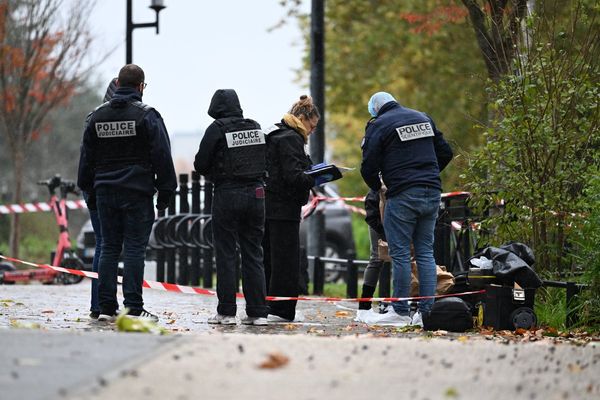
The Vietnamese refugee recounted this tale many decades later, on a recent December afternoon, from a location that felt worlds away from a packed fishing boat: a hushed, formal room tucked away within the offices of the Roman Catholic diocese of San Diego.

“It’s overwhelming,” he said, after finishing the story. “I never thought I would be in this position.”

Michael Pham, 58, now holds one of the highest-ranking positions in the Catholic church: bishop of San Diego, one of fewer than 200 other active diocesan bishops in the United States. Pham was the first American bishop to be appointed by Pope Leo XIV, and is the first Vietnamese American to head a US diocese.

And it’s partly due to his own harrowing immigration story that Pham has started doing something unconventional, especially for a prominent member of the church: accompanying immigrants as they arrive at the federal courthouse in San Diego for their court hearings or ICE “check-ins”.

This year, ICE agents have haunted the hallways of courthouses across the country, frequently arresting immigrants immediately after they leave court appearances. The San Diego immigration court has seen a particularly high rate of ICE activity, with at least 170 arrests in a three-month span this past summer, according to local watchdog groups.

But Pham and other clergy members realized that if they were visibly present in the courthouse, it would serve as an emotional and spiritual comfort to immigrants, and also potentially lower the political temperature for ICE agents and judges. After all, there’s a general sense of “humanness” that’s being lost in all of this, Pham said.

“There are people in court who have lived here for 10, 20, 30, 40 years without criminal records,” he said. “And just imagine they have family, children, grandchildren, businesses – now being torn apart.”

In gearing up for his first court visit in June, Pham received a few soft suggestions from “leaders” in the church that it might be safer to merely bless immigrants at the end of a mass and then send them on their way. Pham disagreed.

“I said: ‘That doesn’t sound right,’” he said. “If I said I want to do something, I need to follow through.”

Pham got a few other bishops on board, and a group of clergy later marched to the court after holding a mass. The day was so successful that Pham announced to reporters afterward, in a completely spur-of-the-moment decision, that the court visits would continue through a new ministry program. That project, called Faith, or Faithful Accompaniment in Trust and Hope, was officially launched in August. It has since trained roughly 500 volunteers from 17 faith backgrounds.

“Doing this work, we’re uniting people from all different traditions to come together, because we see this as important,” he said. “This is a common good.”

‘An exercise in powerlessness’

On that first day in court back in June, Pham wasn’t alone. Father Scott Santarosa, a Jesuit pastor from Our Lady of Guadalupe church, along with other priests and nuns, were there to witness the uniquely American chaos: the terrified and nervous families arriving for their court dates, the masked ICE agents “lurking” in the hallways, Santarosa recalls.

The general ICE presence, he noted, was “incredibly indiscreet”. Still, ICE didn’t make any arrests while the clergy were there that day.

“When you have nuns and priests standing next to these ICE officers, and we have rosary beads in our hands, and they have handcuffs on their belt, it’s not a good look for them,” he said.

Santarosa, whose own church has long been an “immigrant parish” and is positioned only about 15 miles from the US-Mexico border, was tapped by Pham to help lead the new Faith ministry. Santarosa goes to the courthouse at least once a week, and other volunteers are there every day the court is in session, he said – “even the day after Thanksgiving”.

Typically, a handful of morning-shift volunteers will assemble around 7.30am, check the court docket for the day and then spread out around the building. The volunteers introduce themselves to immigrants and offer to accompany them or pray with them. Another grassroots organization, Detention Resistance, has also been working inside the courthouse to document who is being detained and to inform their relatives about what’s happening.

Santarosa said he had heard an oft-repeated refrain from Faith volunteers: “We just felt so powerless. We wanted to do something.”

“But even this work is powerless, like it’s an exercise in powerlessness,” he added. “Because you show up and there’s really very little we can do except accompany people, pray with people, sit with people.”

On a broader level, it’s difficult to know if the volunteers’ continued presence has affected the overall number of ICE arrests and detentions. But the process of how the arrests happen does appear to have changed since the spring, Santarosa said.

Previously, ICE agents would wait in the hallways outside courtrooms and often arrest people as soon as they exited if their cases had been dismissed. Now, he said, arrests commonly happen out of sight, in the private rooms where ICE “check-ins” are held, where volunteers can’t see what’s happening. That floor of the building is now “the danger area”, Santarosa said.

Because ICE’s process is clearly changing, Santarosa has hope that Faith’s efforts are at least disrupting the flow of consistent arrests.

“As [ICE has] made adjustments, it’s slowed down the number of arrests,” he said. “So every time they set up a new protocol, I think it’s fewer people that are detained as quickly.”

But the new ministry’s influence extends beyond just statistics. Santarosa is helping a father originally from Guerrero, Mexico, by writing him a character reference letter as part of his immigration case; Santarosa even attended his court appearance earlier this month.

The father, who asked to remain anonymous for safety reasons, said he had called the US home for more than two decades. Back in Mexico, the level of crime is “muy feo”, he said, or very ugly. But his family in the US, including his five-year-old daughter, has been living in fear this year as ICE activity has increased dramatically.

Esperemos en Dios y puedan mejorar,” he wrote in a text, meaning: “Let’s hope in God that [these situations] can get better.”

In response to a request for comment about ICE’s rate of arrests in courthouses and in private check-in rooms, Tricia McLaughlin, the Department of Homeland Security’s assistant secretary of public affairs, said in a statement that the “sanctuary policies of some of California’s biggest counties are magnets attracting violent criminal illegal aliens which we will hunt down, arrest and lock up”.

However, nearly 60% of the people arrested by ICE in San Diego and Imperial counties have no criminal histories, according to new data.

‘Both sides sitting in the pews’

Current immigration stances aside, the Catholic diocese of San Diego hasn’t always been the moral authority when it comes to systemic injustices and social ills.

When Pham was appointed bishop in May, he inherited another issue that has plagued the diocese, and the rest of the Catholic church, for years: the widespread sexual abuse of children and teenagers at the hands of Catholic clergy, and the cover-up of that abuse by some church leaders.

San Diego has been one of the centers of that crisis. A total of 457 new sex abuse claims were filed against the diocese after California temporarily lifted the statute of limitations on child sex abuse cases in 2019; roughly 60% of those claims, according to the diocese, represent alleged abuse that happened more than 50 years ago. And last year, the San Diego diocese filed for bankruptcy for the second time in order to settle those cases.

When the abuse claims started to emerge in San Diego in the early 2000s, Pham was working as a vocation director, or a religious guide of sorts. At first, he said, he didn’t realize the true “scale of it, it just becoming so huge”.

Then, in 2007, the diocese agreed to pay nearly $200m to settle 144 claims: one of the largest payouts from a diocese in the church’s sex abuse scandal at the time.

“And that’s when we realized this is much greater than we ever thought,” he said.

Pham has now heard some of the victims’ “painful” stories in mediation sessions, and wants to see the church “help these people as soon as we can”.

“People, I believe, recognize what’s right and what’s wrong in their conscience, and they see the church has that moral compass: that’s when the church speaks,” he said. “But on the human side of that, that’s where we failed. And we have to deal with that.”

In terms of steering the ship when it comes to immigration, Pham and other church leaders have also been “meditating and praying on” how to approach the division among Catholics. Though the idea of “welcoming the stranger” is a key tenet in the Bible, discussing immigration in church has taken on new perceived political meaning, especially as about half of Catholic voters say they support Trump’s immigration policies.

“We live in a society now, particularly in our country, where we are so polarized,” Pham said. “And we see that polarization in the church, because you have both sides sitting in the pews.”

For Santarosa, the issue of immigration isn’t partisan – it’s purely gospel.

“Jesus, in the Gospels, always sides with the poor, the outcast, the stranger, the leper, the woman. We can’t water that down,” he said. “So who is the outcast, who is the stranger, in a way? Now it’s immigrants. I think we’ve got to stand with them as much as we can.”

In a rare move, hundreds of US bishops issued a “special message” on the issue last month, writing that they “oppose the indiscriminate mass deportation of people” and “are saddened by the state of contemporary debate and the vilification of immigrants”.

For Catholics who have conflicting views, anyone is invited to share “wherever they might be in life,” Pham said, “without judgment and without condemning anything”.

That concept of listening intently to the congregation was a core part of the late Pope Francis’s legacy.

“We enter into a dialogue and come to a greater understanding of where people are,” Pham said. “And if we can do that, transformation of the heart can take place and take root.”

Sign up to read this article
Read news from 100’s of titles, curated specifically for you.
Already a member? Sign in here
Related Stories
Top stories on inkl right now
One subscription that gives you access to news from hundreds of sites
Already a member? Sign in here
Our Picks
Fourteen days free
Download the app
One app. One membership.
100+ trusted global sources.