
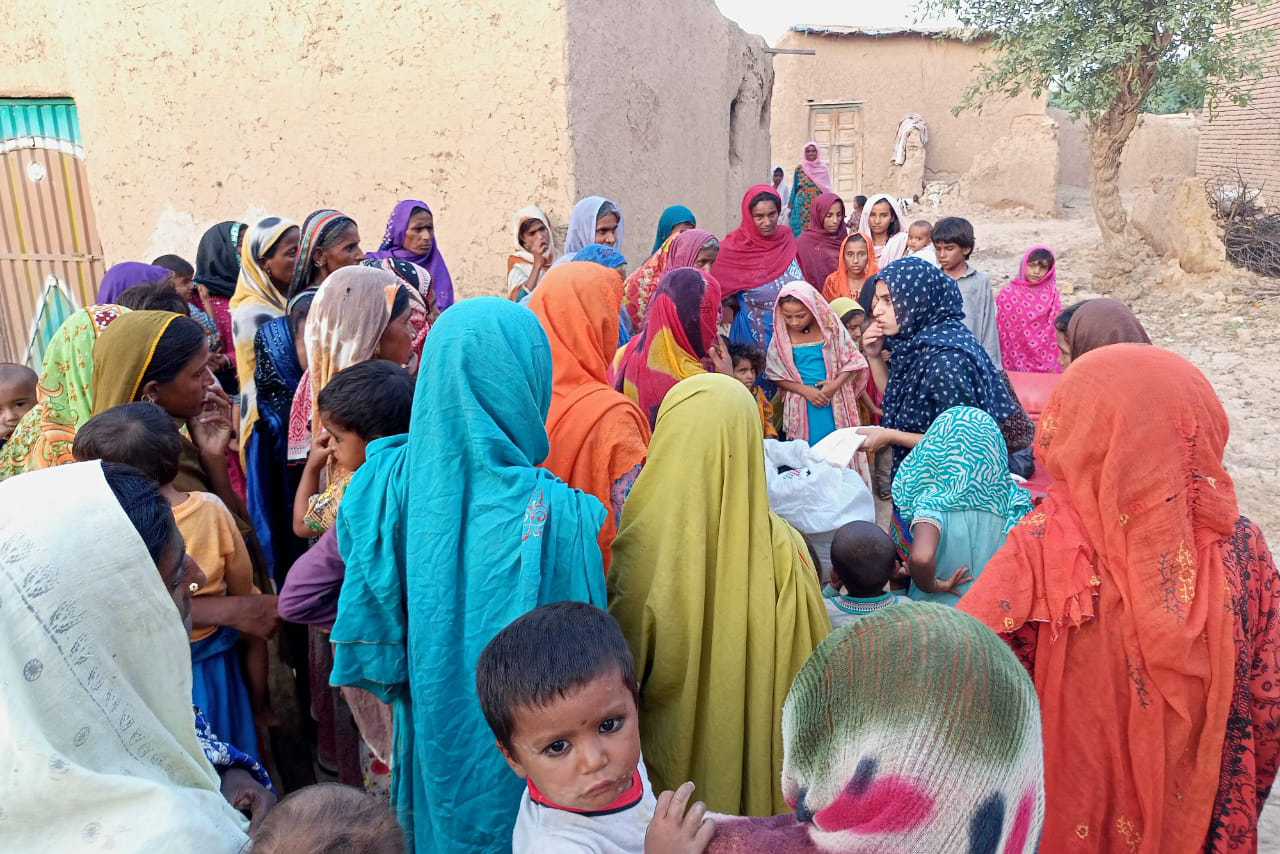
Thul, Pakistan – In November last year, I met Razia* at a rice mill in Thul, a little over an hour from Jacobabad city in Sindh province. An international aid agency was distributing care packages there among families from the district who had been affected by the floods that raged through the province in the summer of 2022. Razia, her head covered with a red dupatta with white embroidery along its border, had a small face, her eyes lined with kajal and a gold piercing hugged the curve of her nose. Its little gold beads shivered as she shook her head when I asked how old she was. She eventually guessed 25, but she looked younger. She had four children.
When the waters entered their village, many people left their homes and sought shelter on the nearest main road. They squatted there in makeshift tents or under the open sky as it continued to rain. I asked Razia about the days on the road. How had she managed with her children? She stared at me. I had asked a silly question.




-copy-29e15046.jpeg?w=600)









