Get all your news in one place.
100's of premium titles.
One app.
Start reading
The Conversation
The Conversation
Peter C. Mancall, Andrew W. Mellon Professor of the Humanities, USC Dornsife College of Letters, Arts and Sciences

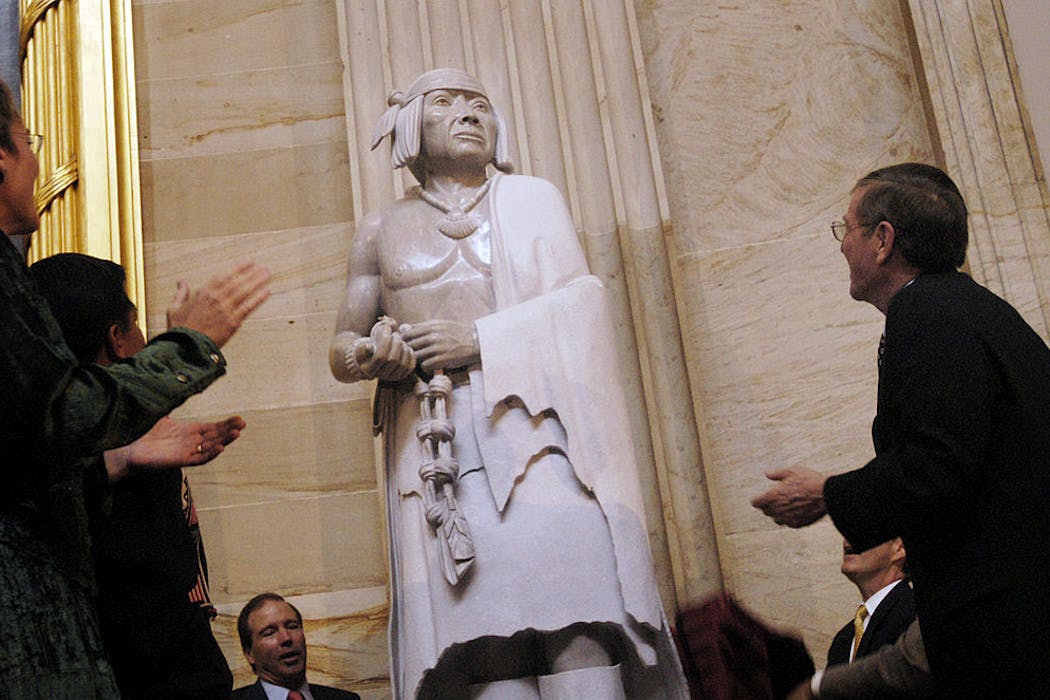
The 17th-century Pueblo leader who fought for independence from colonial rule – long before the American Revolution

Po'pay's statue in the U.S. Capitol, representing the state of New Mexico, was dedicated in 2005. Chris Maddaloni/Roll Call/Getty Images

The U.S. Capitol’s Statuary Hall Collection contains 100 sculptures: two luminaries from each state. They include many familiar figures, such as Helen Keller, Johnny Cash, Ronald Reagan and Amelia Earhart. There are a few from the Colonial era, including founders such as Samuel Adams and George Washington.

Some will also be represented in the Garden of American Heroes that the Trump administration plans to build. The monument will eventually have 250 statues, and the administration has proposed a list of names. Among the figures in the Capitol who did not make the cut is Po’pay, a 17th-century Native American leader from what is now New Mexico. The inscription on his statue in the Capitol identifies him as “Holy Man – Farmer – Defender.”

Sign up to read this article
Read news from 100's of titles, curated specifically for you.
Already a member? Sign in here
Related Stories
Top stories on inkl right now
One subscription that gives you access to news from hundreds of sites
Already a member? Sign in here
Our Picks
Fourteen days free
Download the app
One app. One membership.
100+ trusted global sources.