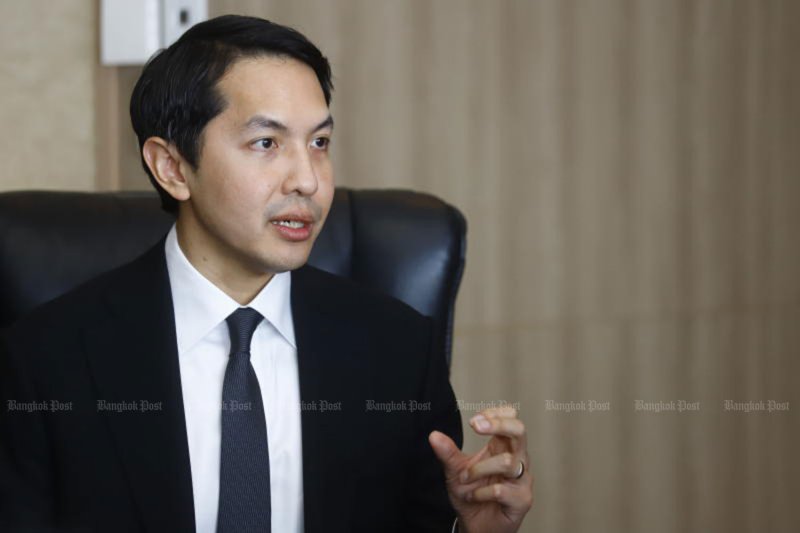
Thailand faces growing risks of another surge in global oil prices as geopolitical tensions in the Middle East threaten energy supplies, highlighting the urgent need to accelerate the country’s transition to clean energy, vice-Finance Minister Santitarn Sathirathai said on Friday.
Addressing a conference on Capital Markets co-hosted by the Securities and Exchange Commission and the Stock Exchange of Thailand, Mr Santitarn said government measures such as the Oil Fuel Fund can help cushion the immediate impact on consumers, but relying on price subsidies is not a sustainable long-term strategy.

Instead, he sees an accelerated energy transition could permanently reduce costs for households and businesses while strengthening national energy security.
Mr Santitarn said uncertainty has become the new normal as conflicts in the Middle East continue to threaten critical energy supply routes, including the Strait of Hormuz and the Red Sea.
Global oil prices could climb again as factors that previously eased market pressure begin to fade. Strategic oil inventories are being depleted, while continued disruptions to Red Sea shipping are increasing transportation costs and tightening global energy supplies.
“We are facing the risk that global oil prices could surge further as oil inventories decline and disruptions to Red Sea shipping continue,” he said.
According to Mr Santitarn, a “three-wave” economic cycle could re-emerge if oil prices continue rising. The first wave would be another oil price shock, followed by higher inflation driven by rising energy costs.
The third wave would be weaker purchasing power for households and businesses as higher prices weigh on consumption and investment.
He said policymakers had expected inflationary pressures to ease, but a new geopolitical shock could push the economy back into the earlier stages of the cycle.
Sustainable solution
While the Oil Fuel Fund remains an important short-term buffer, Mr Santitarn stressed that the lasting solution is to accelerate Thailand’s energy transition.
Greater adoption of renewable energy, solar power and electric vehicles (EVs) would lower long-term energy costs, reduce dependence on imported fossil fuels, and improve resilience against future oil price shocks.
“The real long-term solution is to accelerate the energy transition because energy risks will remain with us for years,” he said.
Thailand should strengthen its green economy supply chain to capture rising foreign direct investment.
Investment in advanced electronics, sensors and high-tech manufacturing can be linked with clean-energy industries, helping modernise Thailand’s industrial base while supporting the country’s transition to a low-carbon economy.
The government will continue monitoring global developments and maintaining existing support measures to protect consumers.
However, Mr Santitarn emphasised that accelerating the energy transition remains the most sustainable way to reduce structural energy costs, enhance long-term competitiveness and strengthen Thailand’s energy security.