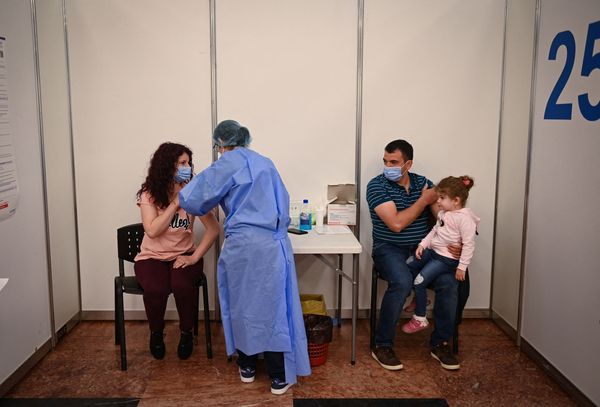
Texas school immunization requirements have not changed for the 2026-2027 school year, the state health department says, a point state school nurses are emphasizing as families sort through a year of shifting federal announcements.
The distinction that matters for enrollment is legal, not medical. School entry in Texas is governed by state law and administrative rule, not by federal recommendation. Whatever a federal agency adds to or removes from a recommended schedule, a Texas child's eligibility to sit in a classroom is determined by the state list.

"Despite all the confusion that hits the news, nothing's changed," said Becca Harkleroad, executive director of the Texas School Nurses Organization, in comments to the Texas Tribune.
State Law, Not Federal Recommendation, Governs Enrollment
Texas immunization requirements for school attendance are set out in state rules. Any change to them would have to come from the Legislature, which does not reconvene until January, according to the state health agency.
That structure is why the past year of federal activity has not altered what a Texas campus asks for at registration. In January, federal health officials reduced the number of routinely recommended childhood immunizations from 17 diseases to 11, shifting vaccines against rotavirus, COVID-19, influenza, meningococcal disease, hepatitis A, and hepatitis B into shared clinical decision-making or high-risk categories. A federal judge in Massachusetts halted that change in March, leaving the earlier recommendations in place, and the federal government is appealing. More recently, the President signed an executive order recommending that the measles, mumps, and rubella vaccine be split into three separate single-disease shots given at separate visits, a combination that has been administered as a single injection since 1971.
None of those developments changed a single line of the Texas school requirement list.
The Required Vaccines for the Coming School Year
The state requirement list covers diphtheria, tetanus, and pertussis; polio; measles, mumps, and rubella; hepatitis A; hepatitis B; and varicella, with the meningococcal vaccine required for seventh graders and again for students entering college. Dose counts and age requirements vary by grade level, and the department publishes a grade-by-grade chart.
Provisional enrollment remains available. A student who has begun but not completed a required series can generally attend while catching up, provided doses are received on schedule. Students without documentation of two MMR doses may still be excluded from campus during a measles exposure event, which is a separate mechanism from the enrollment requirement.
Families who have lost their immunization records can request a copy through their child's prior school district, their child's clinician, or the state immunization registry.
Exemption Rules Are Also Unchanged
Texas allows exemptions for medical reasons and for reasons of conscience, including religious belief. That process has not been altered for the coming year either.
The Legislature made exemption paperwork easier to obtain last year by passing a bill that allowed the affidavit form to be downloaded rather than requested by mail from the state health department. The number of K-12 students with an exemption has risen since, as Houston Public Media reported, a period that overlapped with the record West Texas measles outbreak that began in 2025.
Districts report immunization and exemption data to the state annually, and those figures are published at the district level. Exemption rates matter at the campus and community level rather than the state level. Statewide averages can look adequate while individual schools sit well below the coverage needed to prevent sustained measles transmission, which is one reason school-level data is more informative than state-level data.
Sorting Guidance from Requirement Before the First Bell
The practical task for a Texas family this month is short. Check the child's record against the state grade level chart, not against a national news story. Schedule any missing doses with a pediatrician, a community health center, or a local health department.
Cost is generally not the obstacle it appears to be. Required childhood vaccines are covered without cost-sharing by most private plans, Medicaid, and CHIP. Uninsured and underinsured children are eligible through the federal Vaccines for Children program at participating providers, including many local health department clinics.
Timing matters for families who have moved. Records from an out-of-state school do not always transfer cleanly, and doses given under a different state's schedule may not satisfy Texas requirements, even when the total count appears similar. A clinician can review an existing record against the state chart and identify gaps before registration rather than after.
Parents weighing a decision about a specific vaccine for a specific child, particularly a child with a chronic condition, immune suppression, or a history of vaccine reactions, should have that conversation with the child's clinician rather than relying on headlines. Medical exemptions exist precisely for those situations and require a physician's statement.
Families should also be aware that requirements differ between public schools, licensed child care, and higher education. Child care and pre-kindergarten programs have their own schedules, and college students living in campus housing face a separate meningococcal requirement. A record that satisfies one setting does not automatically satisfy another, and each institution verifies independently.
School nurses are usually the most efficient point of contact for questions about records. They can identify what is missing, explain provisional enrollment, and often connect a family directly with a local clinic offering free doses before the first day.
What remains unresolved is the federal picture. The appeal of the March ruling is pending, and the practical effect of the order on MMR has not been established. Separate single-disease measles, mumps, and rubella vaccines are not currently available in the United States, and manufacturers would have to bring each through the approval process. Pediatricians have emphasized that every vaccine on the schedule remains available in the meantime. Texas requirements would only change through legislative action, at the earliest in January.
Key Questions Answered
Did Texas change its school vaccine requirements? No. The state health department says requirements for the 2026-2027 school year are unchanged.
Why do federal changes not affect Texas school entry? School attendance requirements are set in Texas rules. Changing them requires action by the Legislature, which reconvenes in January.
Which vaccines does Texas require? The list covers diphtheria, tetanus, and pertussis; polio; MMR; hepatitis A; hepatitis B; and varicella, plus a meningococcal vaccine for seventh graders and college-entering students. Dose counts vary by grade.
Can my child start school mid-semester? Provisional enrollment is generally available if a required series has begun and remaining doses are received on schedule.
Have exemption rules changed? No. Medical and conscience exemptions remain available through the same process. Exemption forms became easier to obtain after a change in state law last year.
What does the MMR order mean for us? Its practical effect has not been established, and separate single-disease vaccines are not currently available in the United States. It does not change the Texas requirement.
Where can families get free or low-cost vaccines? Most insurance, Medicaid, and CHIP cover them fully. Uninsured and underinsured children qualify for the federal Vaccines for Children program.