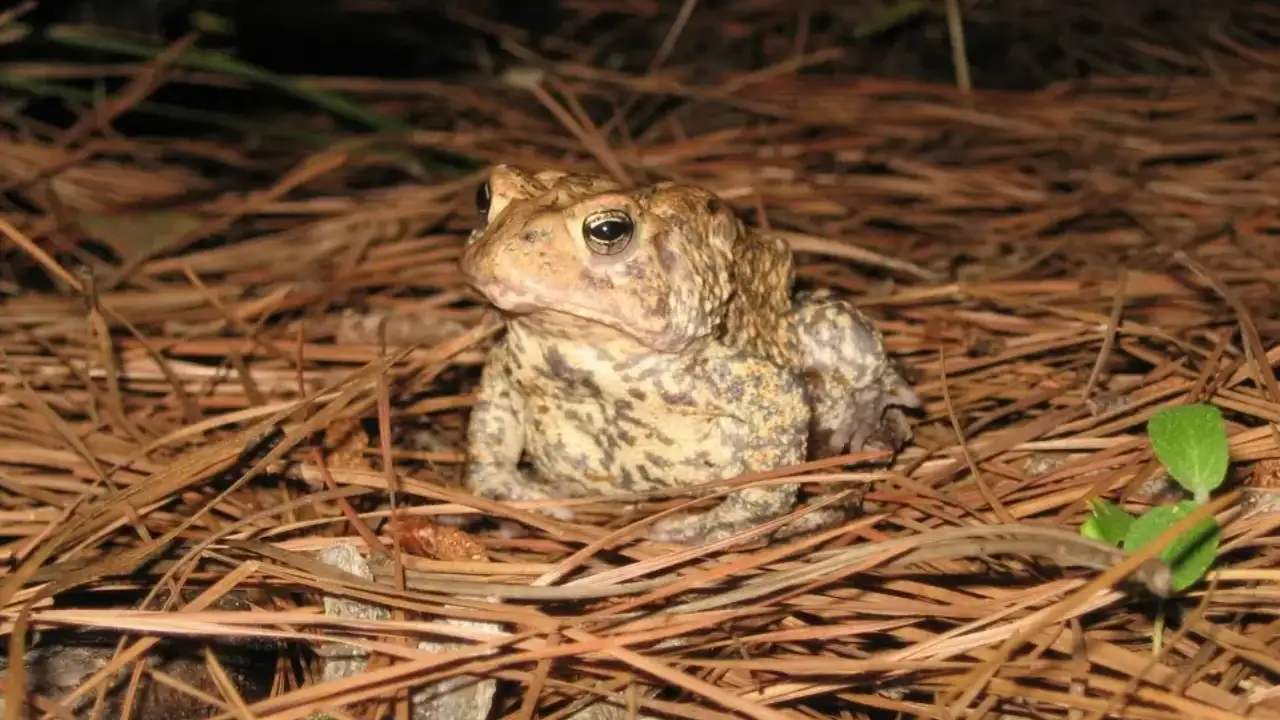
The critically endangered Houston toad has shown encouraging signs of recovery after a male was spotted on a restored private property in Bastrop County, Texas, more than 50 years after the species disappeared from the Houston area. The sighting comes after the U.S. Fish and Wildlife Service (USFWS) released nearly 3 million captive-bred Houston toad eggs this year as part of an ambitious effort to rebuild wild populations and restore habitats across Central Texas.
The discovery has raised fresh hopes for one of the United States' rarest amphibians, suggesting that decades of habitat restoration and captive breeding are beginning to produce results.
Houston toad vanished from much of Texas
The Houston toad was once found across parts of Southeast Texas, including Harris County, where it lived in sandy forests and seasonal wetlands. However, rapid urban development, habitat destruction and land-use changes during the mid-20th century caused its population to collapse.
By 1975, the species had disappeared from Harris County. Today, the only naturally occurring wild population is known to survive in Bastrop County, making the region central to conservation efforts.
The Houston toad was also among the first amphibians to receive protection under the U.S. Endangered Species Act, earning endangered status in 1970.
Why is the Houston toad endangered?
Unlike many amphibians, the Houston toad depends on highly specific habitats to survive. It requires sandy soils, open loblolly pine forests, native grasslands and temporary rain-fed ponds where breeding takes place each spring.
After hatching, tadpoles develop into juvenile toads before moving into surrounding forests. Adult toads travel up to three miles to reach breeding ponds, making connected habitats essential for their survival.
As roads, housing developments, invasive grasses and dense vegetation fragmented forests, breeding sites became isolated. The shrinking populations also lost genetic diversity, accelerating the species' decline.
How conservationists are helping the Houston toad recover
Conservationists have spent more than 20 years breeding Houston toads in captivity to reverse decades of population loss.
Scientists now produce over one million eggs annually for release into carefully selected habitats. This year's effort was among the largest ever undertaken.
In April, around 170,000 eggs were released at three managed sites in Bastrop County as part of the broader release of approximately 3 million eggs across restoration sites in Central Texas.
These locations were selected because they contain suitable breeding ponds and restored forest habitat that can reconnect isolated populations and improve the species' long-term survival prospects.
Which organizations are involved?
The Houston toad recovery program is a collaborative effort involving multiple conservation organizations.
Partners include the U.S. Fish and Wildlife Service, Texas Parks and Wildlife Department, Houston Zoo, Dallas Zoo, Fort Worth Zoo, the Amphibian and Reptile Conservancy, researchers, local landowners and other conservation groups.
The program combines captive breeding, habitat restoration, scientific monitoring and public education to improve the endangered amphibian's chances of survival.
Houston toad recovery still faces challenges
Wildlife experts caution that the Houston toad remains critically endangered, and rebuilding stable wild populations will require continued habitat protection, scientific research and long-term investment.
Still, the sighting of an adult male in restored habitat marks an important milestone for a conservation program that has taken decades to develop.
For a species that disappeared from the Houston area more than half a century ago, the release of millions of captive-bred eggs and the return of adult toads to restored landscapes demonstrate that sustained conservation efforts can make a measurable difference. While the Houston toad remains at risk, its gradual comeback offers renewed hope that one of Texas' rarest amphibians can once again establish healthy populations in the wild.