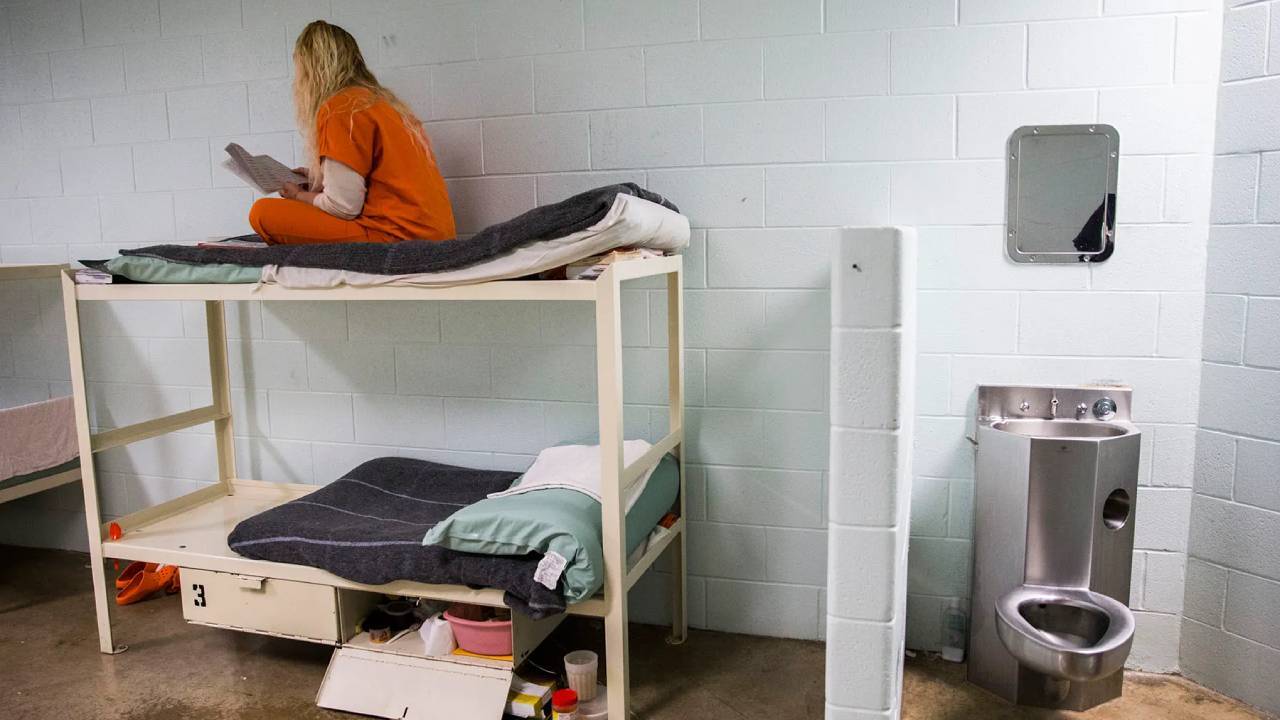
They call themselves “lionesses” for a reason. The women behind the Lioness Justice Impacted Women’s Alliance say their name reflects the determination, loyalty and collective strength that have driven their fight for safer conditions inside Texas prisons.
Get breaking news anytime, anywhere. Download the TOI app now!

Founded in 2022 by a small group of formerly incarcerated women, the nonprofit has spent years pushing back against practices they say harm people caught in the criminal legal system. One of its biggest battles has been over extreme temperatures inside Texas prisons.
Now, a federal court has ordered the Texas Department of Criminal Justice (TDCJ) to air-condition all state prisons by December 31, 2029.
The 19th reported that the ruling followed a lawsuit brought by Lioness alongside Texas Prisons Community Advocates and Texas Citizens United for Rehabilitation of Errants. U.S. District Judge Robert Pitman found that the conditions violated the Eighth Amendment’s protection against cruel and unusual punishment.
Nearly 89,000 people were in unair-conditioned units
In his 150-page order, Pitman wrote that approximately 88,697 incarcerated people were housed in units without air conditioning heading into summer 2026.
Only about 37% of the TDCJ population had access to what the agency calls “cool beds.”
The judge pointed to the extreme temperatures prisoners face during Texas summers, noting that outdoor heat indexes can rise above 130 degrees.
Pitman wrote that incarcerated people in the state were “suffering, and in some cases dying, in extreme heat every summer.”
The ruling sets a December 31, 2029 deadline for the state to complete the air-conditioning work. TDCJ must provide progress reports to the court every six months, and Texas plans to appeal.
‘I don’t know if I will survive this’
For Marci Marie Simmons, Lioness’ director of communications, the ruling is personal.
Simmons spent 10 years incarcerated in a Texas prison and remembers what it was like to endure summer heat inside concrete and steel buildings.
“I remember laying in my bunk — we weren’t allowed to lay on the floor in that prison — and I remember thinking, ‘I don’t know if I will survive this,’” Simmons said.
After the ruling, Simmons said Lioness staff were celebrating while also preparing for the next stage of the fight.
“We’ve been laughing and crying and celebrating, and also, you know, preparing because we know that this is just one step in the fight,” she said.
The organisation has only one full-time executive director and four part-time employees, all of whom are formerly incarcerated. Yet its network has expanded to about 500 members, including around 400 people currently behind bars.
The group advocates for the health, safety and well-being of nearly 20,000 women and transgender people held in Texas prisons and jails.
Letters from inside became evidence
For years, Lioness received letters from incarcerated people describing what extreme heat felt like inside their units.
Some wrote because they were physically suffering. Others, according to Diane Thompson, Lioness’ director of member relations, simply wanted someone outside the prison walls to know what they were experiencing.
“They needed somebody on the outside to hear them and to know what they were living through,” Thompson wrote.
Thompson kept detailed records of the correspondence, documenting the names and units of incarcerated members, the dates of their letters, the problems they reported and other relevant details.
She also kept the original letters.
The correspondence later became part of the legal record, with Pitman referring to the letters multiple times in his ruling.
“We are a membership-based organization. We include our incarcerated members in our decision-making. They lead our advocacy work,” Simmons said. “Because of the structure of our organization, that is what got us to the finish line in this case.”
Prison heat can worsen existing health problems
The consequences of extreme heat can be particularly serious for incarcerated people who already have medical conditions.
Carlee Purdum, an associate professor of sociology at the University of Houston who studies the effects of disasters on incarcerated populations, said the psychological impact can be as significant as the physical one.
“The most significant impact is just the helplessness and the dehumanization that a person feels,” she said.
People participating in Purdum’s surveys reported heat illness, fainting, seizures and rashes.
Wanda Bertram, a spokesperson for the Prison Policy Initiative, also noted that certain medications can increase vulnerability to prolonged heat exposure.
People with high blood pressure, diabetes and heart conditions can face additional risks, she said.
Women in particular can experience additional health challenges. Federal data show that a majority of incarcerated women have chronic medical conditions, while women are more likely than men to report serious psychological distress.
Purdum’s focus groups with women from Lioness also brought up pregnancy, menopause and the difficulties of managing those experiences in extreme heat.
Extreme heat during pregnancy has been associated with higher risks of preeclampsia, premature birth and low birth weight.
Meanwhile, the number of older women in state and federal prisons has increased sharply. Women over 50 accounted for 18% of the prison population in 2023, compared with 8% in 2008.
Cooling down can depend on prison officials
For people currently incarcerated, the court-ordered changes will not happen overnight.
Purdum said people inside prisons have limited control over their own environment. If they run out of water, they may have to ask prison staff for more. Access to cooled areas can also require permission.
“People in the free world just do not understand what it means to not be able to take the simplest actions to stay comfortable, to stay alive,” she said.
Texas is also not alone in facing questions about prison temperatures. A 2019 Prison Policy Initiative report found that at least 13 states did not require universal air conditioning in prisons, with many of those states in the South.
“A lot of places in the country have extreme heat, even more so now with global warming,” Bertram said. “There aren’t really states in the country where this isn’t an issue.”
‘Lionesses stick together’
For the women behind Lioness, however, the fight has never been only about air conditioning.
It has been about people who remain inside and who, they say, have often felt forgotten.
“Our organization is named Lioness, and there’s a reason for that. We move like the animal. Lionesses stick together; they stay together,” Simmons said.
She said that collective determination helped the organisation take on what she described as one of the largest prison systems in the country.
Purdum has seen that same solidarity among women inside Texas prisons.
During focus groups, women described checking on elderly prisoners and those with medical conditions, sharing water and redirecting their own resources to help others endure extreme heat.
“They were just these kinds of extraordinary examples of care,” Purdum said. “We have a lot to learn from them.”
For her, that solidarity also explains why the legal victory carries significance beyond the courtroom.
“It was always about the people that they still had on the inside, and they never stopped fighting for them,” Purdum said. “That was extraordinary to just witness. I’m just very proud to have had the opportunity to work with them.”