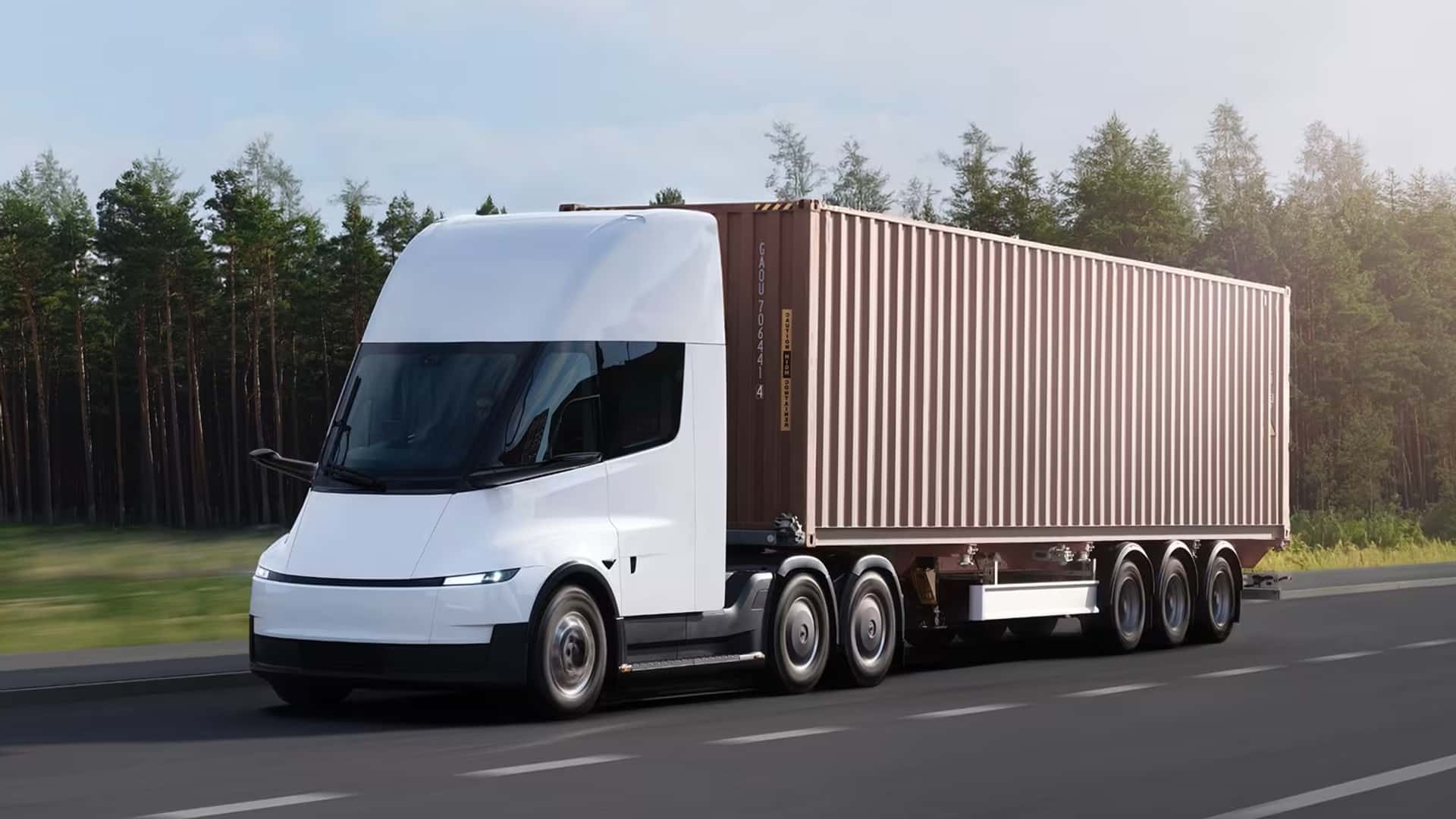
- Tesla has finally started volume production of the Semi, the automaker announced on Thursday.
- It's a long time coming. Tesla first unveiled the Class 8 truck in 2017.
- Sky-high diesel prices mean the timing couldn't be better.
A decade after Tesla first showcased the Semi in 2017, the Class 8 truck has finally entered volume production, the automaker said at a launch event at its Gigafactory Nevada on Thursday. The first deliveries begin this week, the automaker said.

The all-electric big rig arrives at a high-stakes moment for commercial freight, as diesel prices sit at a record high due to the wars in Ukraine and Iran. They’re averaging over $6.50 per gallon in the U.S. as of writing, threatening to push up costs for everything from freight rates to grocery bills for everyday Americans.
The all-electric Semi could help businesses better manage their costs over time compared to diesel trucks, according to Tesla. “The cost of electricity per mile is much less than the cost of diesel, especially in these crazy times,” Tesla CEO Elon Musk said in a prerecorded video played at the event.
Gallery: 2026 Tesla Semi
To support the growing fleet of Semis, Tesla executies said it plans to roll out 30 Megacharger locations, with a total of 200 megawatt-capable posts, in the U.S. by the end of this year. The Megacharger network will also be open to other electric truck manufacturers, similar to how Tesla opened up the Supercharger network for all EVs. Tesla said many owners will prefer to charge it overnight using its slower, 125 kW Basechargers, which can be installed at fleet depots.
The Semi won’t be able to charge at everyday Tesla Superchargers that owners of its passenger EVs use. It comes equipped with the Megawatt Charging Standard (MCS) connector.
Perhaps the most interesting fact about the Semi is its brute charging performance. Businesses will need the Semi’s gigantic battery to charge quickly to maximize uptime and productivity, and Tesla appears to have taken care of that.
The Semi will charge at peak speeds of 1.2 megawatts, which the company claims will help add 60% to its state of charge in just 30 minutes. In a charging video Tesla showed at the launch event, the Semi estimated 50 minutes to a full charge from 3%. It indeed peaked at nearly 1,200 kilowatts and was pulling more than 750 kW at 62% state of charge.
Tesla hasn’t officially confirmed the Semi’s battery capacity, but according to a filing with the California Air Resources Board, the packs are absolutely humongous.
The Long Range version has a usable capacity of 822 kilowatt-hours, whereas the Standard Range gets 548 kWh. Tesla said the Long Range will be good for 500 miles of range with full payload, which totals 82,000 pounds including the truck, trailer, and the cargo inside. Tesla estimates the Standard Range to cover 325 miles on a single charge. They’re both estimated to deliver 1.7 miles per kWh of efficiency.
The Semi is using Tesla’s own 4680 nickel-cobalt-manganese-aluminum (NCMA) battery cells made at Gigafactory Texas. The 4680 cells in its passenger cars have reportedly underperformed the cells from suppliers and the in-house battery program itself has faced several challenges over the years.
Musk said the Semi will also get a version of its Full Self-Driving (Supervised) advanced driver assistance system, although the timeline of that rollout is unclear. Although it's worth noting that
Tesla has said it aims to build 50,000 Semis annually once the 1.7 million-square-foot Nevada plant is running at full capacity. Early signs show that there is strong demand for the truck, despite (or maybe because of) the long wait. This week, a coalition of shipping companies placed an order for 2,500 Semis, according to the clean-transportation nonprofit Catalyst Mobility. That should double the fleet of electric trucks in the U.S. Last month, the Swedish autonomous freight company Einride struck a deal to buy 500 Semis.
If diesel prices remain elevated, that could give the Semi, and other electric big rigs from the likes of Volvo and Freightliner, a serious boost.
Contact the author: [email protected]