Submissions have been lightly edited for brevity and clarity
As it is written, Wednesday is mailbag day.
Today, we are wrapping up the U.S. Open and looking ahead.
• Here’s my 50 Thoughts column from the U.S. Open.
• Here’s this week’s Served podcast:
• All hail the great Pete Bodo, though we hope it’s not farewell and will make every effort to prevent that!
Let’s hit the questions …
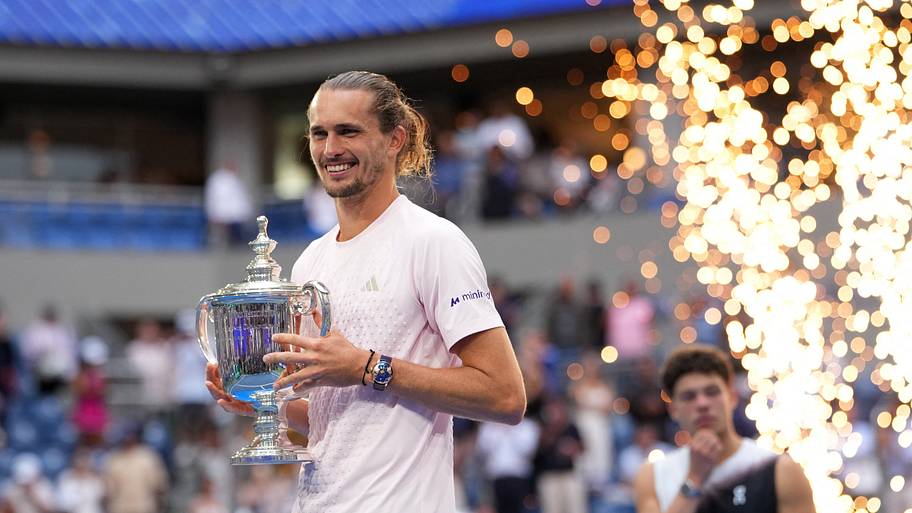
First, let’s rip off the Band-Aid. Predictably, there were a lot of “what do we do about Zverev?” questions. I’d rather not be writing about this. Even specific to him, I’d rather be writing about him winning his second major in 90 days or his fascinating trance, in which he lost track of the score while serving out a major final!
But if part of this column is to reflect tennis’s vox populi and address your concerns/questions, we ought to do this.
• A) Again, those looking for simple answers will be disappointed. Alexander Zverev has been accused of multiple instances of domestic violence by two former partners. To some, this is an indelible stain. There was no guilty verdict (his case was settled out of court). To some, that makes it a moot point, and there is no stain at all. Most of us fall in the middle. There is lingering discomfort. There are also insufficient grounds for a ban. And then what? Some fans won’t watch Zverev play. Some fans find him to be a martyr who has endured allegations—inevitably a “witch hunt”—that resulted in no conviction.
B) For the media, there is no conversion chart here. Going a full best-of-five match without mentioning two serious charges seems like a dereliction of duty. (Note that Mary Carillo is an exception to this.) But allegations, however unseemly and severe, don’t nullify his majors or his rankings, and don’t need to be referenced every time he bounces the ball before serving.
C) I say this not to condemn but to (I hope) elucidate. John McEnroe didn’t mention the allegations against Zverev during the entire U.S. Open final broadcast, but when Zverev went to the net to shake hands with Ben Shelton, McEnroe wished Carlos Alcaraz and Jannik Sinner a full recovery. Only John knows his intent. Maybe he simply meant that Zverev, again, won a major without facing Alcaraz and Sinner. Maybe it was subconscious. But at the end of the triumphant match, he wasn’t gushing over the No. 1 seed winning his second major in 90 days; instead, he pivoted to two other players. That encapsulates tennis’s collective ambivalence and discomfort here.
D) Me? In both New York and at Roland Garros, I noted the Zverev “cloud” in my columns about his title, but I mentioned it near the end of the story. Some of you wish I had not buried this reference. Others wish I had not tainted his major with a reference “to allegations from years ago.”
E) Facts matter. (This is as good a write-up as any.) He was never proven innocent, and the allegations were not proven false. Nor was he cleared. There was a settlement, and no guilty verdict is on the books. And if you believe in basic presumptions, you can’t resume calls for a ban. (I put it this way to a casual fan colleague: You don’t have to like him, but you have to acknowledge the absence of a finding of guilt.)
F) Truth serum? This, of course, is circumstantial (probably inadmissible in a criminal case) and proves nothing. But I always found this chilling: Zverev stood accused of heinous acts, predicated on violence, power and a lack of impulse control. His reputation has been stained. He has caused great unease within his own workforce. And in February 2022, he was kicked out of the Mexico Open after attacking the umpire’s chair with his racket. Because he was displeased with the outcome of a doubles match in Acapulco? So often, when people are accused of bad acts, the first defense is, I simply don’t have the capacity to do what has been alleged. It’s not in me. It’s not in my nature. I am not a rude/mendacious/violent person. Zverev took that card off the table. Again, it proves nothing. But especially given the tenuous context at the time, it was, to me, chilling and, at best, horrible optics.
G) Here’s a GQ piece that was published after Zverev’s U.S. Open win. (I was struck by the last paragraph.) Giri Nathan essentially makes this same point here. This is a horrible situation for tennis. This is a horrible situation for Zverev. No amount of majors won or declarations of no one can ask me about this again, will make this go away. But had he (then or now) acknowledged the severity of the allegations—I categorically deny the accusations; this is particularly difficult, as I condemn domestic violence in the strongest terms possible and take seriously this unconscionable act and very real issue with no place in civil society—I suspect it would go a long way in the eyes of many fans. (Speaking ahead of the London ATP Finals in 2020, Zverev said: “These accusations are just unfounded and untrue. We had our ups and downs, but the way our relationship is described in the public is not how it was. That’s not who I am, that’s not how I was raised by my parents. That’s not just simply who I am as a person.”) Getting accused of violence by two different women and then ending a prearranged interview when the subject is broached? That doesn’t help rehabilitate or reconcile.
H) Social media is not real life. But here’s what happens in real life. The No. 1 seed and winner of a major earlier this summer played a semifinal match—at an event with affordability issues—and ticket prices plummeted to less than the cost of a Honey Deuce. Brands scattered. Tournaments have strenuously avoided promoting a Hall of Fame player. Zverev may or may not give you pause, but it’s disingenuous to suggest that there is no cloud, that this isn’t a challenge for tennis as a whole.
I) Again, there are no simple answers. And as Zverev might become No. 1 and has won 20 of his 21 matches at majors, this discomfort is unlikely to ease. It’s unsatisfying. But in the absence of true resolution (thanks, Byzantine German legal system), fans simply have to weigh the facts and circumstances and find their zone of comfort.
Jon, I heard there was an epic tennis match last night! Too bad no one saw it!
J.P.
• There was an epic match in the morning in Spain? (This is in reference to the Alcaraz-Shelton U.S. Open semifinal barn burner.) No, this was such a squandered opportunity. Again, there’s nothing cute or clever about a sporting event ending at 3:33 a.m. local time. The USTA must address this.
Jon,
Great coverage of the U.S. Open and especially your “50 Parting Shots” column, which I always look forward to reading. Quick question from a tennis nerd who listens to Served, just finished Matthew Futterman’s book, went to the qualifiers, and bought Week 1 upper deck Arthur Ashe tickets but did not spend a minute in Ashe, preferring to watch up close, i.e., Francisco Cerúndolo vs. Jan-Lennard Struf and Zachary Svajda vs. Arthur Géa: There are by my count 29 ATP 250 tournaments and 16 ATP 500 tournaments yet only three 250s—Delray, Beach, Houston and Winston-Salem—and two 500s—Dallas and D.C.—are in the United States. I haven’t checked but I suspect the same is true re: the WTA. Why is that? Has this always been the case? I suspect other tennis nerds like me would love to go see such tournaments if they were held here, especially given the prices and crowds at the US Open.
Thanks, Andrew Lachow
• The number of smaller tournaments in the U.S. is down dramatically from even 2001 (25 years ago), let alone the ’80s. Some of this is the global spread of tennis, with events moving to countries that claim the best players. (Hey, Boris Becker and Steffi Graf are doing well in Germany? Let’s set up shop.) Some of this is following the money. Some of this is the USTA taking its eye off the ball.
Wow! Super Saturday in ’84 and now Terrific Tuesday in ’26!!!
All four matches went the distance and three of those matches went to a match tiebreak.
I realize yesterday’s matches on Arthur Ashe were over two sessions, but is this the first time that each match on Ashe went the distance?
Rod
Toronto Canada
• Alas, it ended at 3:33 a.m. local time which not only meant few people saw the conclusion, but it complicated the best day narrative.
I saw Gaël Monfils and Elina Svitolina arriving to the practice courts to take over from Mirra Andreeva and Andrey Rublev—Svitolina ignored both Russians and walked straight to the bench to drop off her stuff and Monfils greeted Rublev with a big hug and chatted for 30 seconds before joining her. I didn’t notice if he said hello to Andreeva, but I’d assume he knows Rublev far better. Obviously not the same as an on-court handshake, but I thought it was interesting!
Anon
• Funny, I asked a rep from the Monfils camp about this. The speculation was that he might have been inclined to shake the opponents’ hands, but spousal pressure might have overwhelmed those instincts. Alas, we’ll never know.
Can we all just admit that Aryna Sabalenka is a sore loser?
P.
• I know I am likely in the minority here. My buddy, Chanda Rubin, and I argued about this (civilly) on the air the other day. But I can’t get too worked up about Sabalenka in defeat. She lost the final, finishing the year with zero major titles for the first time since 2022. She lost the No. 1 ranking. She lost another three-set final, her fifth. She gave Elena Rybakina an appropriate handshake. Forgive her if she is frustrated.
You know what should offend us? Athletes who don’t care or don’t honor their talents. Sabalenka cares. Deeply. Would it have been better if she waited until she got to the locker room before breaking equipment? (Not that it saved her in 2024 or Coco Gauff in Australia.) Yes. Would it have been better to verbalize frustration but not act on it? Sure. Would I like it if my own children had broken their toys in defeat? No. But I can’t get too exercised.
Hey Jon. Hope you are great. A couple of comments/question regarding Aryna Sabalenka. Full disclosure, I'm a big fan, and it’s been rough seeing her not win a major this year. It seems like her volatile temperament has been a factor in all of her losses, except for maybe the U.S. Open loss to Rybakina where Rybakina was the better player on the day. Knowing that she can get any combination of angry, despondent, panicky, rushed, or in one mode of playing, you’d think that she would have developed and utilized some new mental tools for her arsenal. She’ll never have the court demeanor of Chris Evert, but do you agree it would be to her benefit her to emulate Chris; i.e., slow down, not show her opponent she's frustrated (thus giving them increased confidence and probably a game or two), and mentally dictate the match as much as she can physically? I know it all looks easier to an outsider, but I’ve not seen her make these adjustments to her game, and am surprised her team hasn't made them happen. Thanks!
Scott, Charlotte, NC
• With some boundaries, I think you have to let players be themselves. Clara Tauson is never going to be a serve-and-volleyer. Learner Tien is never going to be a servebot. Same with personalities. It’s hard to take an expressive, extrovert and say, be more like Chris Evert.
I know I write you too much … so sorry about that but oh well. Anyway what in the world is going on Iga Świątek? She won Wimbledon just last year and I just can’t figure her out. Does she even want to play anymore? Does the fact that she made a very questionable coaching change a few years back have anything to do with this?
Thanks.
Keith Jacobson
• All good. Świątek is a generational player. Full stop. But especially for an athlete with a full-time mental coach, her shortcomings—and she speaks about this—seem to stem from confidence issues, rather than physical injuries or bad technique.
Hi Jon,
A couple of comments on your US Open 50 parting thoughts:
You mentioned that “It’s become axiomatic that college tennis is having a big impact on the professional game.” However, the results of this tournament are a reminder that a college player hasn’t won a major on the men’s side since John McEnroe in 1984, and on the women’s side since Billie Jean King in 1975! While many players who have been in the college system have had fine pro careers, it has not been an avenue for achieving greatness.
Lots of talk about high ticket prices, but per ticketdata.com, ticket prices across all sessions were similar to last year (except for the first Sunday), and cheaper than last year as the tournament wore on. The final get-in price (again, per ticketdata.com) for the men’s semifinal featuring the player that ended up winning the tournament was a mere $ 40, about 10 times lower than the price of a grounds pass for Day 1 opening matches, so it goes both ways.
Your thoughts?
Sal G. MA
• Yes, we came within a match of a college champion (note: as we did when Danielle Collins and Jennifer Brady made the Australian final). But I would still argue that as a matter of quantity and overall impact (including doubles), the college game has never been more relevant.
The market economy is a fickle beast. U.S. Open grounds passes could be priced north of $400, and the tickets for the Zverev–Karen Khachanov semifinal were available for under $20, i.e., cheaper than a Honey Deuce. Something is only worth what someone else will pay for it.
Take us out, David, NYC, with a different perspective:
HI JON: I admire how consistently and vociferously you criticize the 12-day Masters 1000 format in your mailbags; however, I’m afraid I must respectfully disagree.
You mention that there’s a proof-of-concept in that the format worked in Indian Wells and Miami, which is true: for years, they were the most popular M1000 events, and never once suffered from the “bloated one-week event” criticism the others receive. I personally see this as American bias (and I say that as an American). When the ATP downgraded Hamburg to a 500 event in 2009, European tournament directors complained that a North American tournament never would’ve gotten the axe, and I agree with that. There is definitely a double standard applied to tennis tournaments in North America compared to the rest of the world, and seemingly brand-new criticism of this format is just another example of that.
You also mention the toll it takes on players’ schedules, which is an honorable concern that I share. But I remember players complaining just as much about playing every day as they are now about the new days off between matches. Sometimes you’d get a final where one player was gassed from three straight 2.5-hour matches and clearly had nothing left in the tank. (And they still skipped M 1000 events at a decent rate under the old format.) It is also clear to me that the players complaining about schedule length have much easier ways to shorten their calendars without skipping M 1000s: for example, Casper Ruud played seven 500s last year; Alex de Minaur played eight; Ben Shelton and Taylor Fritz each played nine. For comparison, the ATP requirement for a top 30 player is only four 500s a year. These players could shave up to five weeks off their schedule without breaking any tour rules, which makes up for the additional five weeks of M 1000s that the past few years have given us. And crucially, these new weeks give us “best-on-best” tennis instead of scattered appearances at smaller tournaments where top players are given big appearance fees to play in the first place. As someone from a city that recently lost a WTA 500 tournament, I care deeply about the continued success of the smaller events. But I also couldn’t help but notice that some top seeds clearly weren’t playing at maximum effort at my local event, since the goal of their appearance was to warm up for bigger tournaments and of course cash in the hefty appearance fee they received before hitting a single ball. There can’t be that many ATP players who single-handedly keep tournaments in business by showing up—perhaps only Alcaraz, Sinner, and Djokovic, none of whom play very many 500s and 250s to begin with. I’d much rather see lower-ranked players get a chance at more ranking points (and prize money) while also getting to earn guaranteed main-draw prize money in the M 1000s. With the expanded format, 30 additional players are direct-acceptances in M 1000 main draws, and this is a massive pot of annual “salary” for players ranked 45-75 in the world. Not to mention that the expanded qualifying draws make it possible for more players to get their big break on the tour (Would any casual fan know Valentin Vacherot’s name with a 56-draw Shanghai last year?). So the way I see it, the expanded M 1000 events are a tradeoff where more money is given to the “trench soldiers” of the tour at the expense of bloated appearance fees for top players at smaller events. And that’s a tradeoff I’m willing to make.
Perhaps there’s room for compromise here: We could keep the draws at 96 and shorten the tournaments to 10 days. But that also has its drawbacks, because it isn’t really fair to any tournament that occupies the previous week. We could have ATP 250 events coinciding with the second week of the M1000s. And we could increase the M1000 bonus pool to further incentivize the top players to prioritize those on their calendar over the smaller events. I wouldn’t be opposed to any of these. But I believe reverting to the old M 1000 format would be detrimental to the product of professional tennis as a whole.
Best,
David, NYC
HAVE A GOOD WEEK, EVERYONE!