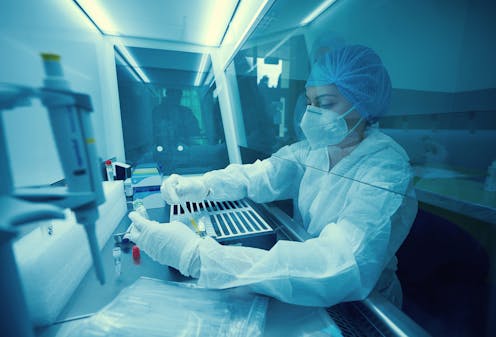
The 2023 Nobel Prize in physiology or medicine will go to Katalin Karikó and Drew Weissman for their discovery that modifying mRNA – a form of genetic material your body uses to produce proteins – could reduce unwanted inflammatory responses and allow it to be delivered into cells. While the impact of their findings may not have been apparent at the time of their breakthrough over a decade ago, their work paved the way for the development of the Pfizer-BioNTech and Moderna COVID-19 vaccines, as well as many other therapeutic applications currently in development. The 2023 Nobel Prize in physics likewise will go to a team of scientists who used lasers to clarify the behavior of electrons, and many prior Nobels have honored basic research.
We asked André O. Hudson, a biochemist and microbiologist at the Rochester Institute of Technology, to explain how basic research like that of this year’s Nobel Prize winners provides the foundations for science – even when its far-reaching effects won’t be felt until years later.