
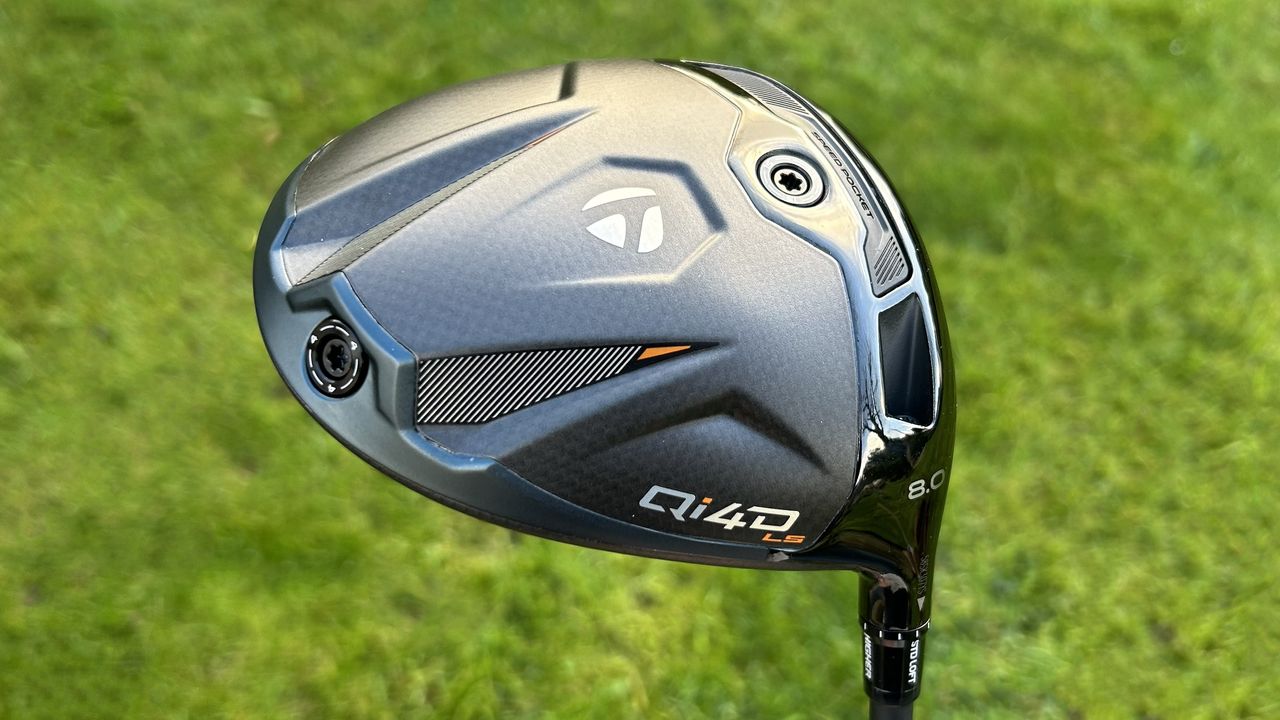
The TaylorMade Qi4D LS (Low Spin) driver is designed for players seeking maximum ball speed, minimal spin, and a piercing ball flight. As the model realistically aimed at the fastest swingers, the LS version seems to encapsulate TaylorMade’s aggressive aerodynamic advances and its new fitting philosophy, delivering a driver that’s already proven its worth in the hands of the world's best.

WATCH: Kick Point: The Golf Gear Show gives their full verdict on the new Qi4D range.
It was very interesting to see Tommy Fleetwood make the switch so swiftly. Given the incredible form he has been in during the second part of the season, a professional of his calibre surely wouldn't have made a driver change lightly. As such, I was extremely keen to see if the Qi4D LS had the performance to usurp some of the best drivers in the game from their thrones.
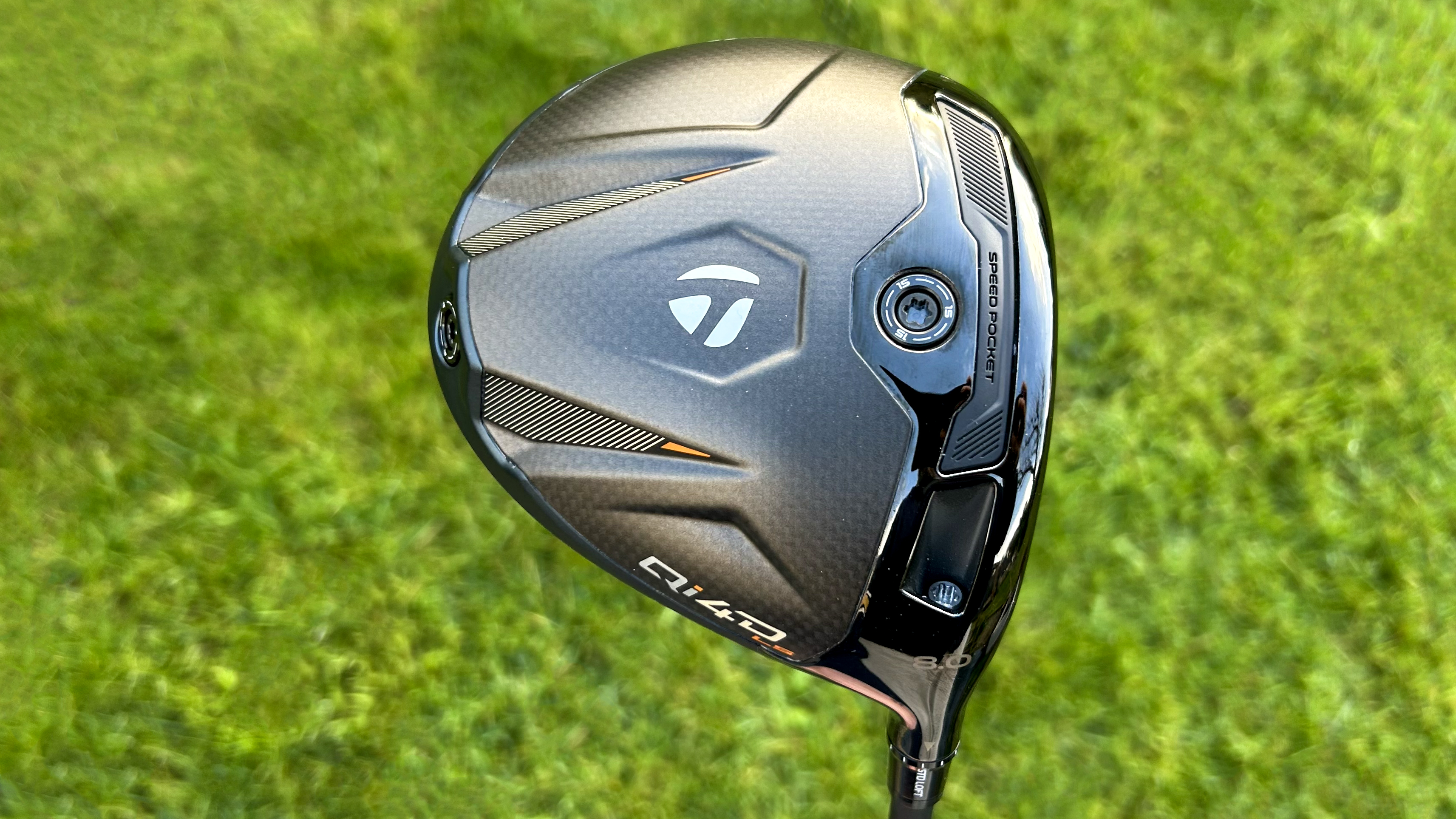
In terms of the looks, many loyal TaylorMade enthusiasts will be pleased to hear that a familiar, somewhat traditional pear-shaped profile remains in the LS model. The pear shape seems inherently appealing to the faster, better player's eye, often hinting at workability and a penetrating flight.

While this profile has never personally been my favourite - I confess I tend to prefer a larger footprint and rounder shapes - I can absolutely see why so many golfers adore this classic shaping.
The Qi4D LS maintains that traditional tour-preferred aesthetic while hiding substantial aerodynamic improvements, which TaylorMade says were achieved through "softer blends and tucked protrusions." In practice, TaylorMade has essentially removed a whole section from the sole relative to the previous Qi35 LS.
While performance numbers often drive the narrative, the experience of hitting the Qi4D LS was, for me at least, defined by its feel. Where the sound and feel of the previous Qi35 LS was something I personally found a little harsh, the Qi4D LS is a complete turnaround.

I’m not entirely sure what specifically has been changed - whether it is simply an accumulative effect of optimized internal acoustics, the new Carbon Face, or the improved Speed Pocket design - but the feel is absolutely spot on.
The acoustic feedback hits a brilliant sweet spot: it is neither high-pitched and metallic nor dull and heavy. Instead, it has struck a beautiful balance of being both lively and soft at the same time, delivering a powerful, yet refined sensation at impact. This is, for me, one of the most notable improvements over the previous generation.
The primary technical story across the Qi4D family is the heavy focus on aerodynamics. A big story from all of the media presentations I sat through was encapsulated by a tagline along the lines of, "There is no limit on clubhead speed." This correctly identifies the one area manufacturers can still optimize for distance, as the governing bodies have already capped MOI and COR.

I am pleased to report that, out on the test field, this focus was absolutely and tangibly successful. Using the LS model, much like with the core model, I picked up around 1.5 mph of clubhead speed over not only the previous generation but also this year's competitive set, which was completely unexpected.
While we know the head itself can be no 'hotter' than anything else on the market (due to the COR limit), the ability to simply move it quicker resulted in a 2-3 mph ball speed gain for me and between 5-8 yards of additional carry.
Crucially for a low-spin head, I found the Qi4D LS to be less volatile than the Qi35 LS in terms of its left-to-right dispersion. I found the previous low-spin model to be very aggressive on spin (or lack thereof), sometimes leading to significant carry distance losses or unpredictable flight on slight misses.

The Qi4D LS appears to have found a better balance, allowing me to find a few more fairways than I remember from my testing last year, making it much more playable.
There is also the option of two Trajectory Adjustment System (TAS) weights - 15g and 4g - to allow golfers the option to dial in launch and spin.
The Qi4D LS, like all of the new models, is available in two face options: a standard version and one marked up with reflective fitting markers embedded into the face. Referred to as Launch Monitor Enabled (LME) drivers, these markers eliminate the need for manually placed stickers, allowing camera-based launch monitors like the GC Quad to more accurately capture highly accurate face angle and rate of rotation data.

I actually opted for the fitting heads for my order, not only for the data capture benefits, but also for the fact that the slightly lighter face allowed me to see a little more loft, which I enjoyed.
This idea of precision fitting ties directly into TaylorMade's new shaft strategy, the REAX system (a nostalgic step back in time for those who remember the name). Through significant and lengthy research at its Kingdom facility in Carlsbad, TaylorMade has come up with a system that categorizes players' swing types based on their "rate of rotation" through impact into three types: High rotation (like Charley Hull), Mid rotation (like Rory McIlroy), and Low rotation (like Collin Morikawa). The REAX shafts are then designed to complement these release types.

While I personally believe precise shaft fitting often requires more nuance than a three-category system, I really feel this is an excellent way of breaking down shaft fitting into an easy-to-understand concept, and it can provide a great starting point for testing, making the custom process more accessible.
TaylorMade has also color-coded these profiles to make it even easier to recognize - red for high, blue for mid, and white for low rotation.
The Qi4D LS is a very strong offering in the low-spin market. The core technology delivers genuine, validated speed gains through refined aerodynamics, while the improved feel and acoustic package, for me, correct the one major drawback of the previous model.
Add in the improved control over dispersion compared to the Qi35 LS, and you have a low-spin driver that already has significant tour validation and is ready to compete at the very top of the category.
You can purchase the standard TaylorMade Qi4D LS driver for £549/$649.99 or the LME head for £579/$699.99.