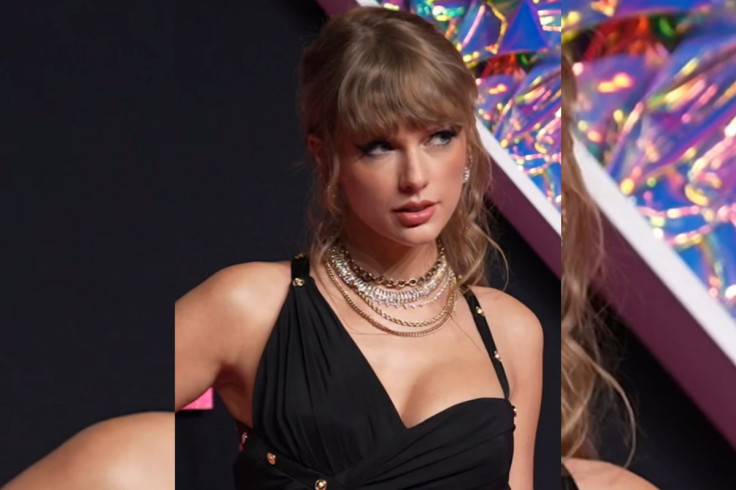
Taylor Swift is pushing back against a trademark lawsuit over the word 'Showgirl', saying that there is little chance people would mistake her work for that of Las Vegas performer Maren Wade. Swift's attorneys are urging a federal court to dismiss the trademark lawsuit brought by Wade.
The lawsuit centres on Swift's 2025 album The Life of a Showgirl and Wade's registered Confessions of a Showgirl trademark. Wade, whose legal name is Maren Flagg, says she began developing the phrase through a Las Vegas Weekly column in 2014 before expanding it into performances, touring productions, a book and other media. She says that Swift's use of a similar phrase threatens the identity she spent years establishing.

Swift's Lawyers Challenge Confusion Claims
Swift's lawyers have argued that Wade's theory does not make commercial sense. They contend that consumers are unlikely to believe Swift is behind Wade's podcast, book or cabaret performances, pointing to substantial differences between the businesses and how their entertainment is presented. The latest filings ask the court to dismiss the amended lawsuit.
'Plaintiff's overarching assertion that consumers are – or could be – confused into believing that Ms. Swift, a 14-time Grammy Award winner and global musical icon, is the source of or is associated with plaintiff's podcast, book, or live cabaret performances at golf resorts and RV parks is nonsensical,' the lawyers wrote in the new filings.
Swift's lawyers have also argued that The Life of a Showgirl is an expressive work protected by the First Amendment, rather than merely a source-identifying trademark. Swift's attorneys previously invoked First Amendment protections, arguing that the album title forms part of a creative work.
Why the Trademark Dispute Started
Wade's lawsuit takes a different approach, saying that Swift's enormous commercial reach could produce what trademark lawyers call 'textbook reverse confusion', as reported by the Associated Press. In a reverse-confusion claim, a later user with greater commercial reach is alleged to overwhelm an earlier mark, potentially causing consumers to believe that the established user is connected to, or copied by, the later entrant.
The lawsuit described the term reverse confusion as 'a junior user's overwhelming commercial presence drowns out the senior user's mark, until consumers begin to assume that the original is the imitation'. Wade's lawyers argue that what she had built over 12 years was threatened by Swift's use of the phrase.
According to court filings, the US Patent and Trademark Office issued a nonfinal Office Action in November 2025 refusing registration of The Life of a Showgirl in International Classes 9 and 41 under a likelihood-of-confusion provision, citing Wade's existing Confessions of a Showgirl registration. Swift's lawyers have emphasised that the refusal was nonfinal, applied to only two of the 14 classes in the application and involved an intent-to-use filing.
During a 27 May hearing, Swift's lawyer, J. Douglas Baldridge, said Wade had used hashtags related to Swift to direct attention to her commercial website. He also said Wade encouraged users to follow her as she entered what she called her 'Showgirl era'.
'There is absolutely no doubt that this woman, because of exuberance or trying to realise commercial gain, was very much affiliating herself with Ms. Swift for eight months while millions was spent to get this album out there, and it can't be undone,' Baldridge said. 'It was eight months of not objecting to an expressive work while she glommed onto it,' he added.
Wade's lawyer countered this, however, saying that his client had spent 12 years building her brand through a column, her own show, touring and a book before securing what her lawyer described as an 'incontestable federal registration', only to have her trademark 'absorbed in real time into a multi-billion dollar commercial machine'. 'They knew what they were doing, and they proceeded anyway,' Wade's lawyer said.