Get all your news in one place.
100's of premium titles.
One app.
Start reading
Guitar World
Guitar World
Entertainment
David Mead

“Taylor has said that this is easily its most plug-in-and-play version of the 324ce and we’d heartily agree. It will certainly take some beating”: Taylor Next Generation 324ce review

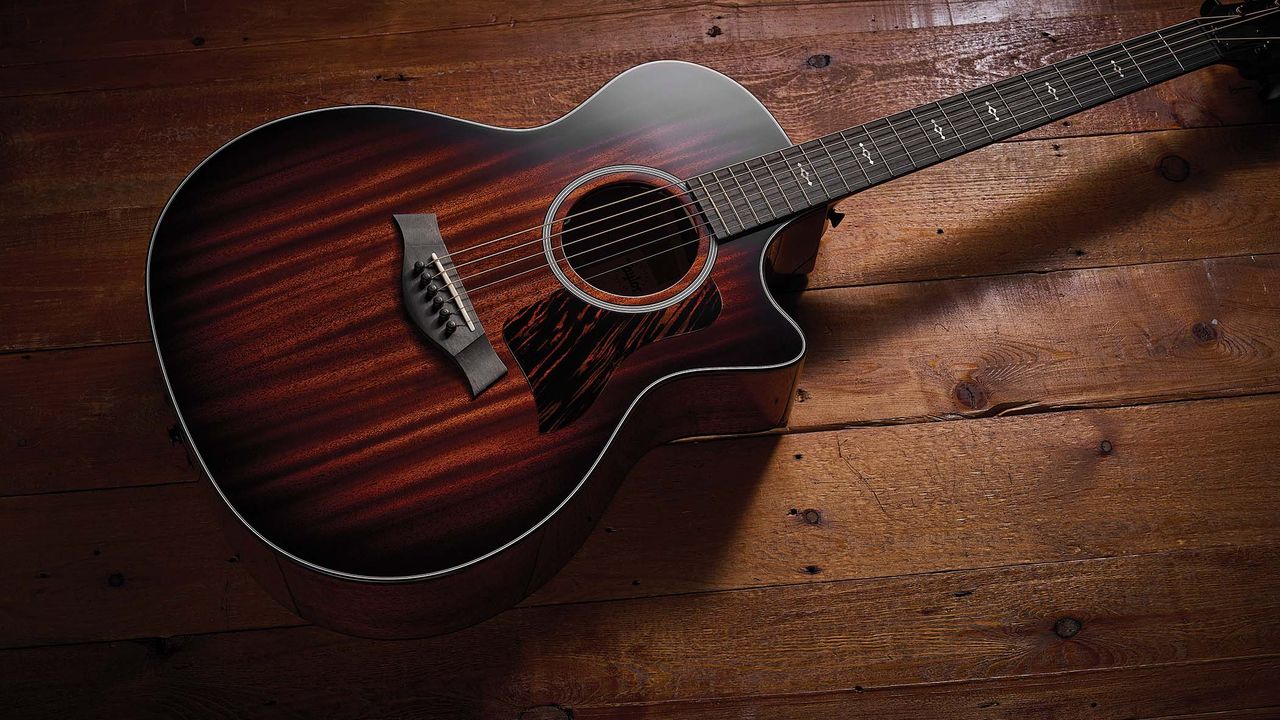
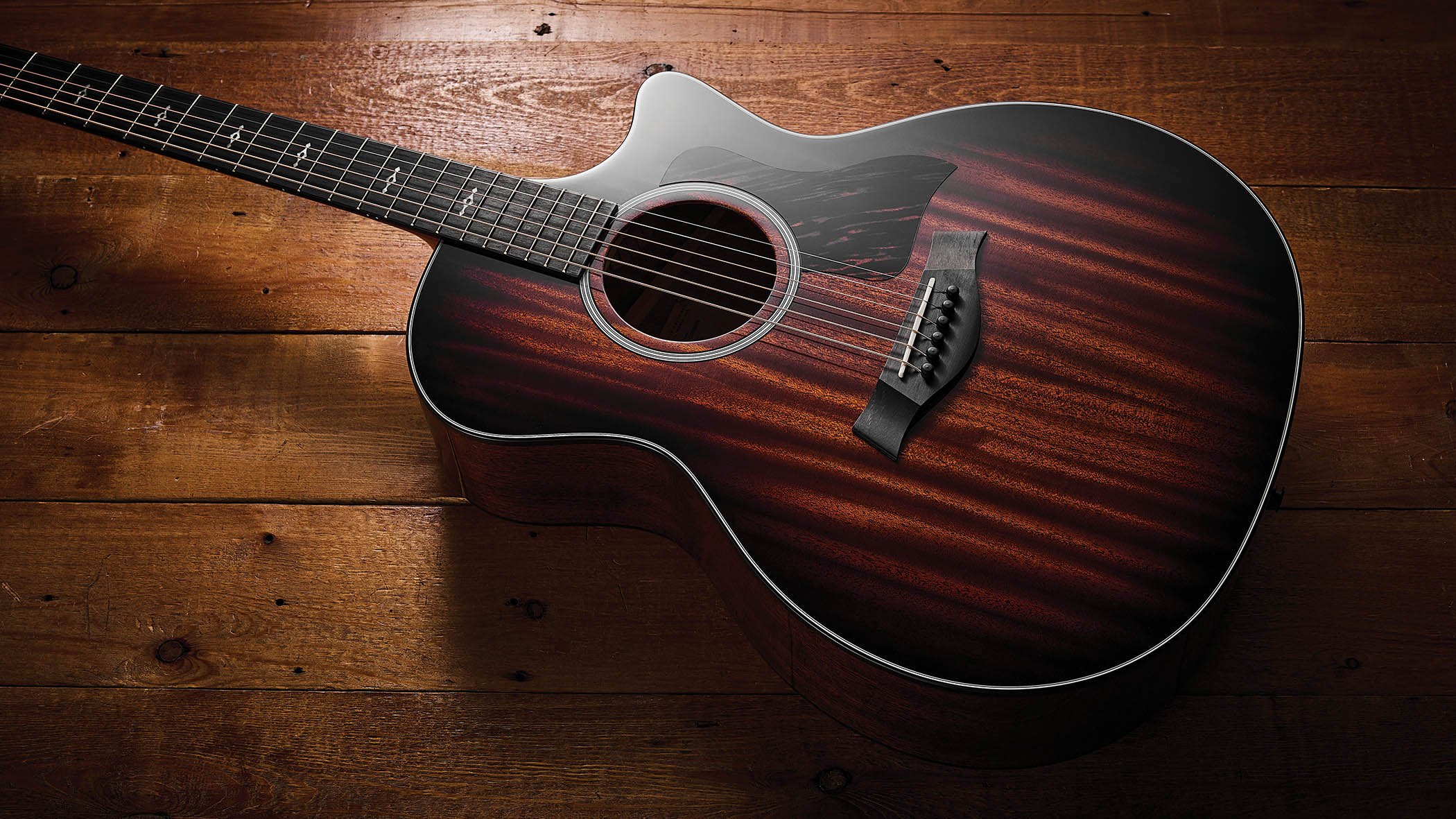
The Next Generation 324ce is a revised and upgraded version of Taylor’s renowned Grand Auditorium acoustic.

What is it?

(Image credit: Future/Matt Lincoln)

That old quote ‘standing still is the fastest way of moving backwards in a rapidly changing world’ couldn’t apply more in today’s ultra-competitive guitarscape.

This is why we see companies such as PRS and Taylor – to name but two – continually tweaking, upgrading and refining their instruments in order to stay ahead of the game.

Taylor in particular has been relentless in its pursuit of tonal enhancements and improved playability, driven by its tireless CEO and chief designer, Andy Powers. “As guitar makers, we see the ever-wider variety of players and styles,” he tells us. “This means different types of sounds, feels and aesthetic presentations, all in step with the creative world of today’s players.”

With this in mind, Taylor has turned its attention to its popular Grand Auditorium model and is currently in the process of giving it a refresh across the range. The GA has enjoyed the position of being one of Taylor’s defining acoustic guitars for 30 years, with its comfortable body size, lively tone and everyman appeal, but now it’s receiving a set of new features to satisfy the needs of the new breed of acoustic player.

First and foremost is the tonal engine room, also known as the soundboard bracing. Back in 2018 Andy Powers introduced V-Class bracing to the Taylor range, claiming it enhanced playability, tone and even tuning. Although dubious at first, the guitar world listened and decided that there were indeed benefits to the new bracing design.

Now, Andy has taken things one step further by employing a scalloped version of his creation. This subtle change, we’re told, enhances the guitar’s lower register, adding more oomph to the bass response.

Elsewhere on the guitar the neck joint has been revised with a longer tenon that extends deeper into the body “for dramatically enhanced sustain, warmth, and resonance”, Taylor claims.

(Image credit: Future/Matt Lincoln)

Not only that, it has a further trick up its sleeve in the form of easier adjustment in order to combat climate changes that bring about action height tweaks on the road.

Basically, there is a nut inside the guitar’s body at the neck joint that you access with a “quarter-inch nut driver” tool (a little like a socket wrench on a long flexible arm) or the truss rod wrench. Turn it to the right to lower the action, turn to the left to raise it.

It’s as simple as righty-tighty, lefty-loosey, and if you use the nut driver you don’t even have to loosen the strings, whereas using the truss rod wrench means you would have to slacken them off in order to get your hand inside.

(Image credit: Future/Matt Lincoln)

The chances are that players in the UK could set and forget the action, but those living in a country with a whole range of climate differentials might need to equip themselves accordingly. If this sounds like a faff, we can assure you that our 324ce came with a perfectly set up action and we didn’t need to go and rummage through the toolbox.

The third and equally significant change for Taylor is a brand-new acoustic guitar pickup system called Claria. Gone, it seems, is the Expression System 2, to be replaced by a simplified setup comprising an under-saddle piezo with specially tuned EQ controls located in the top rim of the soundhole.

What’s new? Well, Taylor tells us that it offers “discrete soundhole-mounted volume, mid-contour, and tone controls [that] enable a wide range of tone-shaping.

Players will find it easy to quickly dial in their preferred sound in any type of performance venue, offering remarkable plug-and-play utility.” Naturally, the volume and tone controls speak for themselves, but the mid-contour is interesting. Along its travel you have a scooped midrange at one end, which broadens to full-fat mids at the other. In theory, this covers pretty much all bases.

(Image credit: Future/Matt Lincoln)

Of course, all this new innovation is all well and good, but the guitar itself has to be able to cut the mustard and so let’s briefly consider its sum of parts.

We begin with a mahogany top. Now ‘hog’, as it is often called, is known for its warmth and midrange bite and so we’re beginning to see a theme developing here with Taylor wanting to push the bass and mids of the Grand Auditorium to the forefront, while keeping the trebles clear and vibrant.

Indeed, the choice of sapele for the back and sides confirms this as Taylor claims that this particular tonewood will add sparkle to the instrument’s soundscape.

The neck is mahogany once again, with a scarf joint just below the headstock, topped with an ebony ’board that sprouts 20 medium, nicely polished frets. Tuners are Taylor-branded matt black with black buttons, which sit nicely with the black Tusq nut and ebony veneered headstock. Along with the dark Edgeburst finish, it seems that the 324ce is set up for stealth manoeuvres. Let’s see how it registers on our tonal radar.

Specs

(Image credit: Taylor)
  • Price: $2,699 | £2,975 | €2,899 (inc case)
  • Origin: USA
  • Type: Grand Auditorium
  • Top: Neo-tropical mahogany
  • Back/Sides: Sapele
  • Max Rim Depth: 113mm
  • Max Body Width: 400mm
  • Neck: Neo-tropical mahogany
  • Scale Length: 648mm (25.5”)
  • Tuners: Taylor logo’d satin black with satin black buttons
  • Nut/Width: Black Tusq/44.4mm
  • Fingerboard: West African Crelicam ebony
  • Frets: 20, medium
  • Bridge/Spacing: Ebony with Micarta saddle/55mm
  • Electrics: Taylor Claria pickup system
  • Weight (kg/lb): 2.04/4.5
  • Options: None
  • Range Options: Taylor’s Next Generation 300 range includes the Builder’s Edition 324ce (£3,695) and the 314ce Studio (£2,255). See website for more details
  • Left-Handers: Not currently
  • Finish: Gloss medium stain with shaded Edgeburst top
  • Contact: Taylor Guitars

Playability and sounds

(Image credit: Future/Matt Lincoln)

We’ve been fans of Taylor’s neck carve for as long as we remember. It’s comfortable and fits the hand well, and if you’ve been playing a C-profiled Strat all day and you pick up a Taylor you’re instantly at home. Simple as that.

You can literally feel the body resonate as you play it and so we’d assess that the extended neck tenon, combined with the marriage of body woods, is working its magic

Our first probing strums reveal a clear and rich tone, with very good separation – every note within a chord remains crystal clear. Furthermore, there’s no mud at the bass end of the spectrum.

But what about that midrange and bass enhancement that Taylor has made? We were surprised that we could actually feel the bass vibrate throughout the guitar’s body.

You can literally feel the body resonate as you play it and so we’d assess that the extended neck tenon, combined with the marriage of body woods, is working its magic. But the enriched bass response isn’t at the expense of the trebles. There’s a lot of sparkle and sweetness there, adding up to a very full tonal range.

(Image credit: Future/Matt Lincoln)

Plugging the guitar into our Boss Katana-50 EX on the acoustic setting, it wasn’t long before we were totally at home with the variations in the mid-contour control and were very quickly able to set on a sound that was full, vibrant and warm.

Adding a dash of reverb on the amp, we were happy with what we heard and confident that a perfectly giggable sound would be well within reach in a very short time on open mic nights, gigs or just fooling around at home.

We’d suggest that the soundhole-mounted controls are a mite more fiddly to use than Taylor’s more old-school rotaries that accompanied the Expression System 2, but we soon got the hang of them.

Verdict

Verdict: ★★★★½

(Image credit: Future/Matt Lincoln)

Taylor has said that this is easily its most plug-in-and-play version of the 324ce and we’d heartily agree. It will certainly take some beating.

At just shy of £3k it might sound a little upmarket for anything other than a dedicated acoustic guitarist, but we’ve seen shops selling it for around the £2.5k mark.

Guitar World verdict: There’s no doubt that the thought Taylor has put into the upgrades on its Grand Auditorium guitars has paid dividends, if the 324ce is anything to go by. Acoustically, it really does have the capacity to suit nearly all styles and the plugged-in sounds are easily manageable, too.

Hands-on videos

Peach Guitars

Alamo Music Center

Empire Music

Sign up to read this article
Read news from 100's of titles, curated specifically for you.
Already a member? Sign in here
Related Stories
Top stories on inkl right now
One subscription that gives you access to news from hundreds of sites
Already a member? Sign in here
Our Picks
Fourteen days free
Download the app
One app. One membership.
100+ trusted global sources.