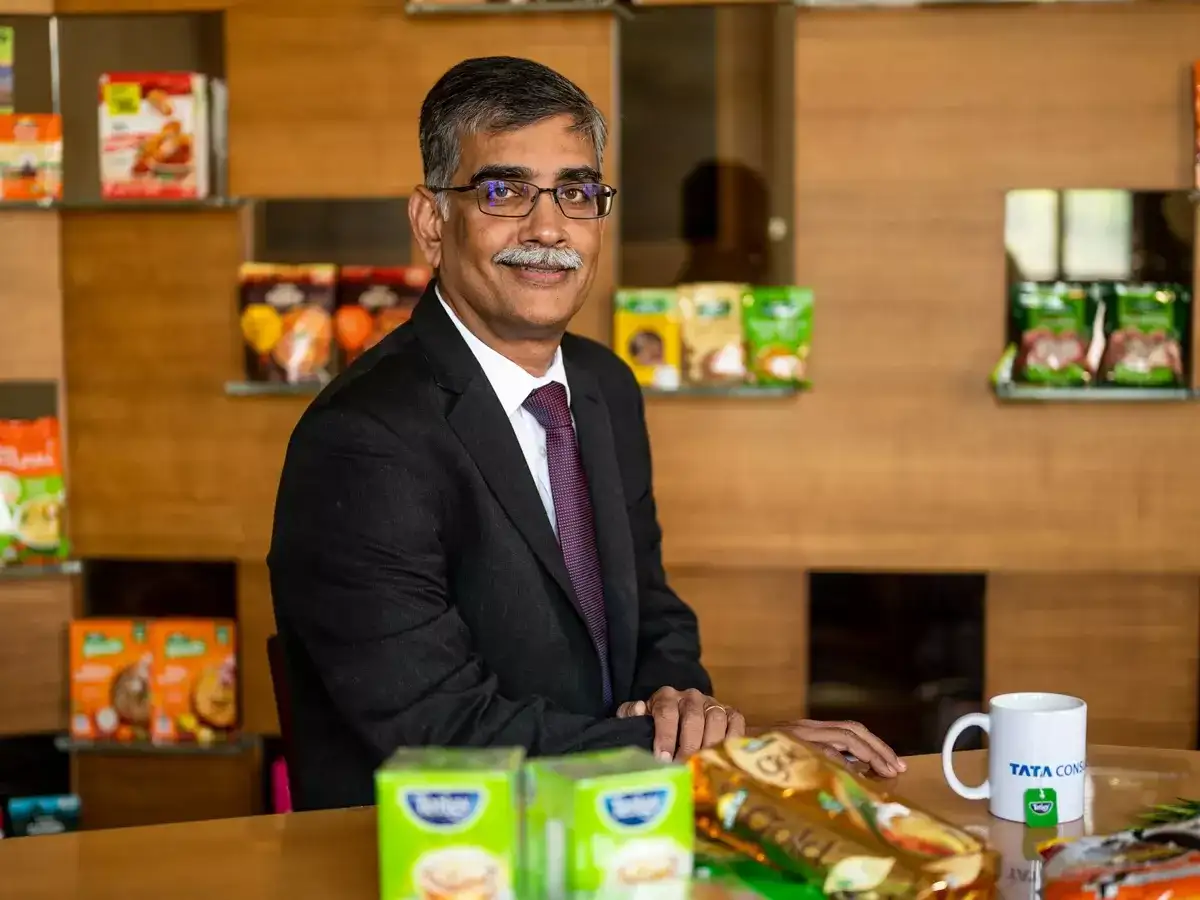
Mumbai: Tata Consumer Products Ltd (TCPL) expects to maintain double-digit revenue growth in FY27, driven by healthy consumer demand, strong volume-led expansion and continued momentum from its fast-growing food and beverage businesses, MD & CEO Sunil D'Souza said.
The Tata Group FMCG major, which reported a 12 per cent rise in revenue, 19 per cent growth in EBITDA and a 29 per cent increase in net profit in the June quarter, also said it may take 'calibrated price' hikes across select categories if elevated commodity, packaging and energy costs persist.

"We expect consumption demand to remain healthy. The better part of the growth is that it is volume-led across categories, which indicates underlying consumer demand," D'Souza told PTI in an interview.
Also Read: Tata Consumer preps F&B push for post-weight-loss needs
According to him, the recent recovery in consumer demand has been aided by measures such as income tax relief, GST recalibration and continued government capital expenditure.
"The whole trend for the FMCG space is very heartening because almost all FMCG majors are showing good topline growth and it is volume-driven topline growth, which means base consumption increase," he said.
D'Souza said TCPL's performance mirrors the broader recovery in the FMCG sector, with volume growth recorded across all major categories.
"Price-driven growth is temporary, volume-driven growth is fundamental growth," he said, noting that the tea and packaged beverages business posted 2 per cent volume growth even as revenue declined 4 per cent due to lower tea prices being passed on to consumers.
The company remains confident of sustaining double-digit topline growth while improving profitability through premiumisation, innovation and scale benefits.
"We have an engine which can consistently deliver double-digit growth and deliver EBITDA margins ahead of topline," D'Souza said.
TCPL's growth businesses -- comprising Tata Sampann, Capital Foods, Organic India, Soulfull and ready-to-drink beverages -- grew around 47 per cent in the June quarter and now contribute nearly 30 per cent of the India business.
"We have been over-delivering on that for at least two or three quarters. We should continue at this pace for some time to come and in the next three to four years, you could see this going to about 45 per cent or so," he said.
The company expects these faster-growing businesses to continue benefiting from consumer trends such as health and wellness, convenience and digital commerce.
On commodity inflation, D'Souza said TCPL has so far avoided broad-based price increases despite pressure from higher tea, coffee, edible oil, packaging and fuel costs.
Last quarter, higher packaging and fuel costs alone had an impact of around 50 basis points on the business, he noted.
Also Read: Tata Consumer Products to pass higher input costs to buyers
"We have not taken up pricing because we don't know how long this will last. But if it lasts long enough, we will have to take pricing to calibrate," he said, referring to elevated petroleum-linked inflation and its impact on packaging and logistics costs.
When asked about the pricing actions, he said, it would vary across categories depending on input costs and market conditions. For salt, TCPL has already increased prices by Rs 2 per pack, taking the price from Rs 30 to Rs 32, largely due to higher imported coal costs, energy expenses and currency fluctuations.
In tea, the company has also begun taking selective price hikes as tea prices have risen 7-10 per cent in recent months.
"Depending on the category, it might be zero in some cases, while in others it could be around 4-6 per cent," D'Souza said.
He emphasised that the company's pricing strategy is aimed at preserving profitability without placing undue burden on consumers.
"As costs go up, I keep calibrating it, making sure that I am not taking advantage of the consumer, but I am not short-changing them either," he said.
On competition from regional and local brands, D'Souza said such competition is a reality across most FMCG categories, but TCPL's strategy is to remain competitive on pricing while differentiating through product quality and distribution reach.
According to him, the company continuously calibrates prices to ensure that its branded offerings remain competitive against local players. In tea, for example, TCPL passes on the benefits of lower commodity prices to consumers to protect market share while maintaining its targeted margin band.
Referring to Tata Sampann, he said the company's growth strategy is centred on gaining share from regional players through better quality, stronger consumer propositions and wider availability.
"To grow Sampann aggressively, we have got to take share from the locals. But to do that, we have got to make sure our product is superior, we have got a better proposition for the consumer and our availability is at scale," D'Souza added.
Looking ahead, D'Souza identified persistently high petroleum prices as the biggest risk to the ongoing recovery in consumer demand.
"The only spoiler on the horizon is if petroleum prices remain at elevated levels and we are not able to offset them. Otherwise, we do see growth continuing in the market," he said.