Get all your news in one place.
100's of premium titles.
One app.
Start reading
The Times of India
The Times of India
World
TOI World Desk

Tasmanian devils lived in Australia’s Pilbara for years before disappearing from the mainland

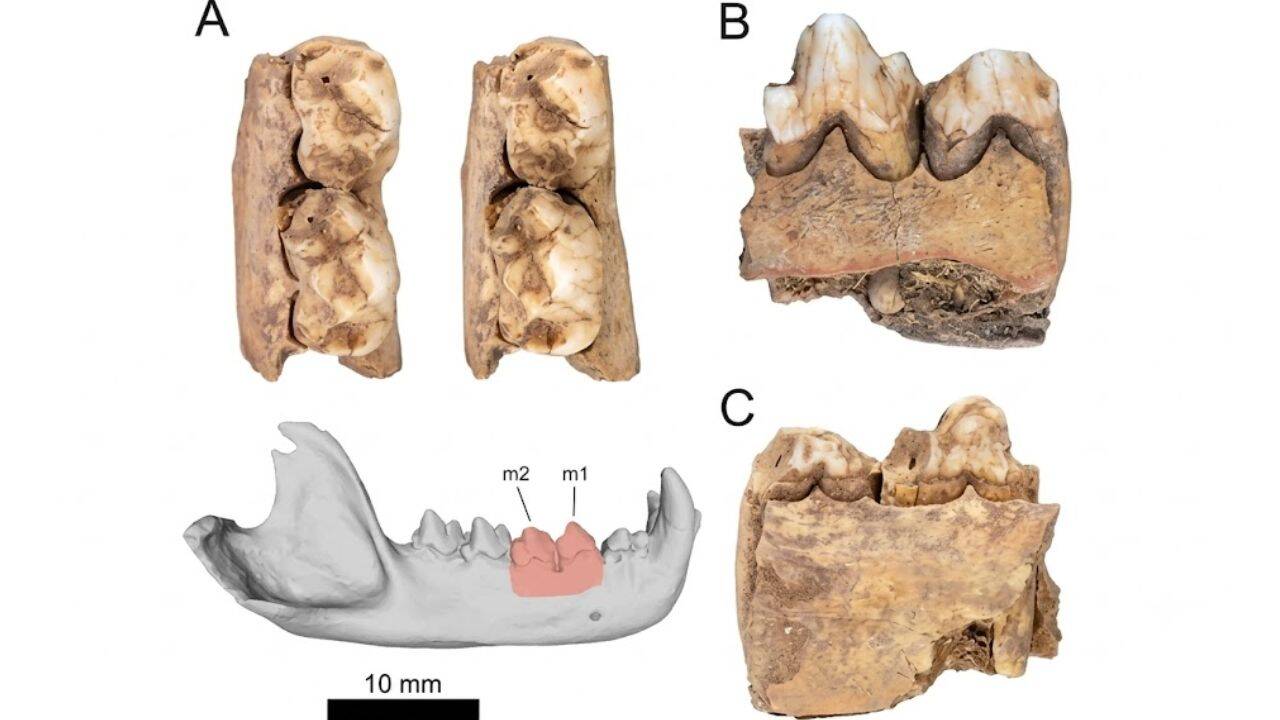
Archaeologists found the first clear evidence that Tasmanian devils once lived in the Pilbara region of northwestern Australia. The evidence comes from Juukan Gorge on Puutu Kunti Kurrama Country, where excavations recovered two diagnostic devil specimens from different periods. One is a right dentary fragment with the first and second lower molars from Holocene sediments.

Get breaking news anytime, anywhere. Download the TOI app now!

The other is an incomplete lower premolar from Late Pleistocene sediments. According to research published by the University of New South Wales (UNSW Sydney) in Archaeology in Oceania titled ‘ First Record of Tasmanian Devils in the Pilbara: Late Quaternary Subfossils From Juukan Gorge, Puutu Kunti Kurrama Country, and Insights Into Human-Faunal Relationships and Extinction ’, show that Tasmanian devils occupied arid inland Australia.

What do the fossil teeth reveal about Tasmanian devils at Juukan Gorge

The study identifies the Juukan Gorge remains as Tasmanian devils based on diagnostic dental features. The dentary fragment preserves the first and second lower molars. Its robust molars, reduced metaconids, slight posterior cingulids, well-developed dental structures, and buccally positioned hypoconids distinguish it from thylacines and quolls. The second specimen is a fragment of a lower first or second premolar. Its robust, low-crowned form resembles that of Sarcophilus, while the tooth crown is positioned buccally, away from the long axis of the dentary. A small enamel protuberance also resembles the buccal cingulid found in Sarcophilus. The researchers note that the premolar identification is tentative because enamel flaking obscures its complete condition and creates a size discrepancy.

What do the two Juukan Gorge specimens reveal about their age

The two specimens come from different layers at the Juukan 2 rock shelter. The dentary was recovered from Holocene sediments and is associated with charcoal. The premolar came from Late Pleistocene sediments and was dated using optically stimulated luminescence. Reportedly, two samples placed the specimen’s age at more than 42,000 and 47,000 years ago.

The researchers say the oldest specimen provides evidence of Tasmanian devils in the Pilbara before the Last Glacial Maximum, while the younger dentary confirms their presence during the Holocene. Direct dating of the specimens was not considered appropriate because of cultural sensitivities surrounding destructive sampling methods. The researchers found minimal signs of bioturbation or major post-depositional disturbance nearby.

Chewed and digested bones show long interaction between devils and humans

The researchers examined bones showing marks linked to devil activity. Chewed bones were assessed for tooth-mark pits and scores, while digested bones were identified through surface pitting or polish. The study reports numerous devil-derived traces throughout the archaeological sequence, including chewed and digested bone fragments. These traces indicate sustained interaction between humans and devils over at least 45,000 years.

The consistent occurrence of bones modified by devil scavenging of human butchery waste indicates that the animals relied, at least partly, on resources produced by people from the time humans arrived in the Pilbara. The findings point to an ecological association between the two groups at Juukan Gorge.

Factors that led to the extinction of Tasmanian devils

The findings also address the disappearance of Tasmanian devils from mainland Australia. The study places their mainland extinction at about 3,200 years ago, with the best estimate at 3,179-3,227 years ago. The researchers note that the cause of the mainland extinction remains under debate. One prevailing hypothesis links the disappearance of devils and thylacines to the arrival of dingoes about 4,000 years ago, either through direct predation or competition for niche space. Other proposed explanations include changes in human hunting technology, increased resource use, and climate instability, as well as combinations of these factors.

Sign up to read this article
Read news from 100's of titles, curated specifically for you.
Already a member? Sign in here
Related Stories
Top stories on inkl right now
One subscription that gives you access to news from hundreds of sites
Already a member? Sign in here
Our Picks
Fourteen days free
Download the app
One app. One membership.
100+ trusted global sources.