Get all your news in one place.
100’s of premium titles.
One app.
Start reading
Reason
Reason
Jacob R. Swartz

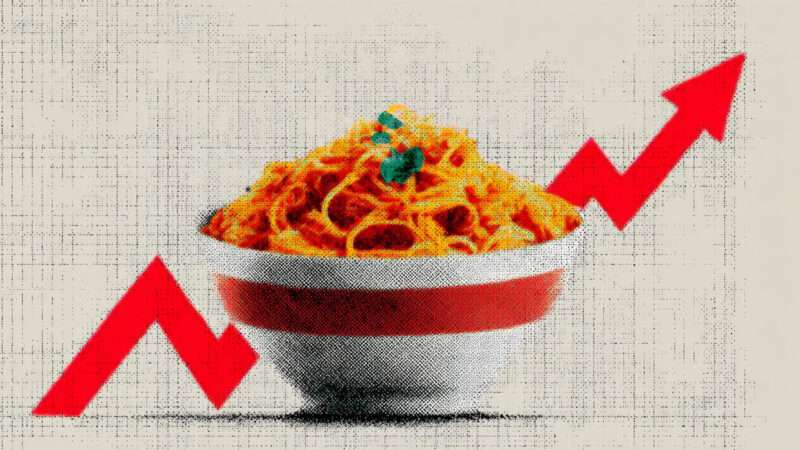
Tariffs Near 107 Percent Threaten to Pull Italian Pasta Brands From American Shelves

Italian pasta makers are warning that some of their products may soon disappear from U.S. grocery stores if a Commerce Department plan to raise tariffs on these goods goes into effect.

In a ruling published this September, the Commerce Department said several Italian pasta manufacturers—including La Molisana and Garofalo—sold pasta in the U.S. at "less than fair value" from July 2023 to June 2024. The decision stems from a petition filed by U.S. pasta manufacturers last year, which triggered an administrative review under U.S. antidumping law. As a result, the agency has proposed implementing antidumping duties of 91.74 percent on some of Italy's largest pasta exporters. Those duties would come in addition to an existing 15 percent tariff on most European Union goods, leaving the affected producers to face total tariff rates of 107 percent if the preliminary determination is finalized. A decision is expected early next year. 
Several companies have already told The Wall Street Journal they are preparing to pull their products from U.S. shelves if the duties are finalized, which would provide a significant blow to one of America's closest allies. In 2023, the U.S. was the second-largest importer of Italian pasta, trailing only Germany, according to the Observatory of Economic Complexity. 

And, as with most of the protectionist trade policies implemented under the Trump administration, this one will not only hurt businesses but also leave consumers worse off.

While most pasta sold in the United States is produced domestically, including by Italian-owned companies like Barilla, which manufactures much of its U.S.-sold pasta in Iowa and New York, American consumers and restaurants still readily enjoy premium foreign-made pasta. The Washington Post reports that Italy exported roughly $780 million in pasta to the U.S. last year. For specialty brands marketed specifically as "Made in Italy," absorbing a near-100 percent tariff is not financially viable without passing the cost directly to consumers. With most distributors and retailers typically setting prices months in advance, consumers may not see any changes until current stock cycles through, but a cost increase is still likely to occur.

The ruling also runs contrary to one of President Donald Trump's campaign promises to make groceries more affordable. Grocery-store food prices have nonetheless continued to rise, with the "food-at-home" CPI sector having jumped 0.6 percent in August alone, according to Axios. While this trend is yearslong and Trump isn't solely to blame, the president's plan to address these prices by cracking down on meat producers or taxing imported food won't do anything to solve the problem.

The Italian government has publicly criticized the U.S. decision. Italy's foreign ministry said in a statement that it was working with the European Commission to contest the proposed duties. E.U. officials have similarly said they are evaluating possible responses if the U.S. moves ahead with the tariff increases. 

For now, the tariff is not final. The Commerce Department is accepting comments and will conduct additional review before issuing a final determination, which could adjust the duty rate or leave it unchanged. However, any formal challenge would likely take months, and the tariffs could still be imposed while legal disputes play out. In the meantime, foodies and American restaurants will pay the price. 

The post Tariffs Near 107 Percent Threaten to Pull Italian Pasta Brands From American Shelves appeared first on Reason.com.

Sign up to read this article
Read news from 100’s of titles, curated specifically for you.
Already a member? Sign in here
Related Stories
Top stories on inkl right now
Our Picks
Fourteen days free
Download the app
One app. One membership.
100+ trusted global sources.