
Get all your news in one place.
100's of premium titles.
One app.
Start reading
Tom’s Hardware
Tom’s Hardware
Technology
Zak Killian

Taiwan raids 12 locations in its first formal crackdown on Nvidia AI chip smuggling — hunts three fugitives for document forgery, fraudulent declarations in Super Micro smuggling case

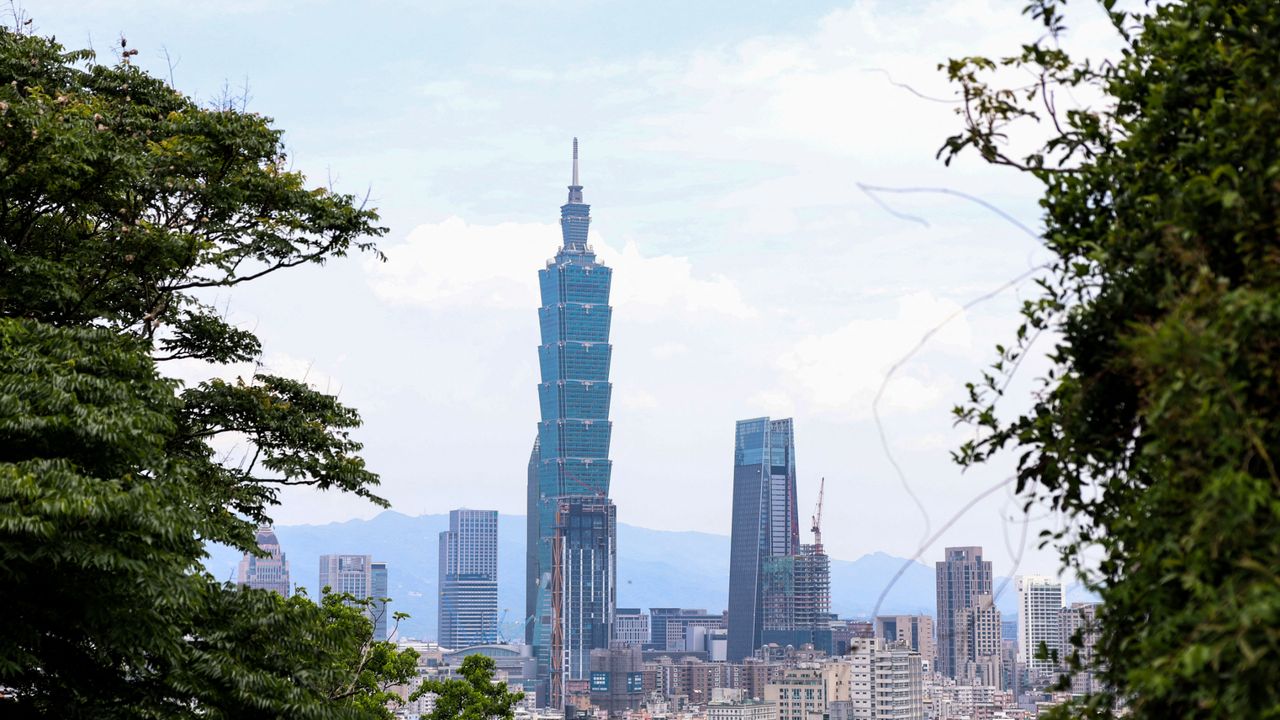
Taipei 101.

On Wednesday, the Taiwan Keelung District Prosecutors' Office executed search warrants across 12 locations and is now seeking to detain three individuals in the island’s first formal crackdown on illicit AI semiconductor exports to China. According to a fresh report from Bloomberg, the trio is accused of forging shipping documents to sneak AI servers manufactured by US-based Super Micro Computer Inc. (Supermicro) into China, Hong Kong, and Macau, in direct violation of Washington’s trade restrictions. While the scale of this specific bust is relatively small, purportedly involving around 50 servers, the political and economic implications are far more significant.

If the name Supermicro sounds familiar in the context of chip smuggling, that’s because the company is currently sitting at the center of the largest tech-evasion case in U.S. history. Just months ago, the U.S. Department of Justice indicted Supermicro co-founder and Senior VP Wally Liaw for orchestrating a breathtaking $2.5 billion smuggling ring that reportedly used front companies in Thailand to route restricted NVIDIA hardware to Chinese tech giants like Alibaba.

Go deeper with TH Premium: AI and data centers

(Image credit: Microsoft)

Though Taiwanese prosecutors claim this new 50-server case was initiated independently of the U.S. investigation, it targets the exact same vulnerability. Smugglers have long used Taiwan as a transit hub, banking on the hope that local compliance teams look the other way. The fact that Taipei is now using local forgery and fraud laws to lock people up signals a major policy shift under President Lai Ching-te, who is under immense pressure from Washington to secure the global AI supply chain.

For those tracking this story closely, Taiwan's sudden aggression isn't really a surprise. Reports of underground hardware in China include thriving repair shops working on illicit Nvidia GPUs and firms stripping restricted NVIDIA silicon off dead boards to build custom "Franken-cards," show chip smuggling is a significant issue.

Yesterday's raids in Taiwan suggest the government is finally taking a harsher stance on the issue. The timing of the Taiwan crackdown is pretty ironic, though; just this week, NVIDIA dropped its Q1 Fiscal 2027 financial results, and the numbers show that the company essentially has a license to print money, regardless of what happens on the black market.

Nvidia pulled in a staggering $81.6 billion in total revenue, an 85% increase year-over-year, with a mind-melting $75.2 billion of that coming strictly from its Data Center division. Driven by insatiable demand for its Blackwell architecture GPUs, Nvidia's growth has gone entirely parabolic. The most critical piece of data for the smuggling narrative was buried in Nvidia's forward guidance, though; management explicitly stated that the company is assuming zero data center compute revenue from China moving forward.

The analysis here is simple: Nvidia has successfully decoupled its legal financial future from China. Nvidia doesn't need the market, and some would argue it doesn't need the regulatory headache. For the black market, the walls are closing in fast. When chip smuggling was just a U.S. DOJ priority, enforcement was limited by geography. Now that key manufacturing and transit hubs like Taiwan and Singapore are actively hunting down middlemen using local criminal fraud laws, the supply chain is fracturing. Getting banned Hopper or Blackwell chips into mainland data centers just became exponentially more fraught.

Sign up to read this article
Read news from 100's of titles, curated specifically for you.
Already a member? Sign in here
Related Stories
Top stories on inkl right now
One subscription that gives you access to news from hundreds of sites
Already a member? Sign in here
Our Picks
Fourteen days free
Download the app
One app. One membership.
100+ trusted global sources.