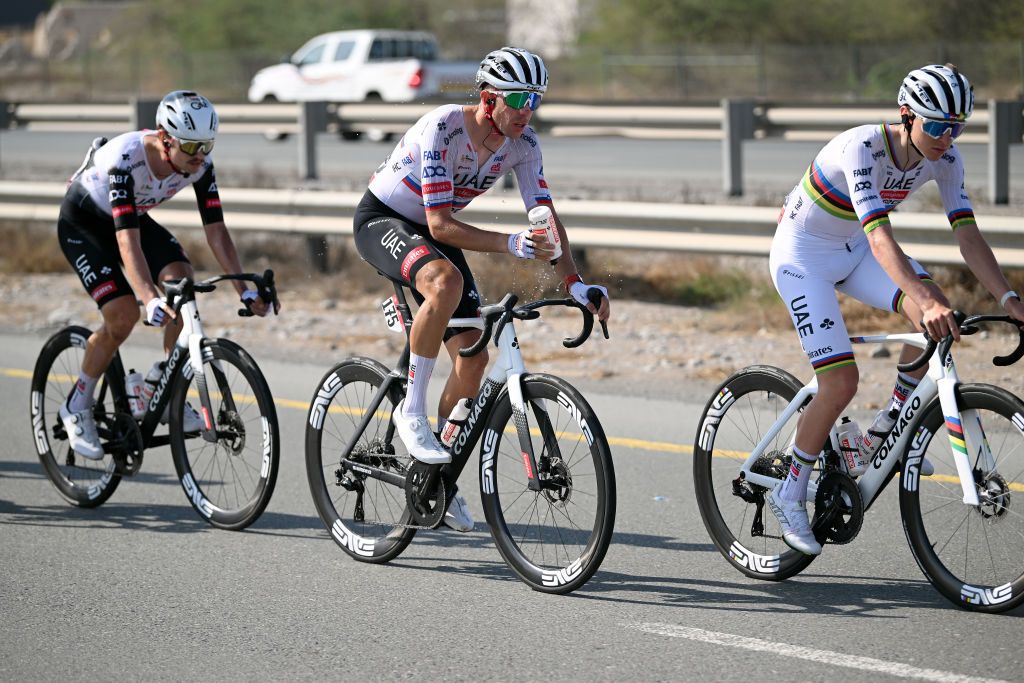
When Tadej Pogačar burst onto the scene as a 20-year-old in his first professional season in 2019 and finished on the podium of the Vuelta a España, it was a landmark moment in the youth revolution that was only just beginning to sweep the sport.
Seven years on, and Paul Seixas is almost making it look like the Slovenian was slow off the mark, such has been the impact made by the sport's latest teenage sensation so far this season.

Seixas, now in his second pro season with Decathlon CMA CGM and still only 19, has won two races already and was best of the rest behind Pogačar at last weekend's Strade Bianche.
Excitement surrounding a possible challenger to Pogačar's dominance of the sport, and a potential first French Tour de France winner in 40 years, has begun to near fever pitch.
Domen Novak, perhaps Pogačar's most trusted domestique, has drawn comparisons between Seixas and the rider Pogačar was at the same age.
"The guy is really very good. Everyone compares him to Tadej; they want to put him next to him, and considering his age, he is even better than Tadej was," Novak said in an interview with Slovenian newspaper Siol this week.
"But you need to know something else. As far as I know Tadej, he didn't do any altitude training in those years; he was racing for the Gusto Ljubljana team. I can say that he won his first Tour while eating pizza, drinking beer and playing PlayStation."
Pogačar was indeed racing for the third-tier Slovenian team in 2018, before making his stunning 2019 season debut and going on to win the Tour de France in 2020, the first of four yellow jerseys he has on the wall.
The comparison is that not only Seixas but indeed most young hopefuls these days are already living highly professionalised cycling lifestyles before they've even turned 20.
Seixas himself revealed he went two months without seeing his parents or girlfriend due to a long pre-season altitude camp earlier this year, talking of the 'sacrifices' required for performance.
For Novak, there's a clear difference even with Pogačar – who was considered precocious at the time – and a real danger of burnout.
"All these young guys coming in are already very polished. They've all been at altitude training for a month and haven't been home for that long," he added.
"It's all very professional, which is great on the one hand, but on the other hand. I'm worried about how long it will take them mentally. I think these guys are already so 'wound up' at 19 or 20 that I don't know if they'll be able to race until they're 30."