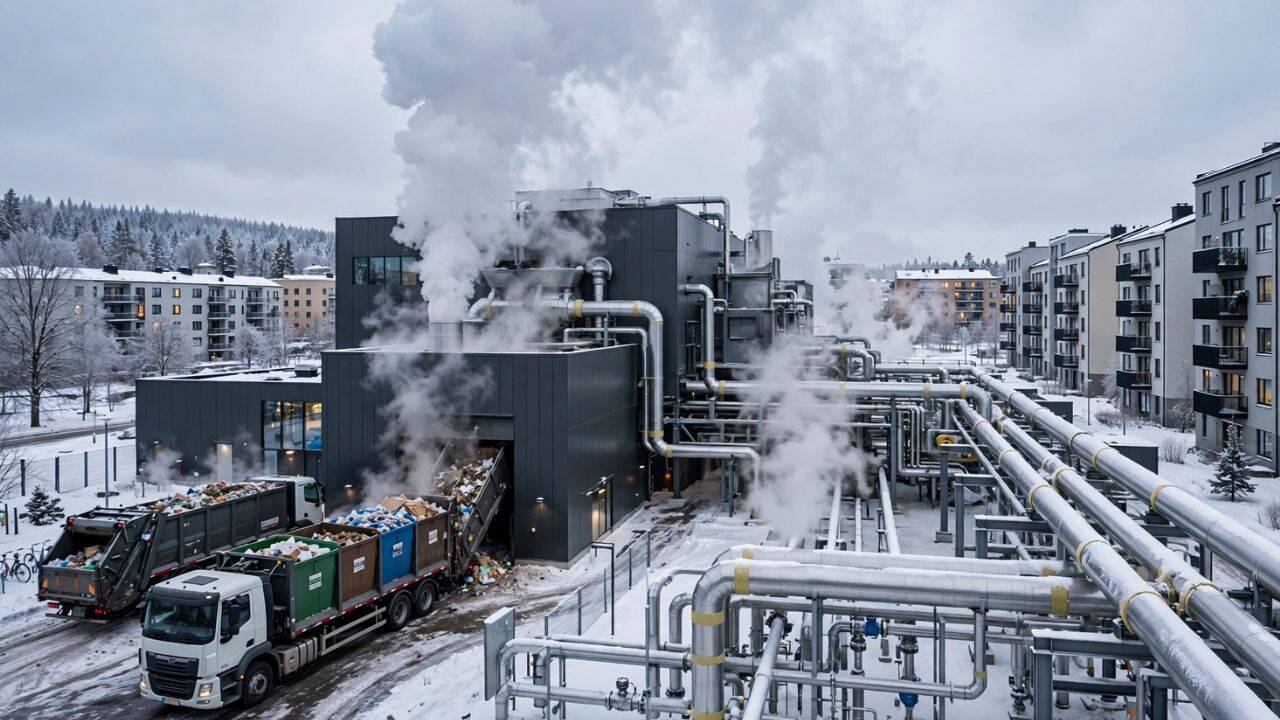
Sweden processed 2.5 million tonnes of sorted waste imported from other European countries in 2024. The country’s waste-to-energy plants have more capacity than the amount of combustible waste generated within Sweden, which allows them to accept waste from abroad. Avfall Sverige’s Swedish Waste Management 2024 report states that 1.2 million tonnes of the imported waste were municipal waste. The imported material provided fuel for energy recovery while helping other European countries deal with their waste. Swedish energy recovery plants handled 6.6 million tonnes of waste during the year and generated about 20 terawatt-hours of energy. This included 17.6 TWh used for heating and 2.4 TWh for electricity.
Get breaking news anytime, anywhere. Download the TOI app now!

Why did Sweden import 2.5 million tonnes of waste in 2024 from Europe
Sweden has more energy recovery capacity than the amount of combustible waste generated domestically, allowing its plants to accept waste from other European countries. In 2024, Swedish facilities treated 2.5 million tonnes of sorted European waste, including 1.2 million tonnes of municipal waste. The imported waste became part of the fuel used by these energy recovery plants. Avfall Sverige also notes that accepting waste from abroad can help exporting countries manage waste that might otherwise require other forms of treatment. The report places this practice within Europe’s wider move away from landfill, as countries look for alternative ways to treat waste and recover value from discarded materials.
How Sweden turned 6.6 million tonnes of waste into energy
Energy recovery was used to treat waste that should not be handled through other methods. Swedish plants received 6.6 million tonnes of waste for energy recovery in 2024. Household waste made up 1.9 million tonnes, or 28% of the total, while waste from companies and industries accounted for the remaining 72%. These plants recovered around 20 terawatt-hours of energy from the waste. Heating received the largest share at 17.6 TWh, while 2.4 TWh was converted into electricity. Five plants also reported supplying 0.1 TWh of district cooling. The report describes energy recovery as a hygienic and sound way to treat waste that cannot be handled through other methods.
Waste-to-energy plants helped power more than 940,000 Swedish apartments
Waste energy recovery made a significant contribution to Sweden’s heating and electricity supply in 2024. The energy recovered from waste was enough to heat more than 1,470,000 apartments and provide electricity for over 940,000 apartments. Swedish plants recovered around 3.0 megawatt-hours of energy per tonne of waste, placing the country among Europe’s leading waste-to-energy performers by energy recovery per tonne. Heating accounted for the largest share at 17.6 terawatt-hours, while electricity generation produced 2.4 TWh. Together, the two forms of energy counted about 20 TWh.
How Sweden manages slag and ash left after waste incineration
Energy recovery does not remove all material from the waste. Incineration leaves behind residues such as slag, bottom ash and flue gas treatment residues. In 2024, slag and bottom ash totalled 914,820 tonnes, while flue gas treatment residues reached 299,650 tonnes. Slag contains non-combustible materials including glass, porcelain, iron scrap and gravel. Once metals are separated, the remaining material can be processed into granulated slag. According to the report, this material is largely used as a construction material at landfill sites. Using granulated slag in place of natural sand and gravel could also reduce the need to extract these finite resources for uses where they are still required.