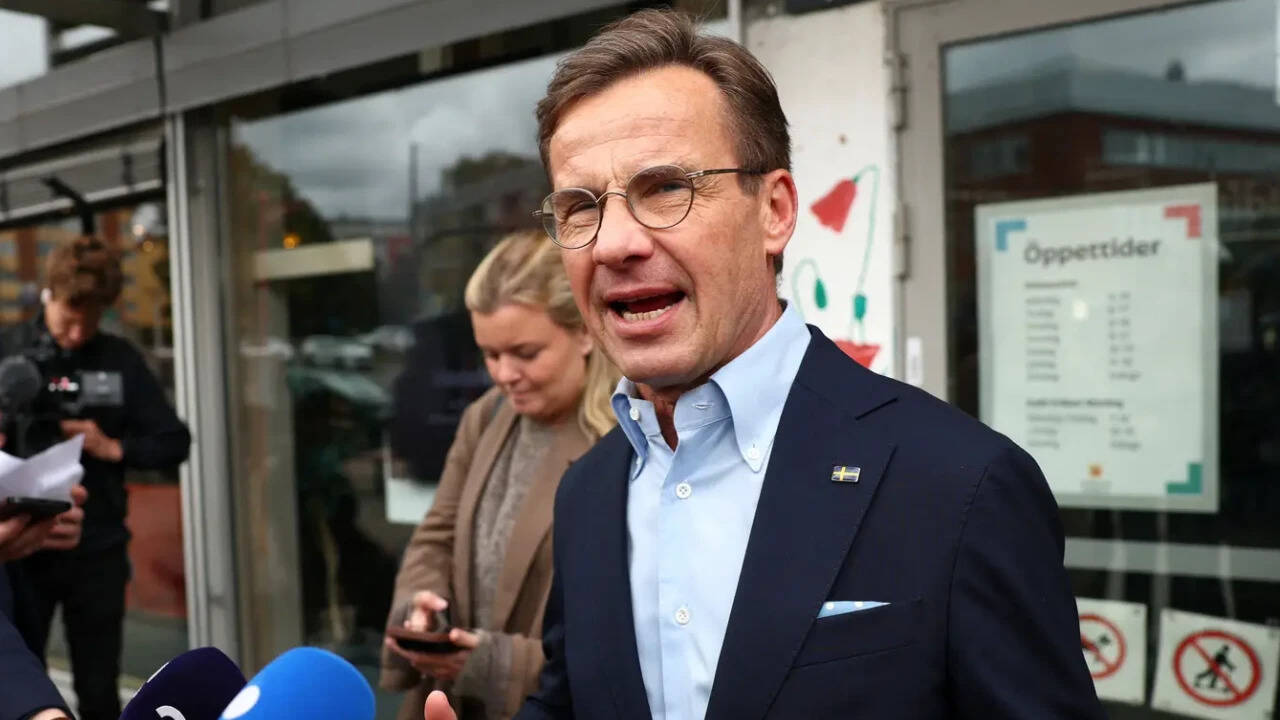
Swedish prime minister Ulf Kristersson announced his resignation on Thursday, after his centre-left opponents won a narrow majority in the general election, defeating the governing right-wing bloc by just 26,169 votes.
Get breaking news anytime, anywhere. Download the TOI app now!
The final count gave the four opposition parties 176 seats in the 349-member Riksdag, while the four parties that make up or support Kristersson's governing bloc secured 173 seats. The result was confirmed after late-arriving ballots, including votes from overseas, were included in the count.
"Now it is the speaker who will lead the next stage of the way to a new government. I am herewith requesting that I be relieved of the office of prime minister to allow that work to start immediately," Kristersson said in a letter posted on social media platform X.
Social Democratic party leader Magdalena Andersson is expected to seek a return as prime minister after four years in opposition. Her party emerged as the largest single party in the election, while the wider centre-left bloc secured enough seats to command a majority in the 349-member Riksdag.
The Social Democrats, however, will have to navigate differences among the centre-left parties before a government can be formed. The four-party opposition majority is narrow, and the next administration will need to secure sufficient parliamentary support for its legislative programme.
Kristersson, leader of the Moderates, had governed through a three-party centre-right coalition, relying on parliamentary support from the Sweden Democrats.
Reuters reported before the election that Kristersson had said he was prepared to include the Sweden Democrats in the cabinet if his bloc retained power.
The election was held on September 13, with the preliminary count beginning after polling stations closed. The Swedish Election Authority said the final count involves further checks of ballots and the formal allocation of seats.