Get all your news in one place.
100's of premium titles.
One app.
Start reading
Roll Call
Roll Call
Michael Macagnone

Supreme Court sides with Monsanto over cancer warning

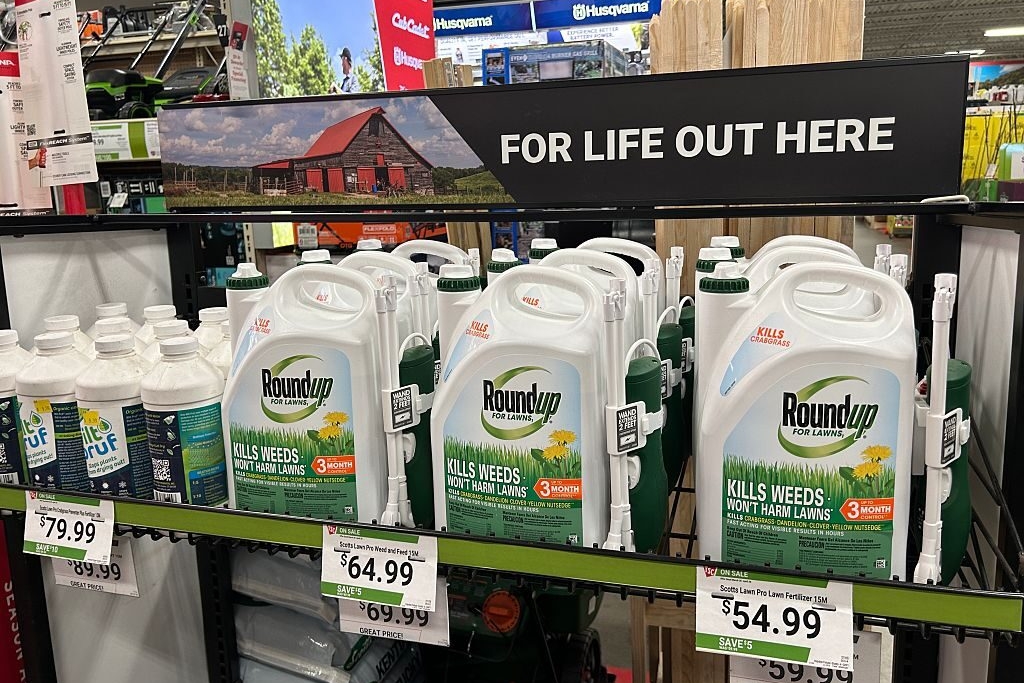
The Supreme Court blocked thousands of state lawsuits against leading pesticide maker Monsanto over the ingredients in the popular weed killer Roundup, in a decision Thursday that potentially sends the tussle to Congress.

The 7-2 opinion held federal law governing pesticide labels overrides state law claims about a label failing to warn about the alleged cancer dangers of the pesticide.

In the majority opinion, Justice Brett M. Kavanaugh wrote that the Federal Insecticide, Fungicide, and Rodenticide Act, first passed in 1947, gives the Environmental Protection Agency full control over the content of pesticide labels.

Because the EPA approved a Roundup label that did not include a cancer warning, Kavanaugh wrote, Monsanto could not be sued for failing to include a cancer warning.

“In sum, federal law requires Monsanto to sell Roundup with the label that EPA approved at the initial registration and that EPA has subsequently re-approved on multiple occasions — that is, the label without a cancer warning,” Kavanaugh wrote.

The decision reversed a Missouri state court win in favor of the original challenger, John Durnell, who successfully sued Monsanto and parent company Bayer for more than $1 million. The ruling also effectively nixes thousands of state law claims against the pesticide manufacturer, as the majority wrote that Congress intended to have uniformity in labeling for those products.

Justice Clarence Thomas wrote separately in support of the overall decision but said that the underlying law may have exceeded Congress’ power to regulate commerce between states.

Justice Ketanji Brown Jackson, in a dissent joined by Justice Neil M. Gorsuch, argued that the majority ignored that Congress intended to require pesticide makers label all relevant dangers of a product, not solely the label approved by the EPA.

Jackson wrote that a provision preventing “misbranding” in the statute, mentioned separately from the EPA process, showed that “even though the EPA approved Roundup’s label, that label could still lack a necessary warning.”

She pointed out that in the past the EPA has found that its own prior approved label for Roundup didn’t meet the law’s standards and imposed fines on Monsanto for mislabeling its product by not adequately warning about a leak risk.

The Supreme Court decision likely tees up future legislative wrangling on Capitol Hill. Disputes over the lawsuit shield have complicated the passage of the current farm bill. The latest House-passed version of the bill included an amendment that stripped language requiring national “uniformity” in pesticide labeling and prohibiting state or local labelling requirements.

Rep. Anna Paulina Luna, R-Fla., the original sponsor of the amendment, warned the Senate in May not to reinstate those provisions, saying on social media that, “If this comes back with those protections included, we have the votes to kill it.”

After the Supreme Court decision, Luna posted on social media that she would introduce legislation “stripping pesticide companies of any liability protections for the harm their products cause the American people.”

“These companies purposefully omit labeling information knowing their products cause cancer and other health problems,” Luna posted. “It is time they are held accountable. Enough is enough.”

Sen. John Boozman, R-Ark., unveiled a Senate version of the bill earlier this week which did not include pesticide labeling provisions.

The case is Monsanto Co. v. Durnell.

Sign up to read this article
Read news from 100's of titles, curated specifically for you.
Already a member? Sign in here
Related Stories
Top stories on inkl right now
One subscription that gives you access to news from hundreds of sites
Already a member? Sign in here
Our Picks
Fourteen days free
Download the app
One app. One membership.
100+ trusted global sources.