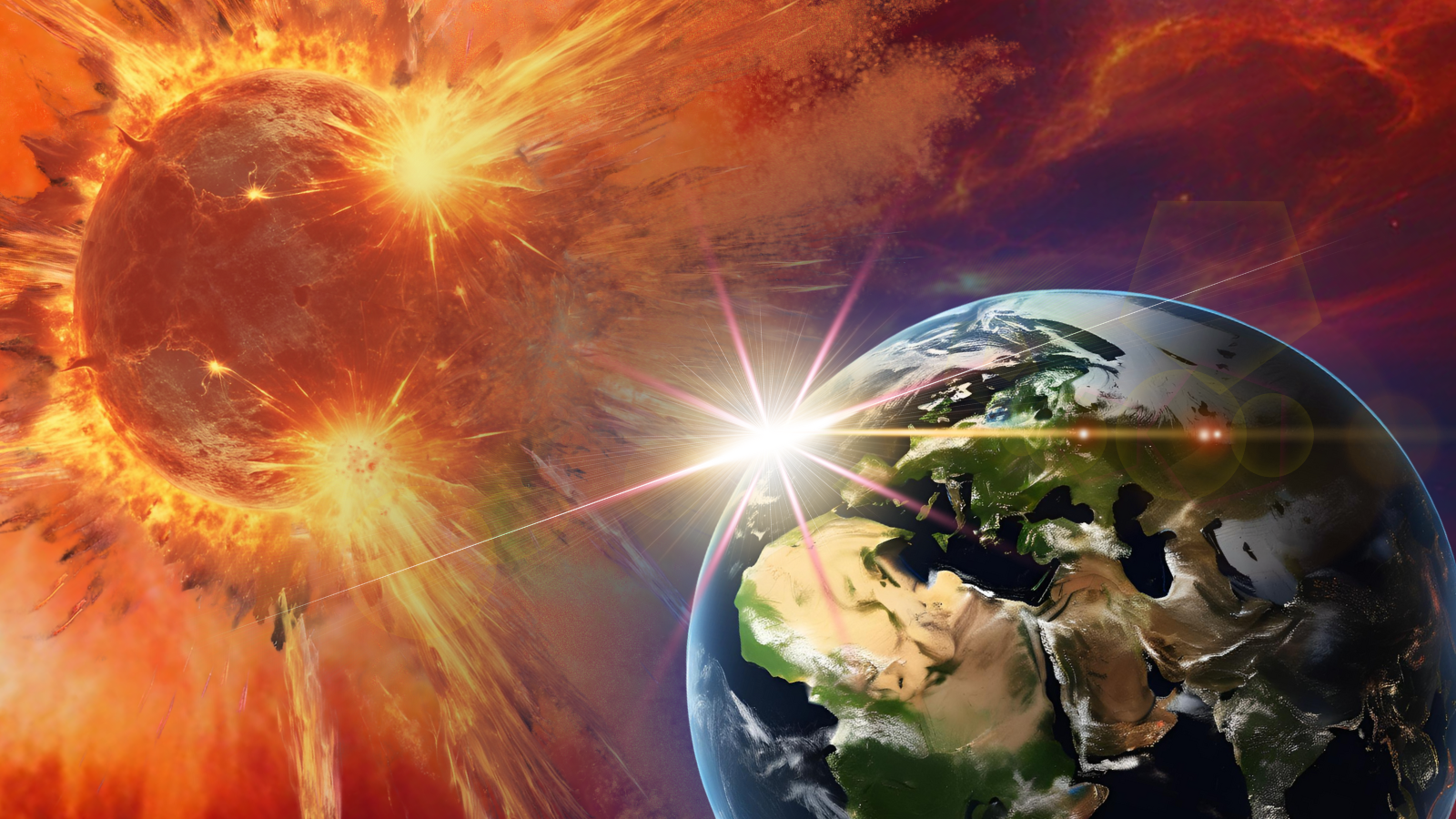
New research suggests that the explosive death throes of massive stars, known as supernovas, may have had dramatic effects on our planet's climate over its distant history. Investigating historic incidents of these events could help scientists predict similar events in the future and prepare for them.
Supernovas occur when stars that are much more massive than the sun reach the end of their nuclear fuel supplies and can no longer support themselves against their own gravity. The complete gravitational collapse that results creates either a neutron star or a black hole, and also sends out a blast of energy and high-speed particles that can traverse star systems and entire galaxies in some cases.
It's estimated that if a supernova erupted within around 30 light-years of our planet, our atmosphere would be violently ripped away, and all life on Earth would perish. Thus, it stands to reason that if a massive star erupted within hundreds of light-years of Earth, this cosmic blast may not be fatal, but could result in extreme changes to our atmosphere, astronomers say.