
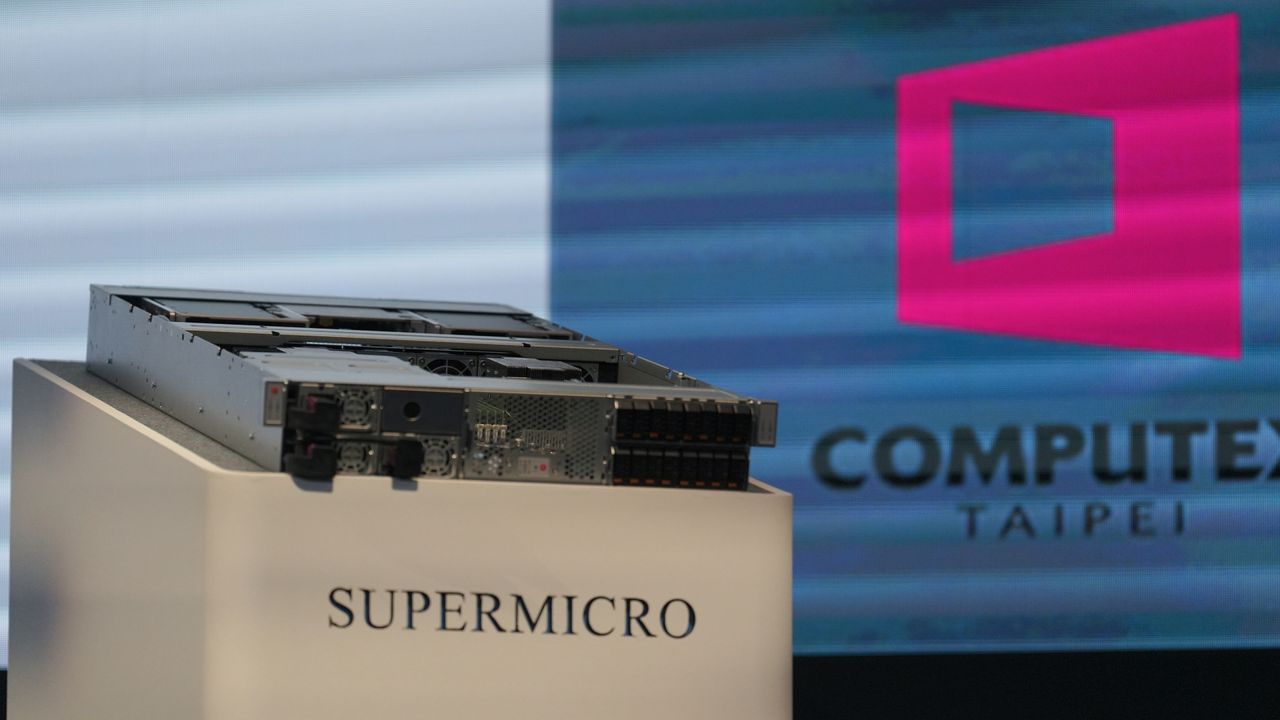
A day after Taiwanese authorities seized 50 Supermicro servers and arrested three people on suspicion of smuggling them into China, Supermicro has clarified that it "worked closely" with law enforcement in Taiwan leading up to the arrests and that it will continue to do so.
This comes days after Nvidia CEO Jensen Huang called on Supermicro to "improve regulation compliance," and months after Supermicro co-founder Yih-Shyan "Wally" Liaw was charged by U.S. prosecutors for allegedly smuggling $2.5 billion worth of servers into China.
Go deeper with TH Premium: AI and data centers
- Photonics and high-speed data movement is the next big AI bottleneck
- The data center cooling state of play
- Massive AI data center buildouts are squeezing energy supplies
- Ultra Ethernet: The data center interconnection of tomorrow
Here is the statement in full:
"Supermicro is committed to protecting our advanced technologies and intellectual property, and we are proud to have worked closely with Taiwanese authorities on the recent event, helping to prevent the illicit diversion of our highly sought-after systems into the restricted China market. Our collaboration with authorities in Taiwan resulted in the arrest of three suspects and the seizure of 50 servers that had been deceptively acquired after being sold by Supermicro to an authorized reseller. We thank local law enforcement and legal officials for their vigilance and professionalism.
The initial transaction – Supermicro's sale of products to an authorized reseller – followed a rigorous vetting and review process that exceeded applicable government requirements. This case highlights the challenges that can arise when products are resold through multiple downstream parties beyond direct manufacturer control. It also underscores the importance of continued collaboration across industry and government to strengthen safeguards, enhance supply chain visibility, and facilitate the enforcement of export control laws. Supermicro will continue to cooperate with law enforcement and government officials in the United States, Taiwan and other jurisdictions to ensure our technology is distributed as lawfully intended."
The smuggling operation that led to arrests reportedly routed servers coming from Taiwan through Japan. Supermicro itself claims that the servers were sold to an authorized reseller, presumably in an attempt to wash its hands of any accusations that the company was directly involved.
Although three Supermicro employees have been charged by U.S. officials in connection to an earlier smuggling operation, neither Supermicro nor Nvidia have been charged. Despite this, Supermicro's stock plummeted nearly 30% after news of U.S. charges broke.
The U.S. government, and presumably Taiwanese authorities, have been cracking down on server smuggling to China over the past several months. In March, the Trump Administration proposed a strict licensing system for advanced AI hardware exports, and some U.S. senators have called on a wholesale ban on export licenses for Nvidia hardware to China, as well as several other south-east Asian countries including Malaysia, Thailand, and Vietnam.


