
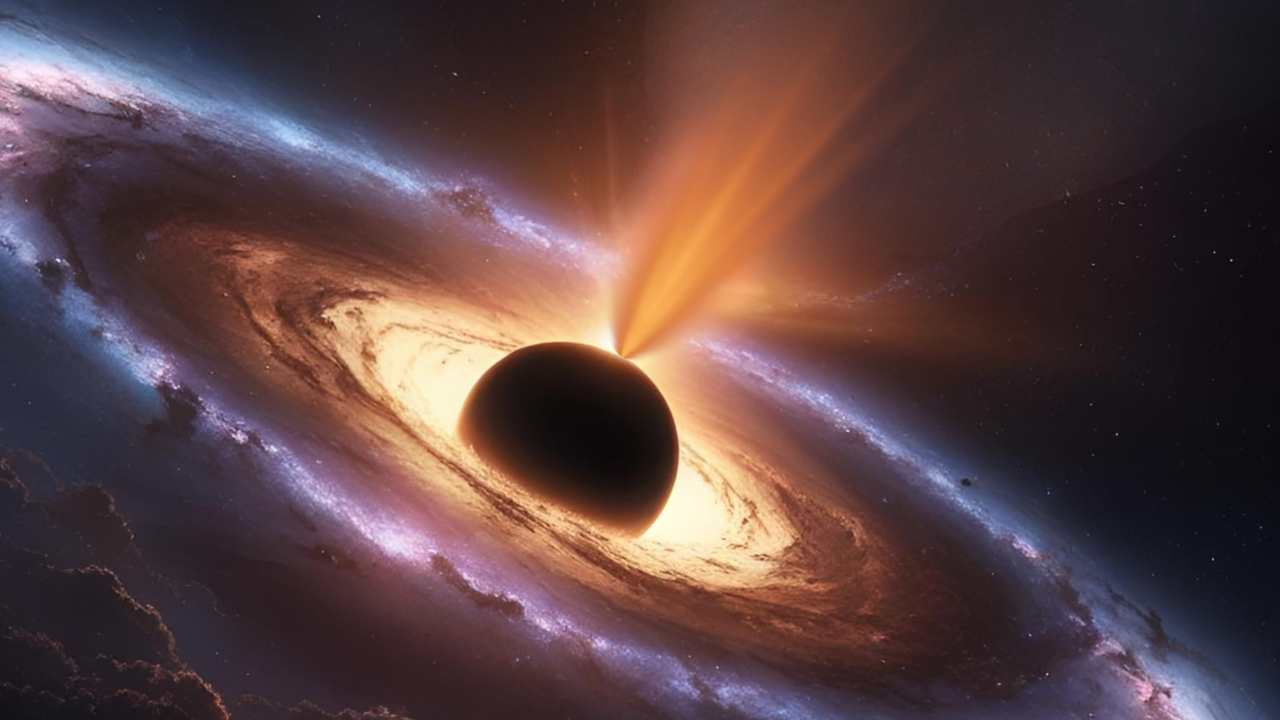
In the four years that the James Webb Space Telescope (JWST) has been making observations of the early universe, it has been delivering one scientific milestone after another. However, the $10 billion telescope has also left astronomers with a massive problem — literally.
The JWST has been routinely spotting supermassive black holes in the early universe that, at hundreds of millions of times the mass of the sun, are too big to have grown to such monstrous sizes before the universe was even 1 billion years old. These cosmic titans are also too massive in comparison to the masses of their small host galaxies, challenging what astronomers know about the relationships between supermassive black holes and their galactic homes that are usually observed in the modern universe.
Now, new research suggests this isn't such a massive problem after all. The team behind this research thinks that it is all a matter of perspective, and that these early supermassive black holes aren't as monstrous as scientists have estimated.














