Get all your news in one place.
100’s of premium titles.
One app.
Start reading
The Independent UK
The Independent UK
National
Jim Gomez

Super Typhoon Fung-wong batters Philippines coast ahead of landfall as nearly a million people evacuated

Super Typhoon Fung-wong, the biggest storm to threaten the Philippines this year, started battering the country’s northeastern coast ahead of landfall on Sunday, forcing the evacuation of nearly a million people.

Fung-wong, which could cover two-thirds of the Southeast Asian archipelago with its 1,600km-wide rain and wind band, approached from the Pacific while the Philippines was still dealing with the devastation wrought by Typhoon Kalmaegi, which left at least 204 people dead in central island provinces on Tuesday before pummelling Vietnam, where at least five were killed.

Philippine president Ferdinand Marcos Jr has declared a state of emergency due to the extensive devastation caused by Kalmaegi and the expected calamity from Fung-wong, which is called Uwan in the Philippines.

Rescuer Juniel Tagarino in Catbalogan City told AFP the body of a 64-year-old woman attempting to evacuate had been pulled from under debris and fallen trees.

"Last night, the wind was so strong and the rain was heavy ... According to her family members, she might have forgotten something and went back inside her house," Ms Tagarino said, adding her relatives were just 50 metres (yards) away when they realised she was missing.

Fung-wong, with winds of up to 185kmph and gusts of up to 230kmph, was spotted by government forecasters Sunday morning about 125km northeast of the town of Virac in Catanduanes province, where it is already being felt. The typhoon is expected to track northwestward and make landfall on the coast of Aurora or Isabela province later Sunday or early Monday, state forecasters said.

(AFP via Getty Images)

More than 916,860 people were evacuated from high-risk villages in northeastern provinces, including in Bicol, a coastal region vulnerable to Pacific cyclones and mudflows from Mayon, one of the country’s most active volcanoes.

Storm alert signals have been hoisted across large parts of the Philippines, with Signal No. 5, the highest warning, raised over southeastern Luzon, including Catanduanes and coastal areas of Camarines Norte and Camarines Sur, while Metro Manila and surrounding areas are under Signal No. 3.

Tropical cyclones with sustained winds of 185kmph or higher are categorised in the Philippines as a super typhoon, a designation adopted years ago to underscore the urgency tied to such extreme weather disturbances.

Defence Secretary Gilberto Teodoro Jr, who oversees the country’s disaster response agencies and the military, warned about the potentially catastrophic impact of Fung-wong in televised remarks Saturday. He said the storm could affect a vast expanse of the country, including Cebu, the central province hit hardest by Typhoon Kalmaegi, and metropolitan Manila, the densely populated capital region which is the seat of power and the country’s financial centre.

Mr Teodoro asked people to follow orders by officials to immediately move away from villages and towns prone to flash floods, landslides and coastal tidal surges. “We need to do this because when it’s already raining or the typhoon has hit and flooding has started, it’s hard to rescue people,” Mr Teodoro said.

The Philippines has not called for international help following the devastation caused by Kalmaegi but Mr Teodoro said the US, the country’s longtime treaty ally, and Japan were ready to provide assistance.

As Fung-wong approached with its wide band of fierce wind and rain, several eastern towns and villages lost power, Bernardo Rafaelito Alejandro of the Office of Civil Defence said.

In this photo provided by the Malacanang Presidential Communications Office, damaged homes beside Mananga Bridge in Talisay, Cebu Province, central Philippines on Friday Nov. 7, 2025 after Typhoon Kalmaegi devastated the province and claimed lives. (Malacanang Presidential Communications Office via AP)

About 50,000 families were evacuated from high-risk villages in Bicol, a northeastern coastal region vulnerable to Pacific cyclones and mudflows from Mayon, one of the country’s most active volcanoes.

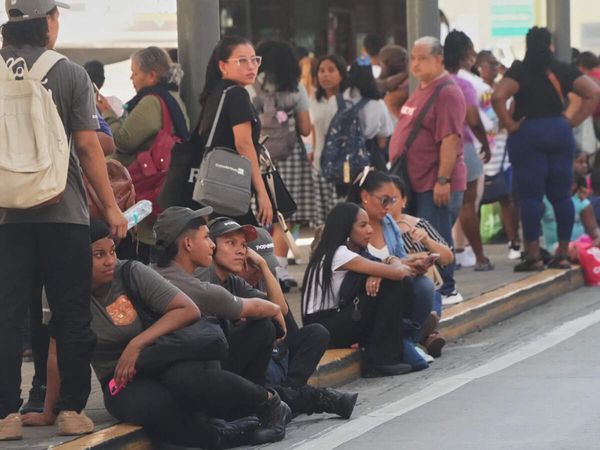
Authorities in northern provinces to be hit or sideswiped by Fung-wong preemptively declared the shutdown of schools and most government offices on Monday. Several domestic flights were canceled in threatened provinces, and more than 6,600 commuters and cargo workers were stranded in at least 86 seaports, where the coast guard prohibited ships from venturing into increasingly rough seas.

The Philippines is battered by about 20 typhoons and storms each year. The country also is often hit by earthquakes and has more than a dozen active volcanoes, making it one of the world’s most disaster-prone countries.

(With inputs from Reuters)

Sign up to read this article
Read news from 100’s of titles, curated specifically for you.
Already a member? Sign in here
Related Stories
Top stories on inkl right now
One subscription that gives you access to news from hundreds of sites
Already a member? Sign in here
Our Picks
Fourteen days free
Download the app
One app. One membership.
100+ trusted global sources.