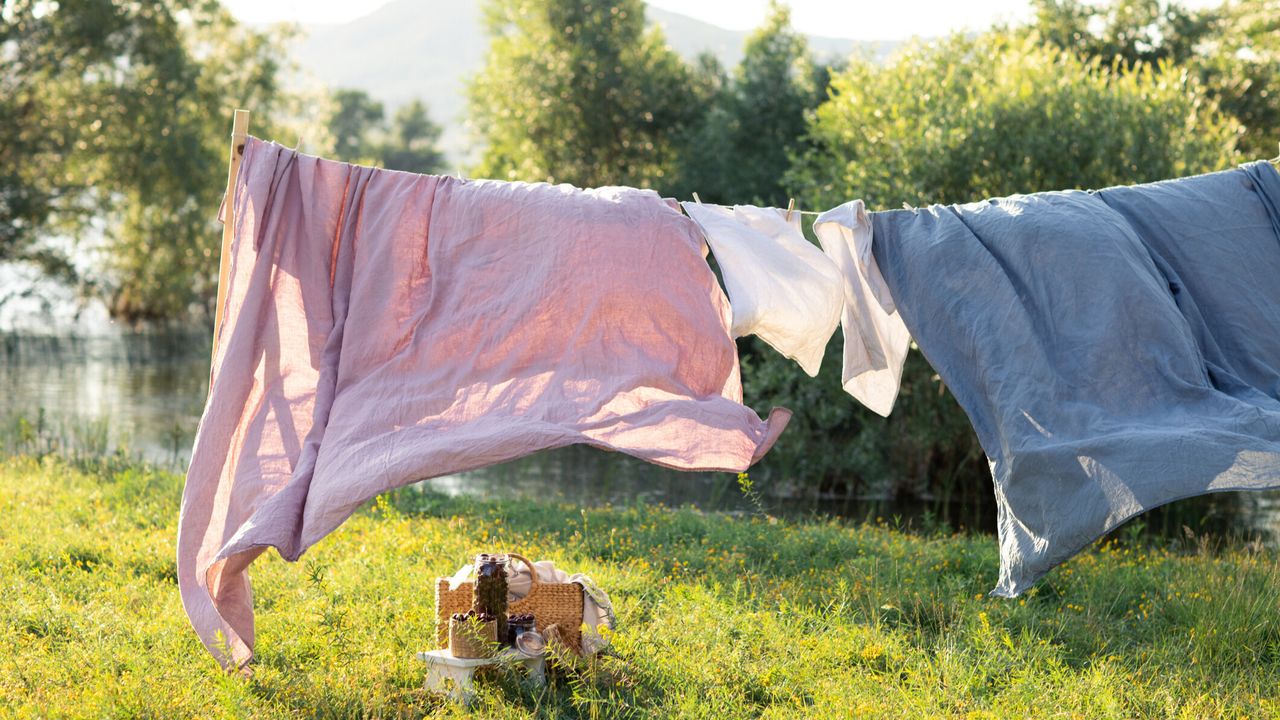
Each day during a heatwave, my neighbor hangs her pillows and bedding on the line for a few hours of ‘sun washing’ or ‘sun curing’ – a viral cleaning trend that claims leaving bed sheets in direct, super-hot sunlight UV-sanitizes them. I understand the appeal – this ‘CleanTok’ hack is free, and who doesn’t like sleeping in line-fresh bedding?
But here’s the microbiological truth: ‘sun washing’ does little to get fungi, bacteria, dust mites and odors out of your pillows, bed sheets and toppers. According to a study on optimal ways to remove dust mites, allergens and pollen, a standard machine wash at 104°F 40°C leaves 94% of dust mites alive and kicking in your bedding. Yep, 94%.
So why is my neighbor dead-set on ‘sun washing’ her bedding during a heatwave? “The real benefit is moisture and not disinfection,” says Dr. Shanina C. Knighton, PhD, RN, CIC, an infection prevention expert and Research Associate Professor at the Frances Payne Bolton School of Nursing at Case Western Reserve University.
To help us separate cleaning myth from microbiological reality, Dr. Knighton explains what ‘sun washing’ actually achieves, why pillows and bedding become moisture bombs during heatwaves, and the exact temperature a washing machine needs to get rid of the nasties.

Key take-aways: At a glance
- The 'sun washing' misconception: Hanging pillows and duvets outside in the sun won't disinfect them. Sunlight cannot physically lift soil or skin cells, and UV rays can't penetrate dense pillow and comforter interiors where microbes hide.
- Why airing bedding in a heatwave is still smart: Moving hot air pulls moisture, sweat, and odors trapped inside dense bedding. It temporarily stops bacteria from multiplying, but it won't get rid of the bacteria.
- The wash temperature that works: According to one study, 104°F / 40°C washes leave 94% of dust mites alive in your bedding. To eliminate dust mites and pathogens, you must machine wash your bedding using the warmest setting its care label safely tolerates. The ideal is 130°F to 140°F / 54.4°C to 60°C.
- When to wash bedding in a heatwave: While pillowcases and bed sheets should be washed once a week (minimum) during summer, step up the frequency if you sweat heavily, skip nighttime showers, have acne-prone skin, or share the bed with pets. Especially during a heatwave.
- Prioritize a dry bed over a tidy bed: Never make your bed straight after getting up if you've been sweating and the sheets felt damp. Pulling up the covers seals in body heat and moisture – the ideal conditions for fungi and odors to multiply during a heatwave.
‘Sun washing’ refreshes bedding — it doesn’t disinfect
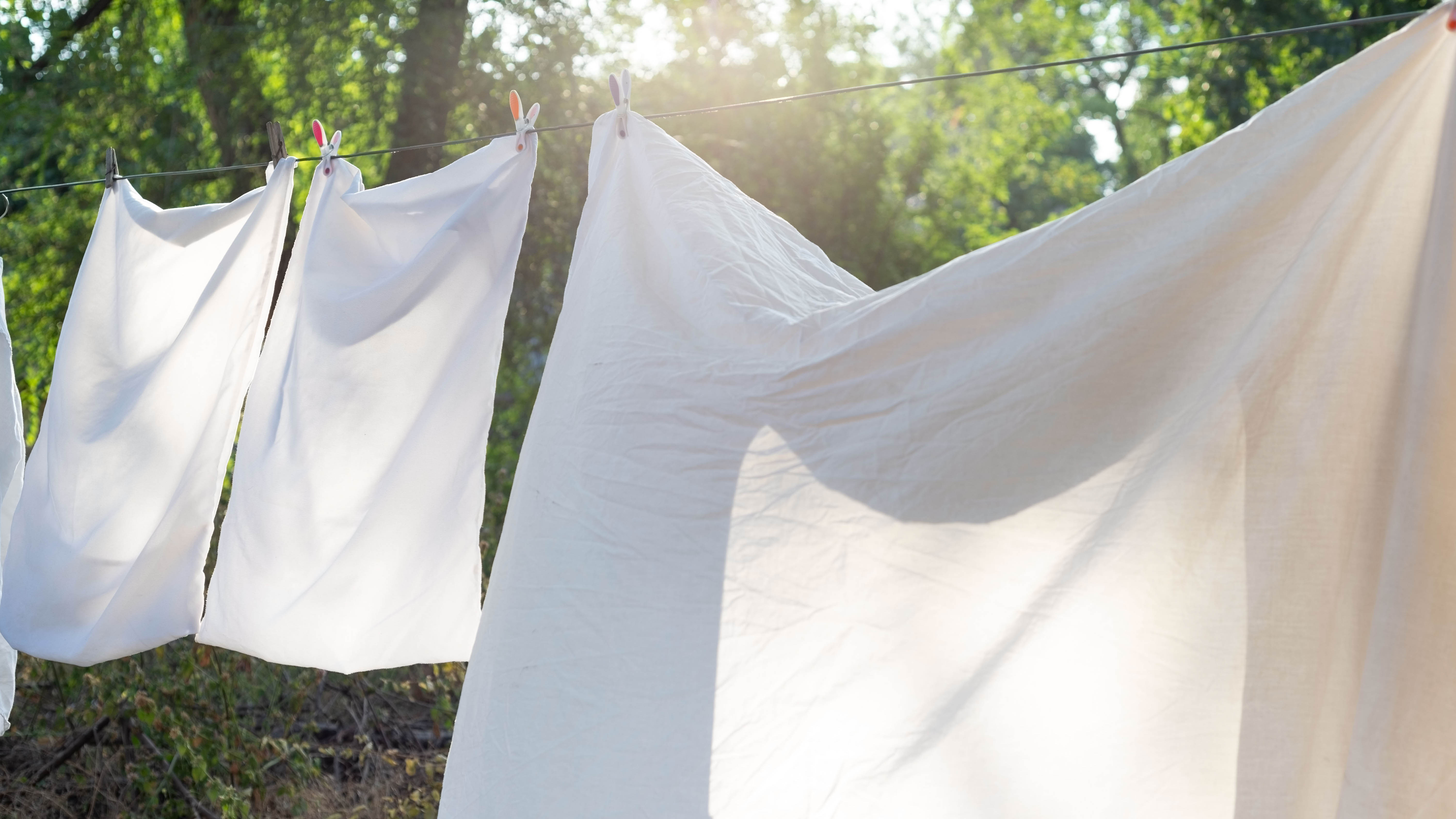
With regular use, pillows and bedding house a build-up of fungi, dust mites, other allergens and odors.
“When researchers at the University of Manchester cultured used pillows, ones in service from a year and a half to more than 20 years, they found between four and 16 species of fungi in a single pillow, with higher numbers in the synthetic ones,” reveals Dr. Knighton.
“The concern is not that any single pillow is a biohazard. It is hours of close contact, night after night, with moisture and skin debris and microbial buildup sitting right against your face and airway."
Deep penetration is required to disinfect dense pillows and comforters, especially older ones that don’t get cleaned regularly in a washing machine — and that’s something a few hours of airing outside can’t deliver.
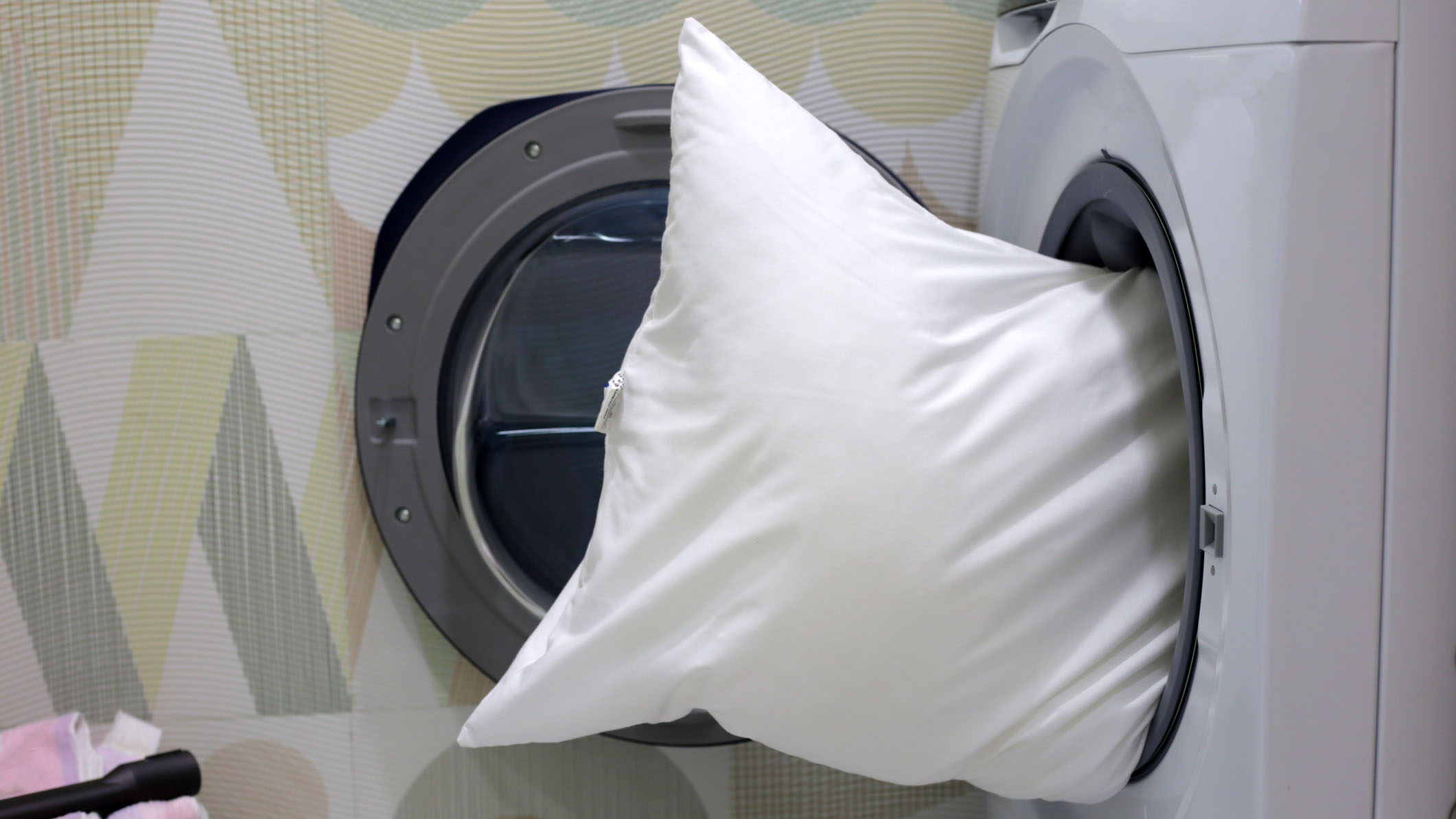
“A machine wash physically lifts sweat, oil, skin cells, allergens, and microbes off the fabric through detergent, water, agitation, rinsing, and heat,” Dr. Knighton explains. “Sunlight does not lift soil off of anything.”
“I would never tell someone to skip a wash because the bedding spent an afternoon outside"
Dr. Shanina C. Knighton, PhD, RN, CIC
Even the geometry of some pillows and bedding dilutes the germ-killing potential of ultraviolet light.
“Direct sun can reduce some microbes on an exposed surface, but the exposure is uneven and unreliable,” says Dr. Knighton. “The top of a duvet might catch the sun while the underside, the seams, the folds, and the dense fill inside a pillow never do.”
The fungi and bacteria hiding deep within the stuffing or wadding of your pillow and comforter remain entirely unreached by sunlight, even if you're 'sun washing' during a raging heatwave.
“I would never tell someone to skip a wash because the bedding spent an afternoon outside,” warns Dr. Knighton.
Why you should still air pillows and bedding outside in a heatwave
Moisture, not microbes, is the real reason to hang your pillows, comforter, and bed sheets out to air during a heatwave. You aren’t UV-sanitizing, you’re UV-dehydrating.
Every night as you lie in bed sweating away during a heatwave, your bedding acts like a giant sponge. It drinks up sweat, saliva (drool), skin oils, dead skin cells, and not to mention skin and hair products. During a heatwave, that sponge becomes extra thirsty and absorption rockets.
“Putting pillows and bedding out in dry moving air pulls that dampness back out and cuts the odor that comes with it,” Dr. Knighton notes. “That is what airing does. It dries and freshens between washes. It does not sanitize anything.”
How pillows and bedding become ‘moisture bombs’ in hot weather
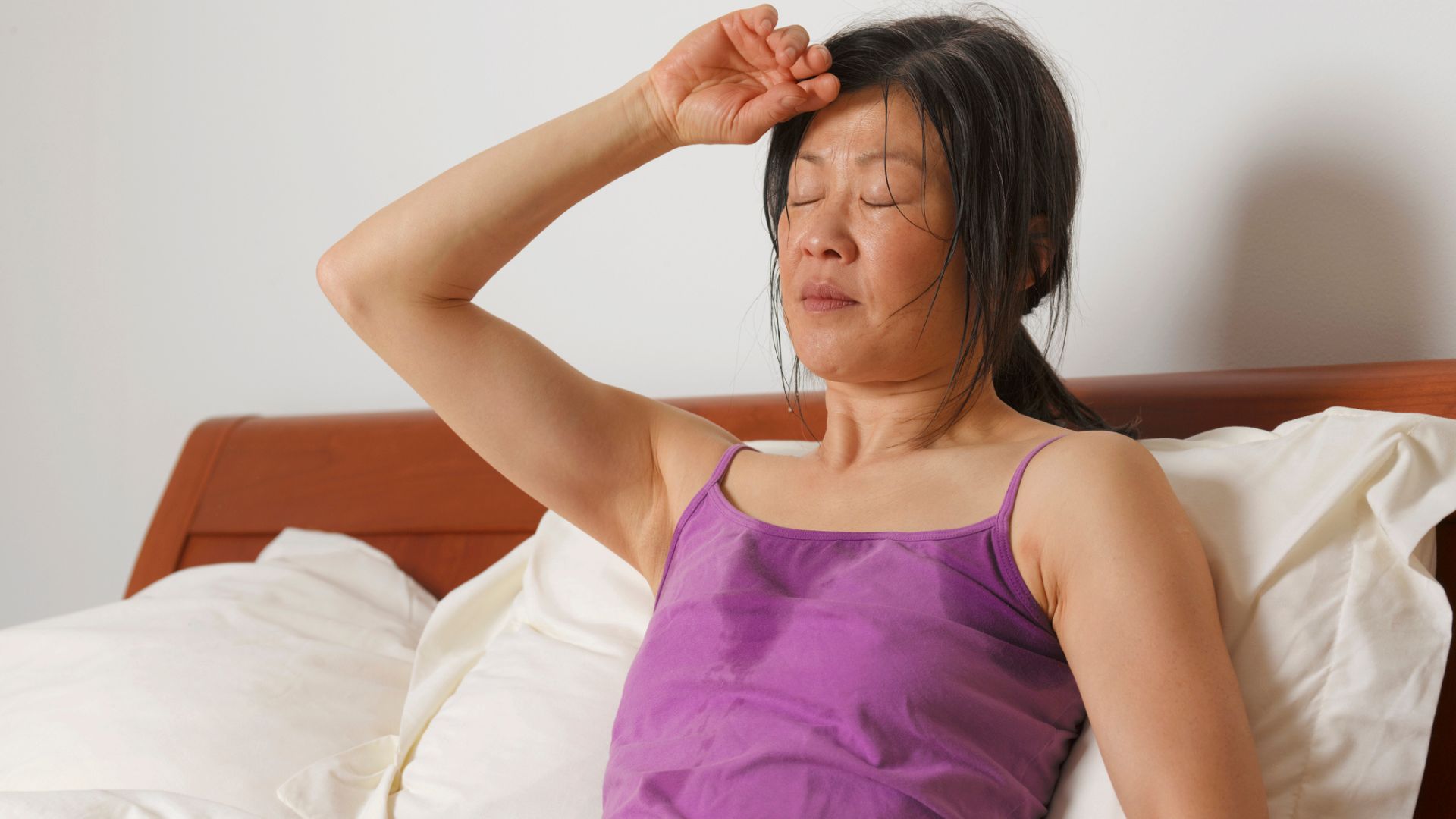
All those hot, sticky summer nights spent sweating away in bed drive moisture down into your mattress, pillows and bedding.
What the heat does is drive more sweat and trap more moisture, and moisture is the thing most microbes need to survive.
Dr. Knighton
“A dense pillow or comforter holds onto moisture far longer than a thin sheet does,” explains Dr. Knighton. “After a hot night, it’s carrying sweat, skin oil, and shed skin cells, and the warmth stays in the fill.
“Warmth, moisture, and organic material with no airflow is exactly the condition that lets bacteria and fungi persist and lets odor build, and the bedding doesn’t have to look dirty for this to be happening.”
So even though your crisp white sheets still look clean after nearly a week of sleeping under them, what’s infiltrated the sheets tells a different story.
To be clear, a heatwave won’t conjure dangerous new organisms overnight, says Dr. Knighton: “What the heat does is drive more sweat and trap more moisture, and moisture is the thing most microbes need to survive.”
The washing temperature that actually kills dust mites and more
Now that we know ‘sun washing’ draws out moisture, but doesn’t sanitize, it’s time to look at what will: your washing machine.
“Wash often, use detergent, the warmest safe setting, and dry the item through"
Dr. Knighton
A standard wash cycle won’t cut it during a summer heatwave (or during any other time of year) — especially if you suffer from allergies or asthma.
“For temperature, use the warmest water the fabric can safely tolerate,” Dr. Knighton advises. “The benchmark most allergy guidance uses for dust mites is 130°F / 54.4°C.
“One study found that washing at 140°F / 60°C killed all dust mites, while a warm wash at 104°F / 40°C killed only about six per cent of them.”
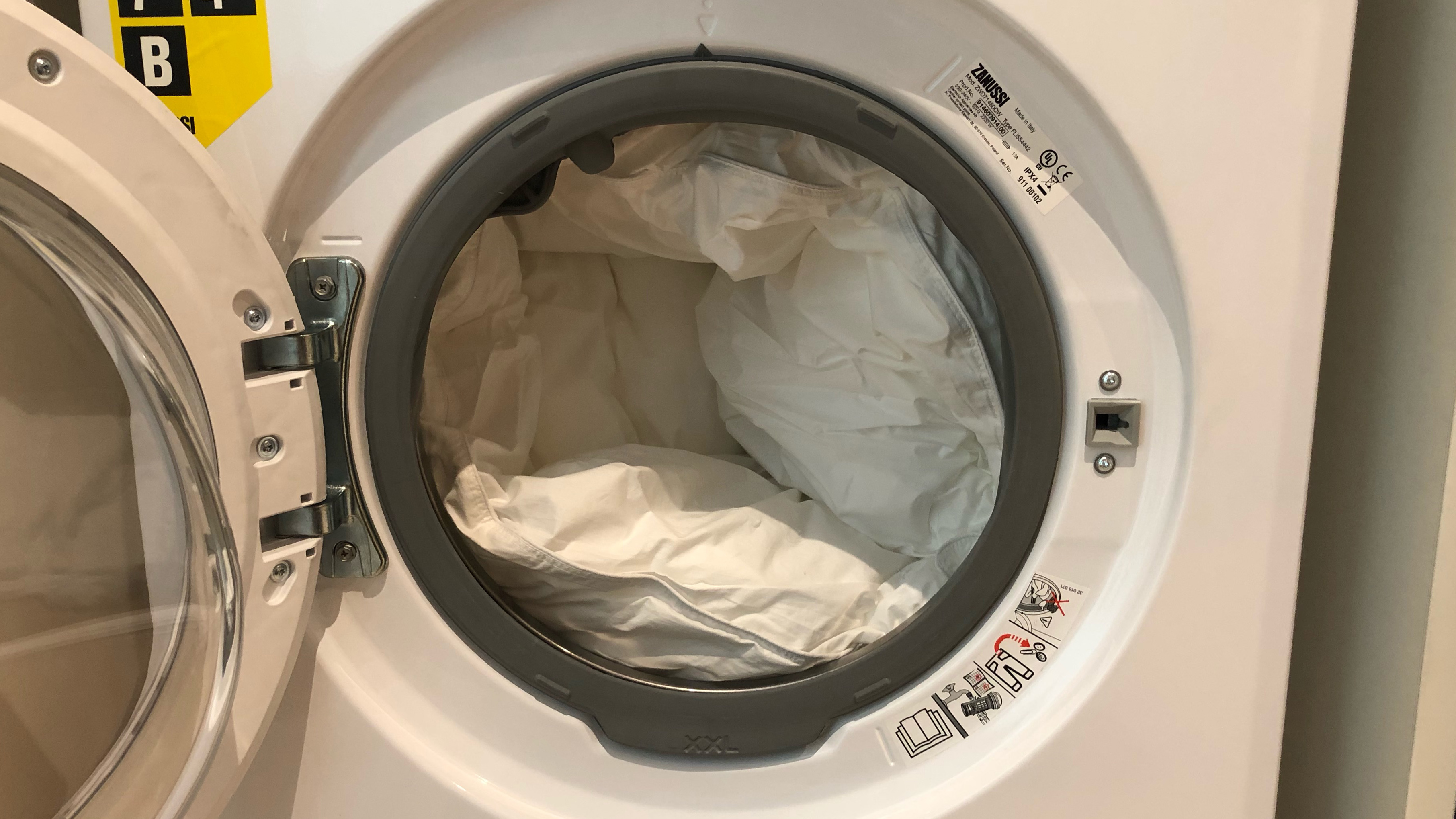
While dropping your laundry down to a cool or warm cycle protects the fabric and saves energy, from an infection prevention standpoint, the hotter the wash the better.
Check your bedding’s care labels to ensure it will withstand a hotter wash. And if you have asthma, allergies, or a chronic health condition, consider swapping to pillows, comforters and bedding that can be safely washed at 130°F / 54.4°C.
"Hospital laundry runs hotter and longer than that, but that is validated industrial processing, not something a household needs or should try to copy,” Dr Knighton explains.
“The practical message is simple: wash often, use detergent, use the warmest safe setting, and dry the item all the way through."
How often you should wash pillows and bedding in summer vs a heatwave
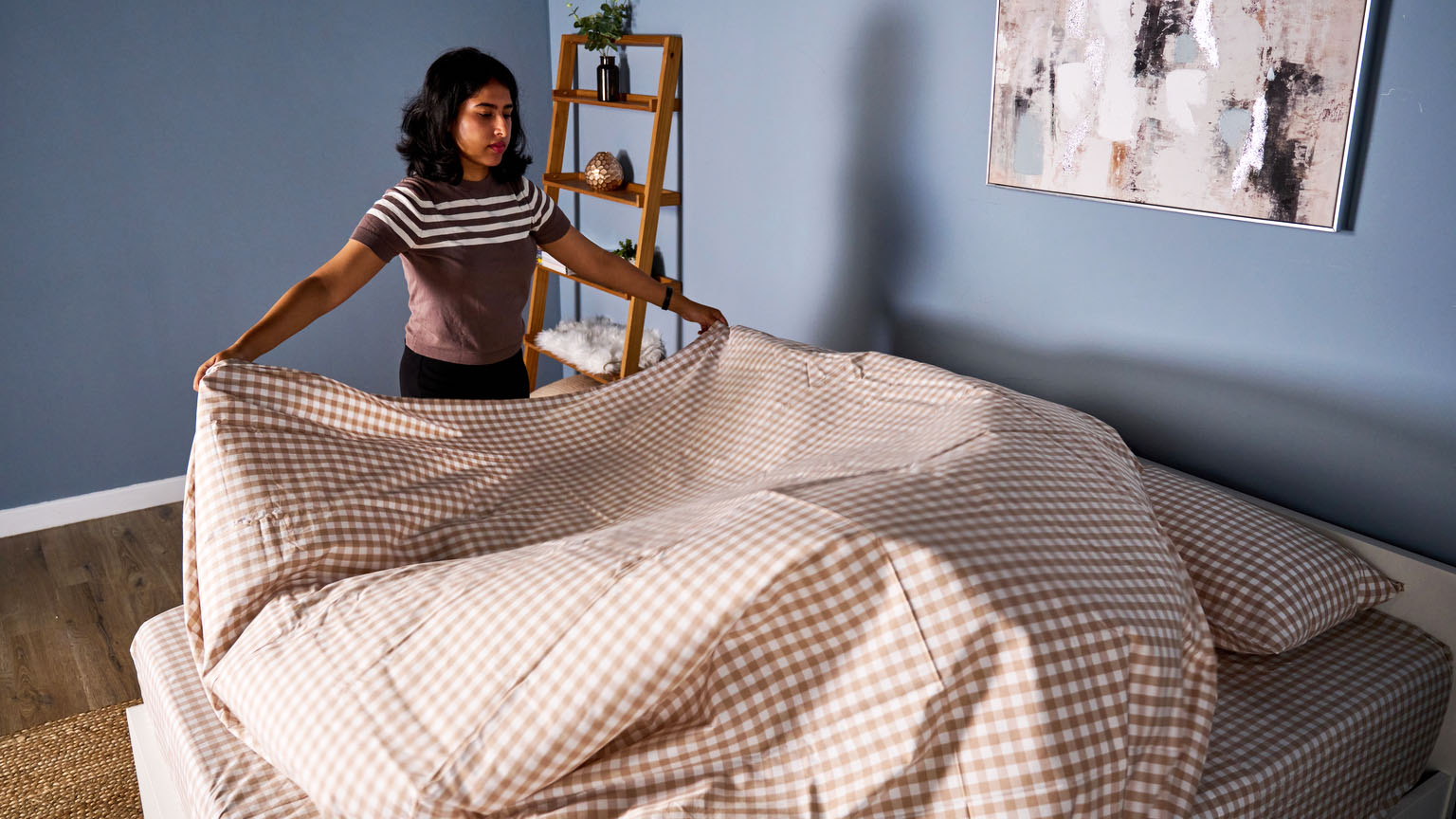
A weekly bed sheets wash is common in most homes, but according to Dr. Knighton you might need to clean them more often during a heatwave.
During extreme summer heat your body is working overtime to cool itself down at night (heat spikes can cause 3 a.m. wake-ups and other middle insomnia issues).
As a result, sweat, facial skin oils, dead skin and more all seep down into your pillows and bedding at an accelerated rate.
Dr. Knighton recommends stepping up your laundry schedule significantly if you match any of the following criteria:
- You sweat heavily during the night or experience night sweats.
- You prefer to shower in the morning and go to bed with daytime skin buildup.
- You have oily, acne-prone skin, eczema, or environmental allergies.
- You share your bed with dogs, cats, or other pets.
- You work a high-exposure job (such as healthcare, childcare, sanitation, or repair work) where you actively carry the day's grime home with you.
Here, Dr. Knighton breaks down exactly how often you should machine wash different types of bedding during hot weather to keep the microbial load under control:
Bed sheets and pillowcases: Once a week (minimum)
You should wash these at least once a week in hot weather, but "more often for a lot of people," says Dr. Knighton.
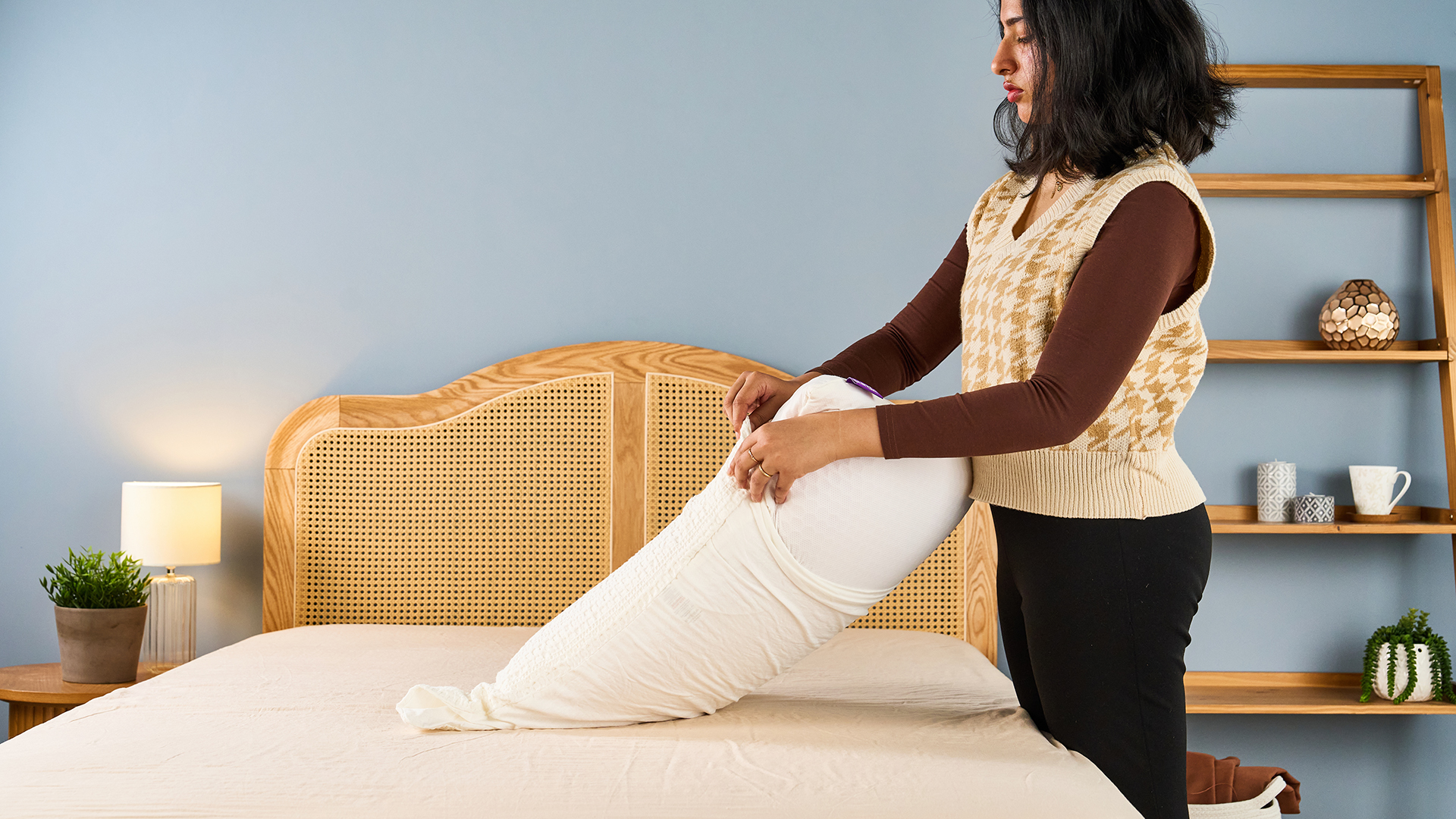
Duvet covers: Every one to two weeks
To combat fungi, dust mites, allergens and more, you should hot wash your duvet cover once a week during summer – more if you don’t shower before sleep then sweat in bed.
Using a top flat sheet as a barrier between you and the duvet cover buys you a bit more time – up to two weeks, but check your cover for odors.
Pillows and comforters: Every three months (or sooner)
Always follow the care label on your pillow or comforter, but generally you should be washing them every few months. However, in a heatwave you need to wash them immediately if they are damp with moisture, stained, musty, or visibly soiled.
“A tidy bed should not outweigh a dry bed,” says Dr. Knighton.
By using ‘sun-washing’ to reduce daily moisture build-up between washing your pillows and bedding on as safe a hot wash as they can handle, you’ll get the microbial load under control and enjoy much cleaner sleep in the hot summer months.