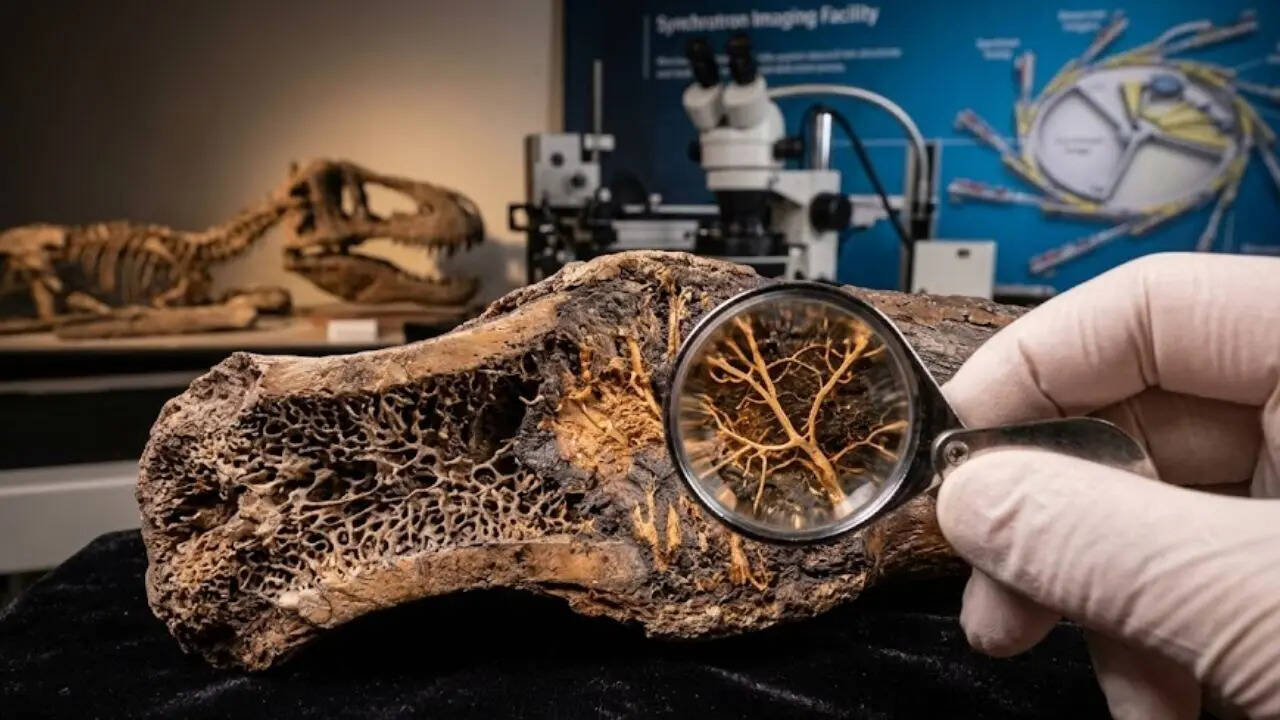
Palaeontologists have achieved a remarkable feat by using advanced X-ray technology to examine a 66-million-year-old injury on ‘Scotty,’ the largest known Tyrannosaurus rex. They scanned one of Scotty's broken ribs with synchrotron micro-computed tomography. As a result, researchers discovered mineralised structures that look like tiny, branching networks, which are the remnants of ancient blood vessels. These findings give an exceptional insight into how top predators healed, revealing that iron minerals kept the shape of these blood vessels intact long after the actual tissue disappeared. This discovery closes the gap between lifeless fossils and the once-vibrant creatures they were, showing that even old wounds can reveal secrets about dinosaur biology and transforms our understanding of prehistoric healing, breathing new life into the skeletal remains.