
Get all your news in one place.
100’s of premium titles.
One app.
Start reading
Digital Camera World
Kalum Carter

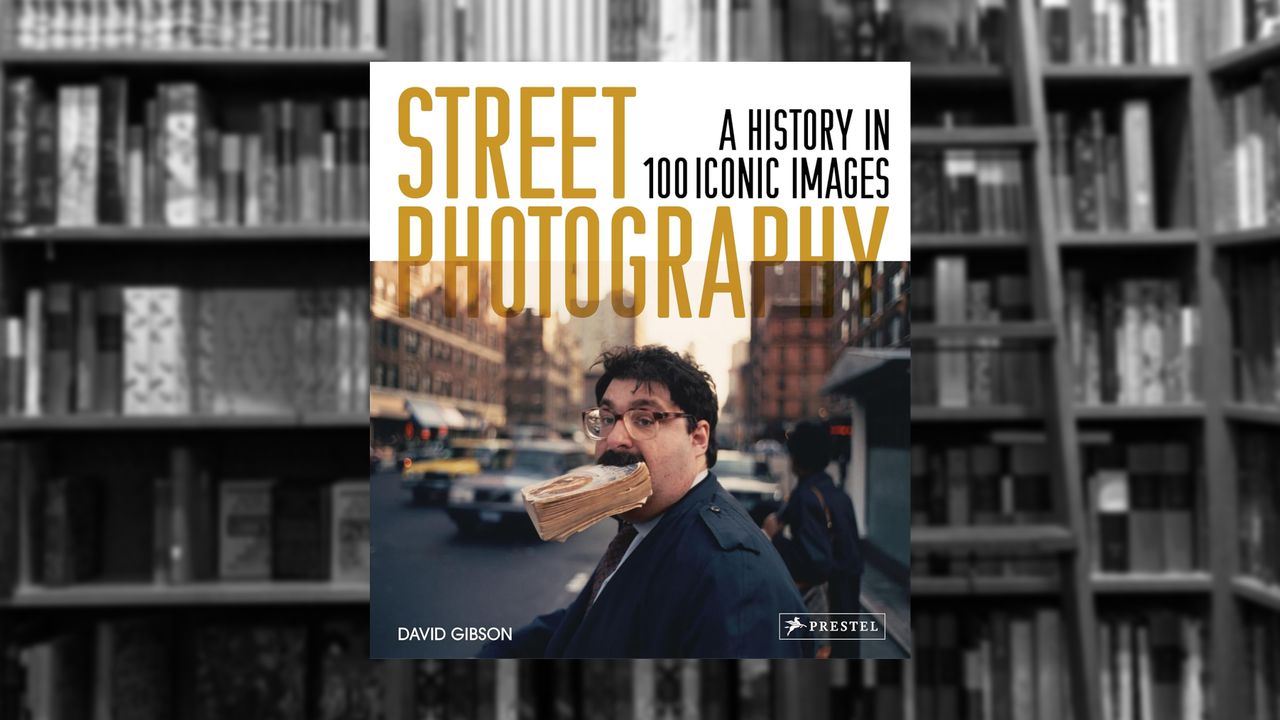
Street Photography: A History in 100 Iconic Photographs by David Gibson review

Street Photography: A History in 100 Iconic Photographs.

Progress in photography always begins with looking back. Our work is shaped by those who walked the streets before us, capturing moments that would become the visual language of the genre. David Gibson’s Street Photography: A History in 100 Iconic Photographs embraces this idea wholeheartedly.

Part history lesson and part practical guide, this photography book brings together some of the most significant street photographs ever made – from Henri Cartier-Bresson, Garry Winogrand, and Vivian Maier to contemporary voices like Alex Webb – and presents them through an accessible, articulate lens. For anyone serious about understanding street photography, both its past and its potential, this is a book worth holding close.

Publisher information

Publisher

Prestel

Publication date

April 8 2021

Language

English

Print length

208 pages

ISBN

9783791387673

Format

Paperback

Dimensions

23.19 x 1.93 x 25.1 cm

Price and availability

Street Photography: A History in 100 Iconic Photographs by David Gibson is available in paperback from all major retailers, priced around $35 / £22; however, it is often on sale for much lower.

A spread on the famous James Dean image by Dennis Stock highlighting its significance in the history of street photography. (Image credit: Future / Kalum Carter)

Review

Street Photography: A History in 100 Iconic Photographs is structured with a clarity that makes it easy to read. Each image receives a single page of analysis, offering just enough context and interpretation to illuminate the work without overwhelming it. This format makes the book incredibly approachable, something you can pick up for five minutes or fall into for an hour, while providing a broad sweep of street photography’s evolution.

The strength of Gibson’s approach lies in the precision of his observations. He’s concise without being simplistic, and his analysis consistently draws a line between the photograph, its maker, and the wider culture it emerged from. One section that particularly stood out to me was the inclusion of Thomaz Farkas.

I’d known of Farkas in passing, but Gibson’s reading of his image, a beach goal set against the shoreline of Rio de Janeiro, was a revelation. He writes about the romance embedded in the scene, the relationship between place and sport, and the visual influences that may have shaped Farkas’s seeing. It was a reminder that even our most historically significant photographers were part of a lineage themselves, working within traditions, responding to the world, and building on the shoulders of those who came before.

The spread on Tomaz Farkas and his incredible image of a goal on the beach of Rio de Janeiro (Image credit: Future / Kalum Carter)

This, in turn, influenced my own practice. Not only as a photographer, but as a curator of images. Some of the most recognisable names in street photography appear here, but often through works that aren’t their most famous. Whether that was a deliberate curatorial choice or a practical consideration is unclear, but the result is refreshing. You encounter new images by familiar giants, which has the effect of expanding their legacy rather than simply repeating it. I found myself stepping away from the book with a list of photographers I wanted to revisit and others I wanted to discover for the first time.

If there is a limitation, it’s one rooted in its own design: each section is brief. Personally, I often wanted more. Another page of context, another layer of interpretation. But the more I read, the more I began to see this brevity as intentional. The book functions almost as a set of prompts, planting seeds that you’re invited to nurture through your own further research. For newcomers to the genre, the concise format makes the history accessible rather than intimidating. For experienced photographers, it serves as a gateway into deeper study.

Looking back through the history presented here also reveals the absences that have shaped the field, most notably from Eastern photographers such as Fan Ho and Daido Moriyama – although the reason to omit the former is supplied in the foreword.

I was also struck by the limited representation of female photographers. That isn’t Gibson’s oversight; it’s reflective of the broader, historically male-dominated world of photography. It’s an important reminder of how the narrative needs to continue to evolve. As a community becomes more inclusive, the history of street photography will too. After all, art grows richer with every additional perspective.

The image chosen for Joel Meyerowitz's inclusion, an early representation of color street photography. (Image credit: Future / Kalum Carter)

Final thoughts

This is a concise yet meaningful look at the history of street photography, distilled into one hundred images that collectively tell the story of the genre. Gibson writes with clarity, respect, and genuine enthusiasm, making the book both engaging and instructive.

Whether you’re new to street photography or have been immersed in its history for years, this is a valuable addition to your shelf; a reminder that understanding where we come from is essential to understanding where we’re going.

The cover of Street Photography: A History in 100 Iconic Photographs by David Gibson (Image credit: Future / Kalum Carter)

Alternatives

Sign up to read this article
Read news from 100’s of titles, curated specifically for you.
Already a member? Sign in here
Related Stories
Top stories on inkl right now
One subscription that gives you access to news from hundreds of sites
Already a member? Sign in here
Our Picks
Fourteen days free
Download the app
One app. One membership.
100+ trusted global sources.