Streaming to survive: Thailand's out-of-work elephants in crisis
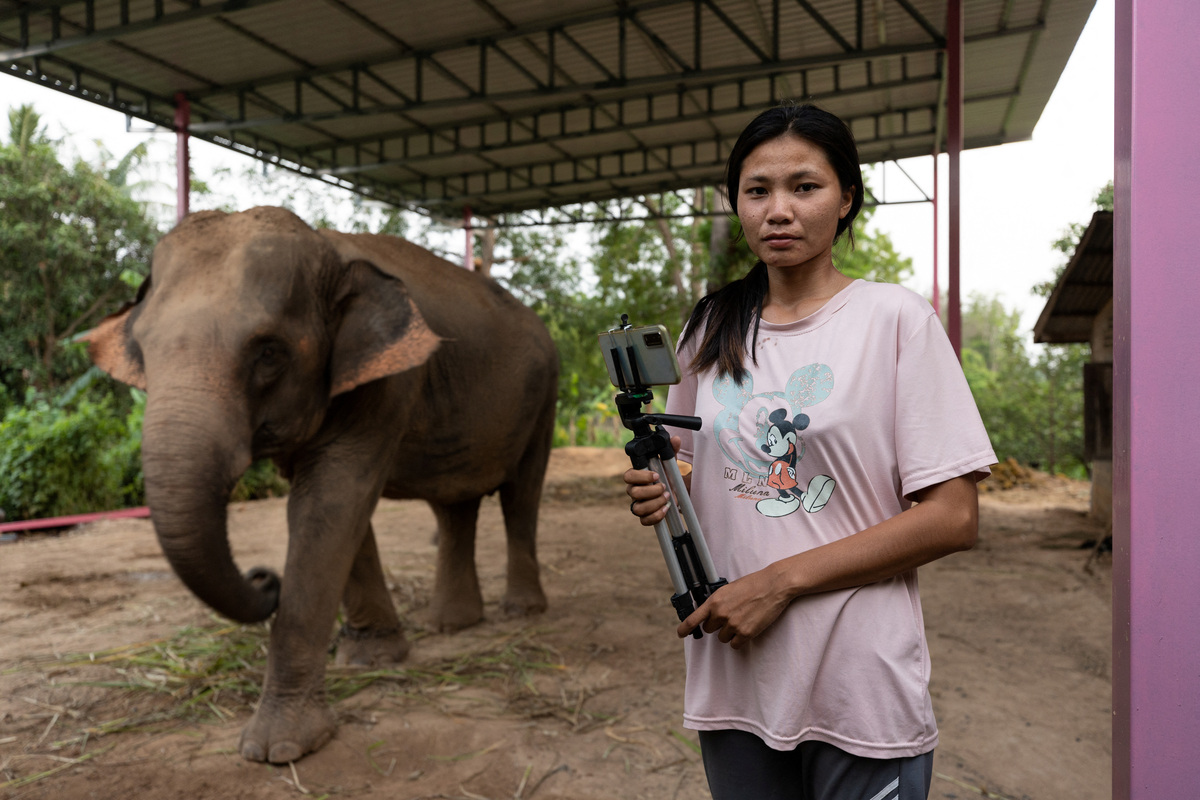
Elephant owner Siriporn Sapmak, 23, poses while holding her gear used for social media live-streaming outside her house, at Ba Ta Klang village in Surin, Thailand April 6, 2022. "I take care of two elephants, Prakai Kaew and Bai Fern," Siriporn Sapmak said to her audience on social media. "We live-stream and sell fruit to make money to buy food for our elephants, because we haven't had a job for over three years. Lots of things have changed and we have to survive and find a way to feed our elephants." REUTERS/Jorge Silva
In the northeastern village of Ban Ta Klang in Thailand, Siriporn Sapmak starts her day by doing a livestream of her two elephants on social media to raise money to survive.
The 23-year old, who has been taking care of elephants since she was in school, points her phone to the animals as she feeds them bananas and they walk around the back of her family home.
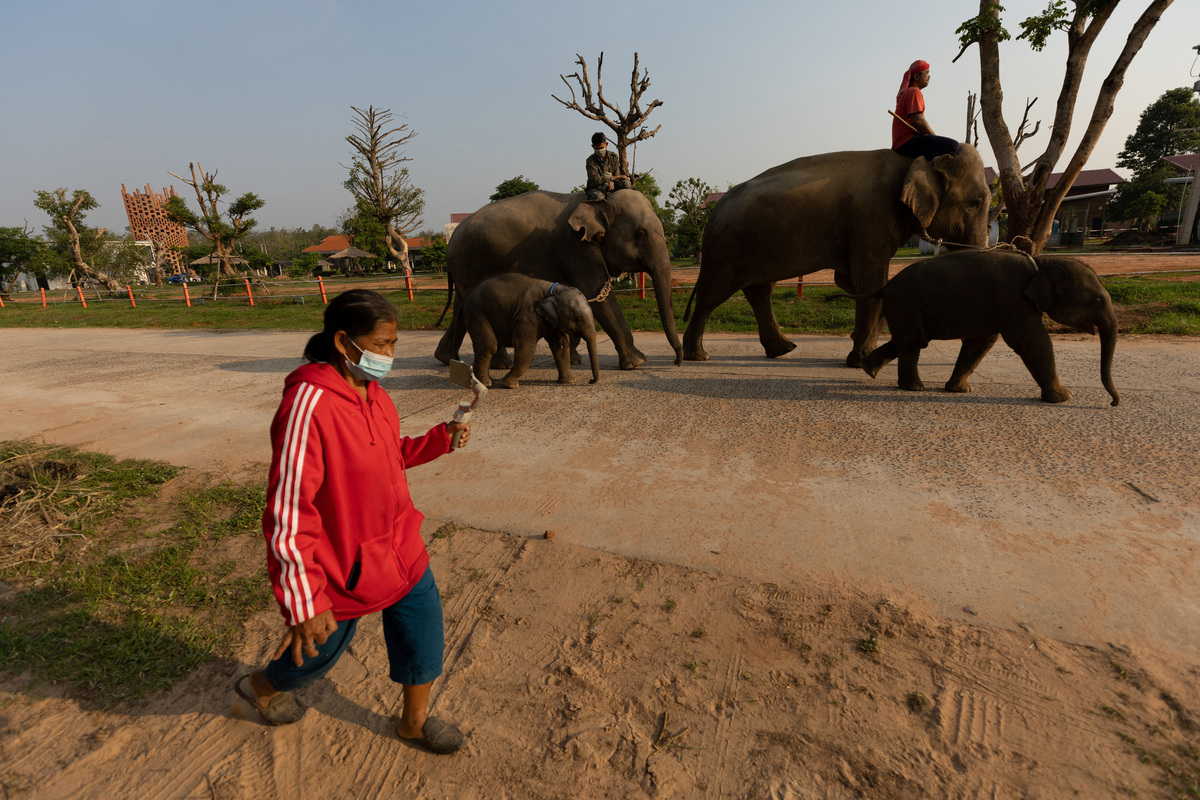
A woman, who is married to a mahout, walks next to elephants while live-streaming on social media at Ba Ta Klang village in Surin, Thailand April 8, 2022. Live-streaming is a new - and insecure - source of income for elephant owners, who previously relied on tourism to earn a wage. REUTERS/Jorge Silva
Siriporn says she can raise about 1,000 baht ($27.46) of donations from several hours of livestreaming on TikTok and YouTube but that is only enough to feed her two elephants for one day.
It is a new - and insecure - source of income for the family, which before the pandemic earned money by doing elephant shows in the Thai city of Pattaya. They top up their earnings by selling fruit.
Like thousands of other elephant owners around the country, the Sapmak family had to return to their home village as the pandemic decimated elephant camps and foreign tourism ground to a virtual halt. Only 400,000 foreign tourists arrived in Thailand last year compared with nearly 40 million in 2019.
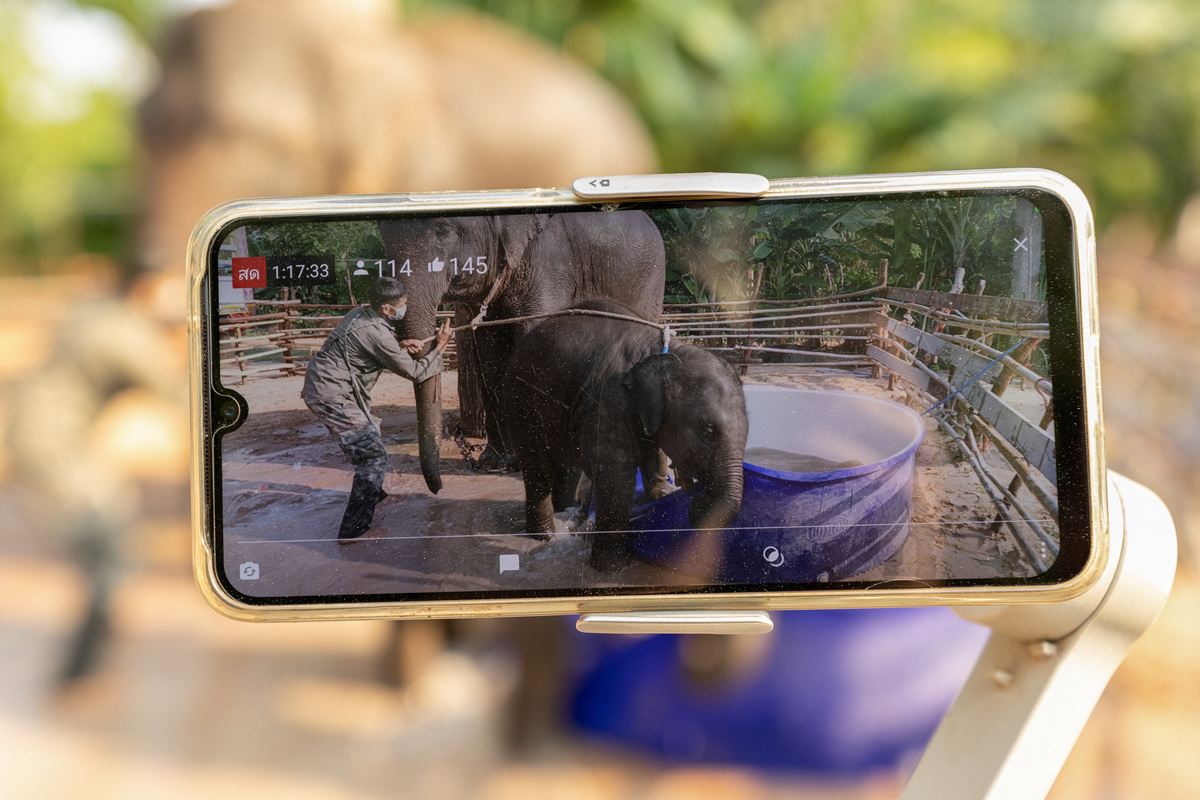
Baby elephant Pangmaemae Plainamo, along with her mother and a mahout, are live-streamed on social media at Ba Ta Klang village in Surin, Thailand April 8, 2022. Live-streaming is a new - and insecure - source of income for elephant owners, who previously relied on tourism to earn a wage. REUTERS/Jorge Silva
Some days, Siriporn doesn't receive any donations and her elephants are underfed.
"We are hoping for tourists to (return). If they come back, we might not be doing these livestreams anymore," she said.
"If we get to go back to work, we get a (stable) income to buy grass for elephants to eat."
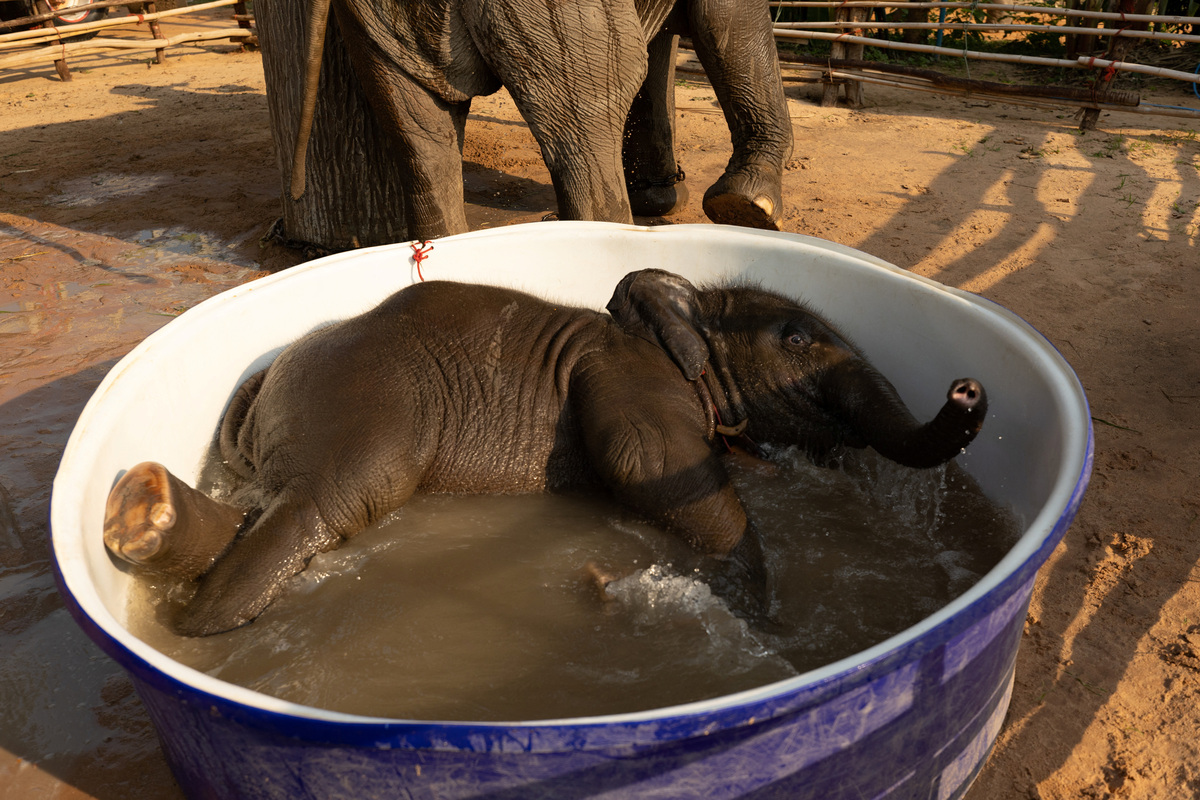
Baby elephant Pangmaemae Plainamo takes a bath at Ba Ta Klang village in Surin, Thailand April 8, 2022. Thailand has about 3,200 to 4,000 captive elephants, according to official agencies, and about 3,500 in the wild. REUTERS/Jorge Silva
Edwin Wiek, founder of Wildlife Friends Foundation Thailand, estimates that at least a thousand elephants in Thailand would have no "proper income" until more tourists return.
Thailand has about 3,200 to 4,000 captive elephants, according to official agencies, and about 3,500 in the wild.
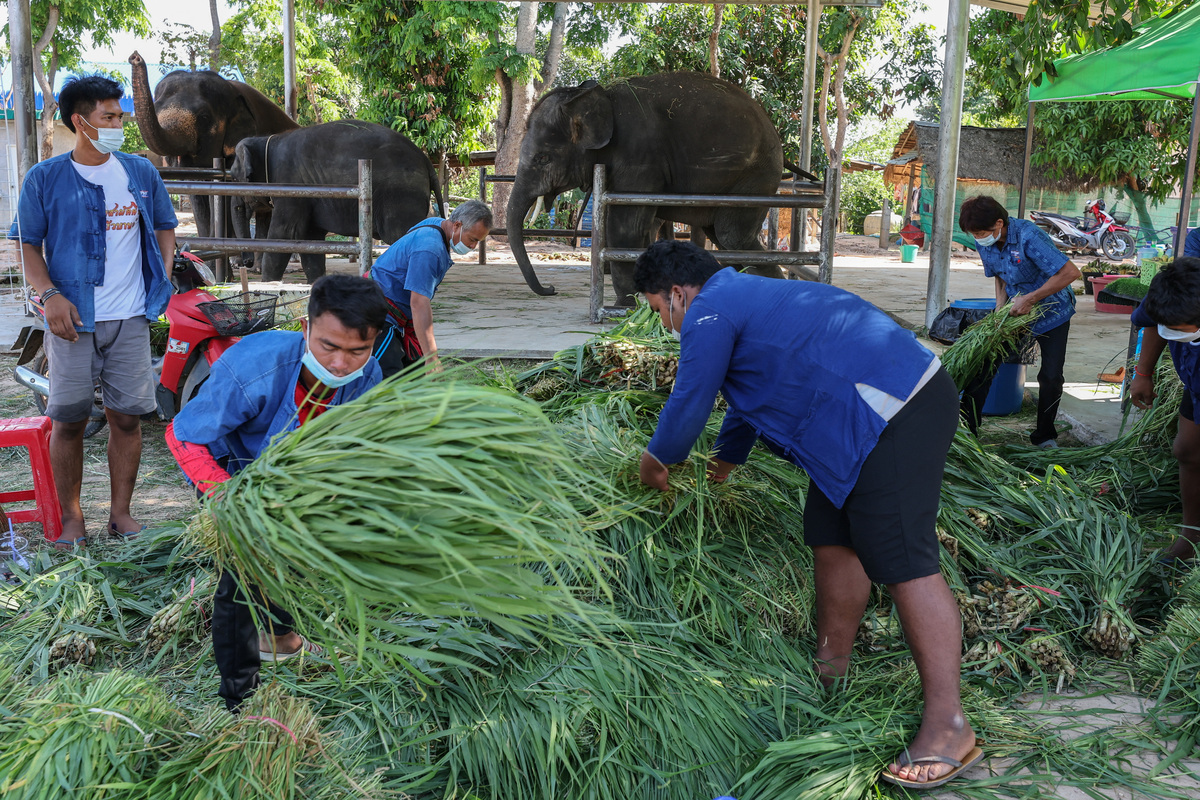
Men pile up grass to be fed to elephants attending a tourist show at Ba Ta Klang village in Surin, Thailand April 5, 2022. Only 400,000 foreign tourists arrived in Thailand last year compared with nearly 40 million in 2019. REUTERS/Jorge Silva
Wiek said the Livestock Development Department needs to find "some kind" of budget to support these elephants.
"Otherwise, it's going to be difficult to keep them alive I think for most families," he said.
"LIKE FAMILY"
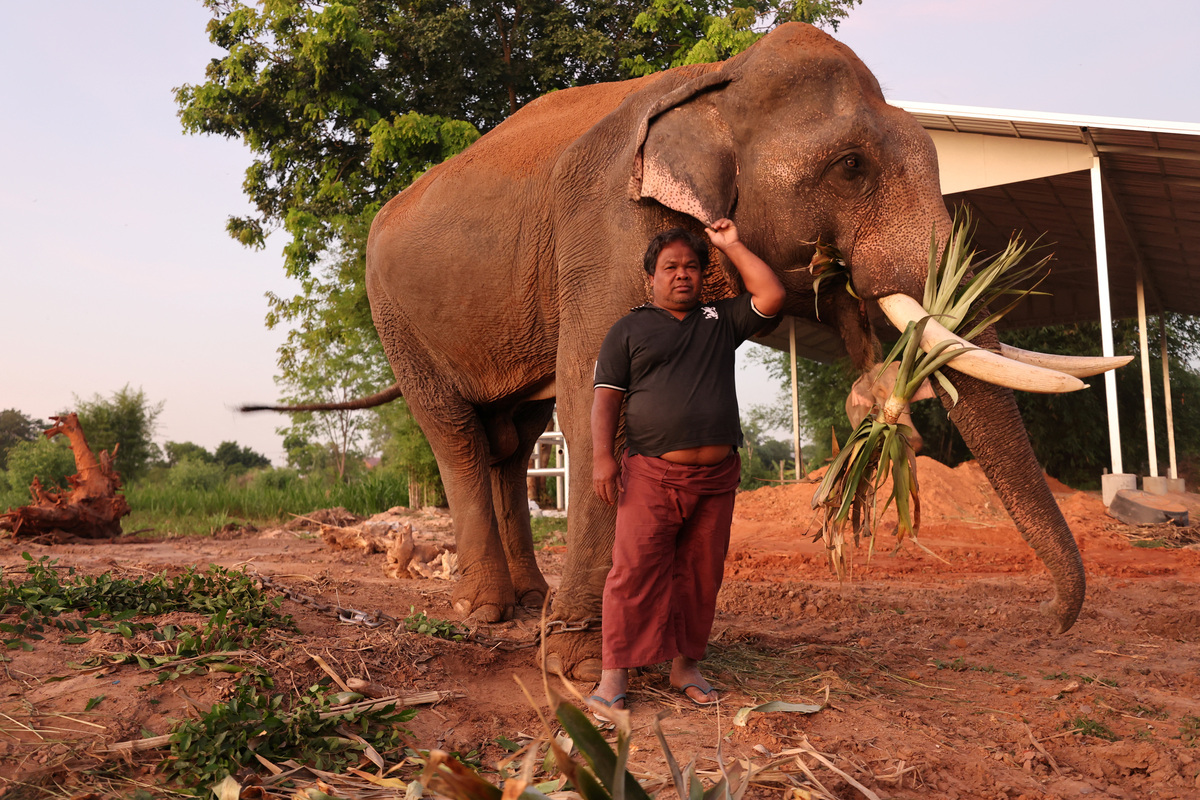
A mahout named Sak, 55, poses with his elephant at Ba Ta Klang elephant village in Surin, Thailand April 5, 2022. Thailand has about 3,200 to 4,000 captive elephants, according to official agencies, and about 3,500 in the wild. REUTERS/Jorge Silva
The families in Ban Ta Klang, the epicentre of Thailand's elephant business located in Surin province, have cared for elephants for generations and have a close connection to them.
Elephant shows and rides have long been popular with tourists, especially the Chinese, while animal rights groups' criticism of how elephants are handled there has given rise to tourism in sanctuaries.
"We are bound together, like family members," Siriporn’s mother Pensri Sapmak, 60, said.
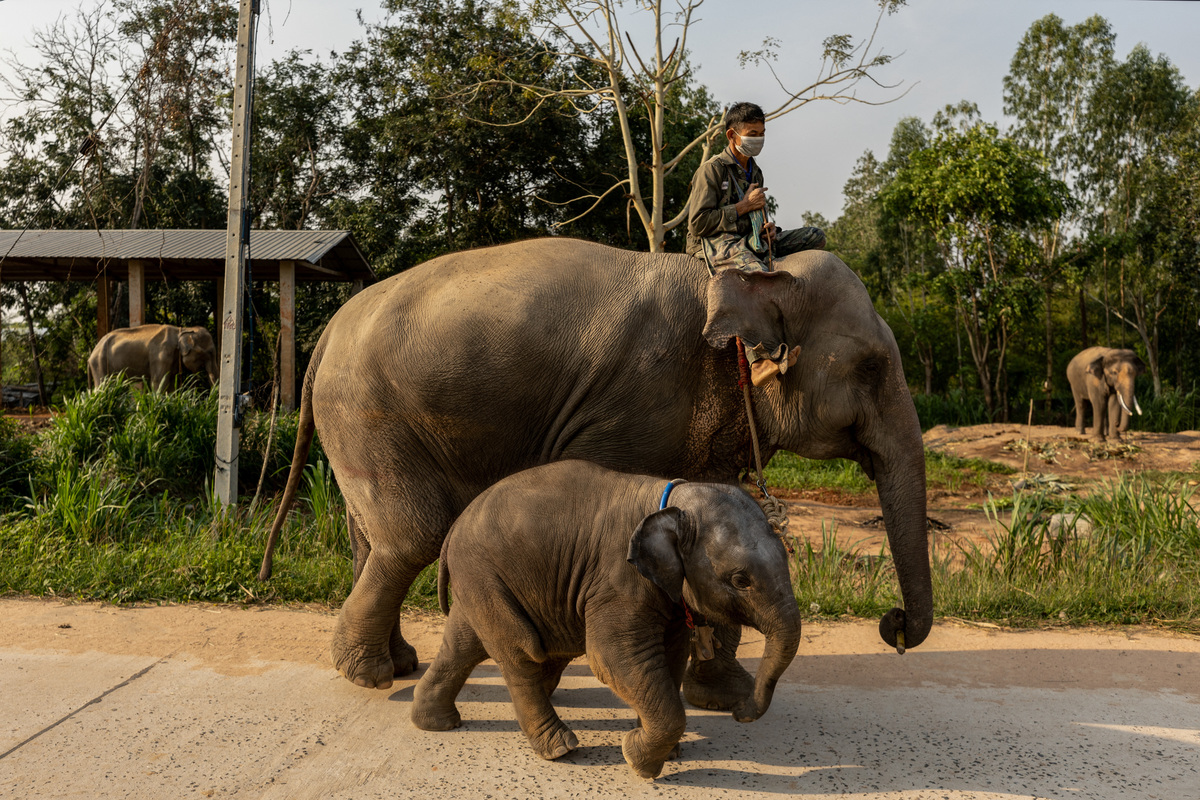
Baby elephant Pangmaemae Plainamo walks with her mother and a mahout at Ba Ta Klang village in Surin, Thailand April 8, 2022. Thailand has about 3,200 to 4,000 captive elephants, according to official agencies, and about 3,500 in the wild. REUTERS/Jorge Silva
"Without the elephants, we don’t know what our future will look like. We have today thanks to them."
The government has sent 500,000 kilograms of grass across multiple provinces since 2020 to help feed the elephants, according to the Livestock Development Department, which oversees captive elephants.
Elephants, Thailand's national animal, eat 150 kg to 200 kg each day, according to the Wildlife Conservation Society.
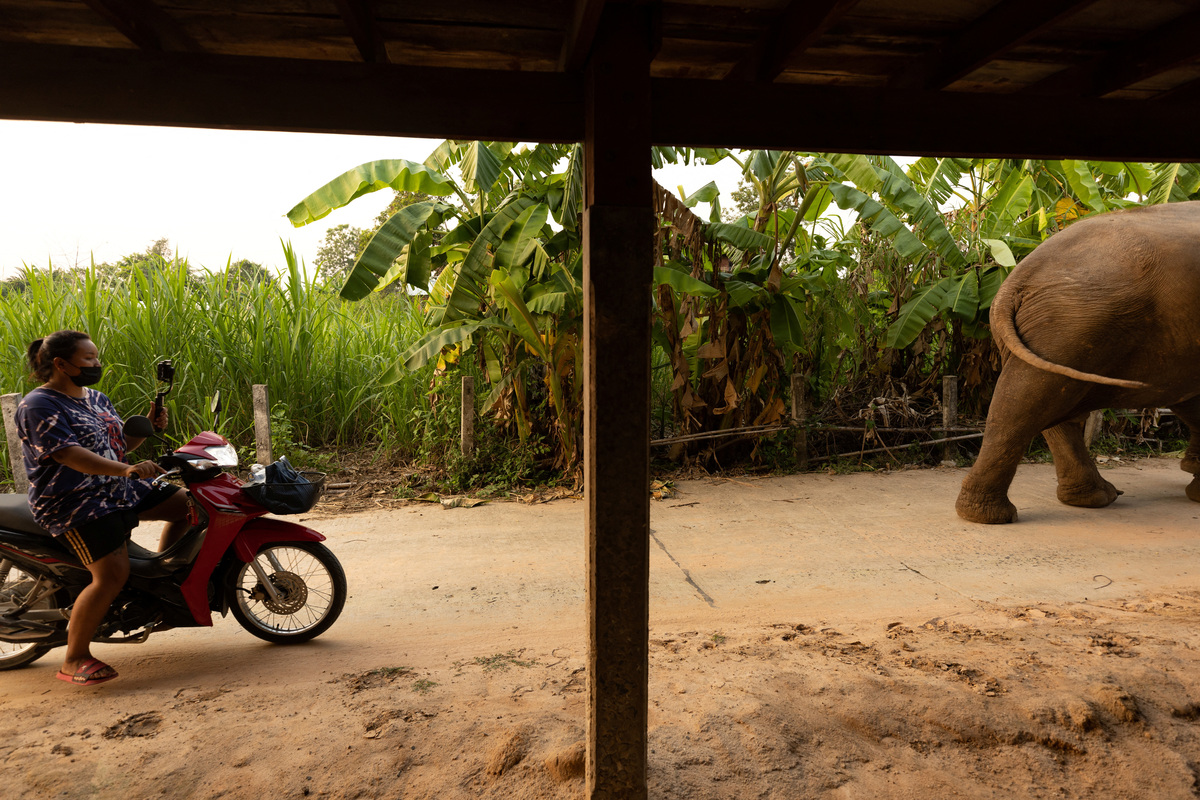
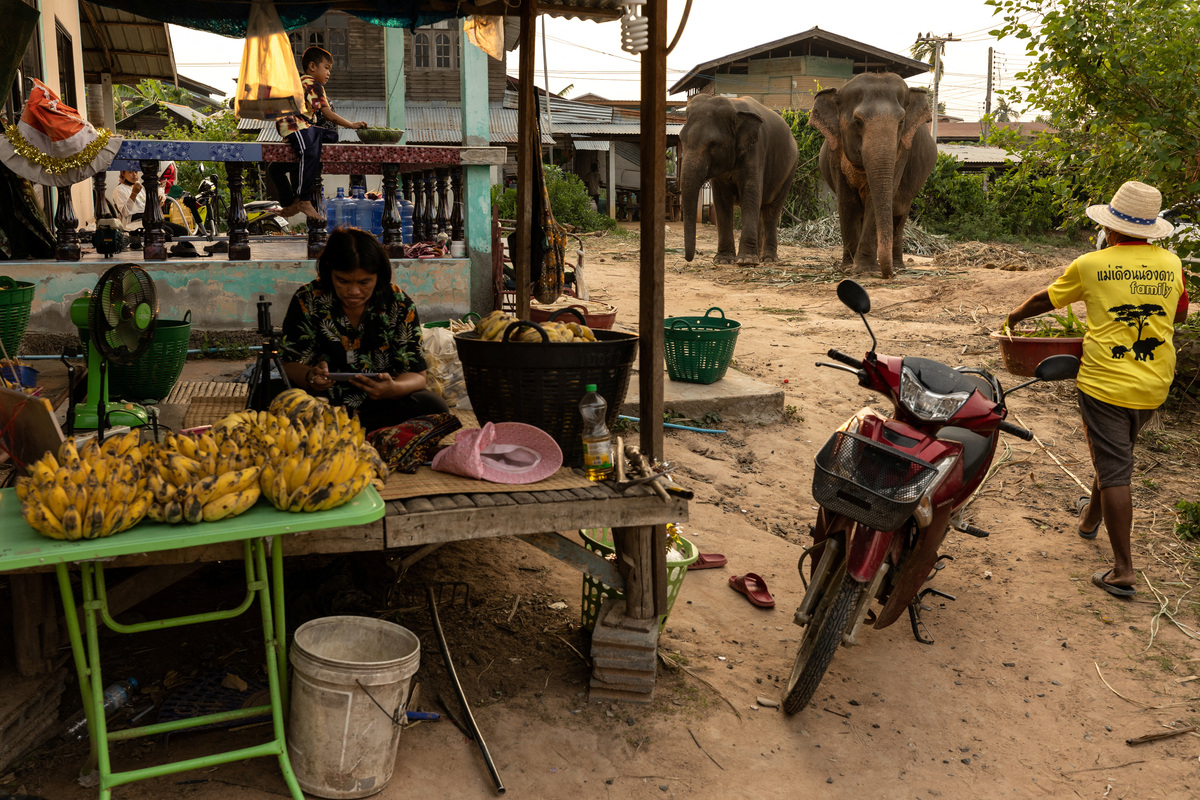
Jiranant Thongchalern, 30, rides a motorbike as she follows her elephant Si-Daw Khamsaen while live-streaming on social media to solicit donations to feed the elephant, at the village of Ba Ta Klang in Surin, Thailand April 6, 2022. "I sell fruit online from 10am to 10pm," the mahout's wife said. "We spend that income on buying food for elephants, but selling fruit online is not enough to feed them." REUTERS/Jorge Silva
Siriporn and her mother, however, said they have not yet received any government support.
"This is a big national issue," said Livestock Development Department Director-General Sorawit Thanito.
He said the government plans to assist elephants and their caretakers and that "measures along with a budget will be proposed to cabinet," without giving a time frame.
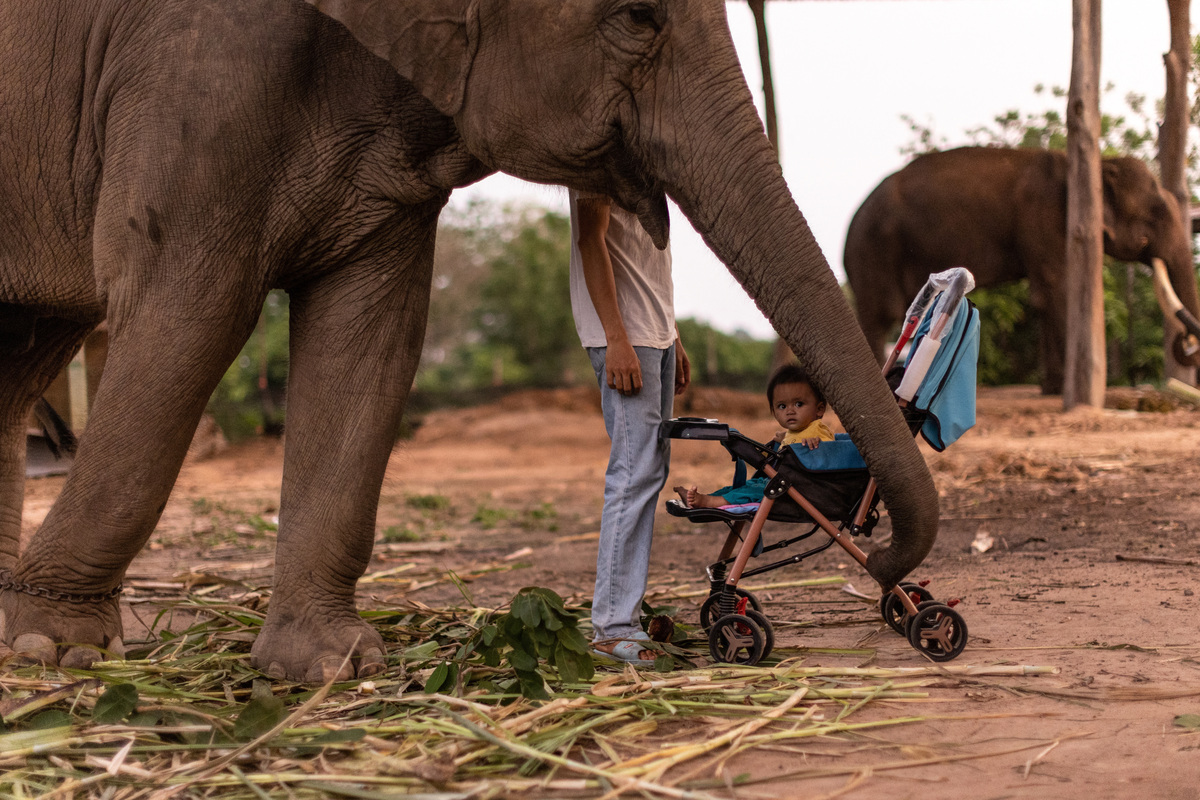
A man, with a baby in a stroller, stands next to an elephant in the yard of a mahout's house at Ba Ta Klang elephant village in Surin, Thailand April 6, 2022. Thailand has about 3,200 to 4,000 captive elephants, according to official agencies, and about 3,500 in the wild. REUTERS/Jorge Silva
While the government is expecting 10 million foreign tourists this year, some say this may not be enough to lure elephant owners back to top tourist destinations, given the costs involved. Chinese tourists, the mainstay of elephant shows, have also yet to return amid COVID-19 lockdowns at home.
"Who has the money right now to arrange a truck... and how much security (do) they have that they are really going to have business again when they go back?," said Wiek.
He expected more elephants to be born in captivity over the next year, exacerbating the pressures on their owners.
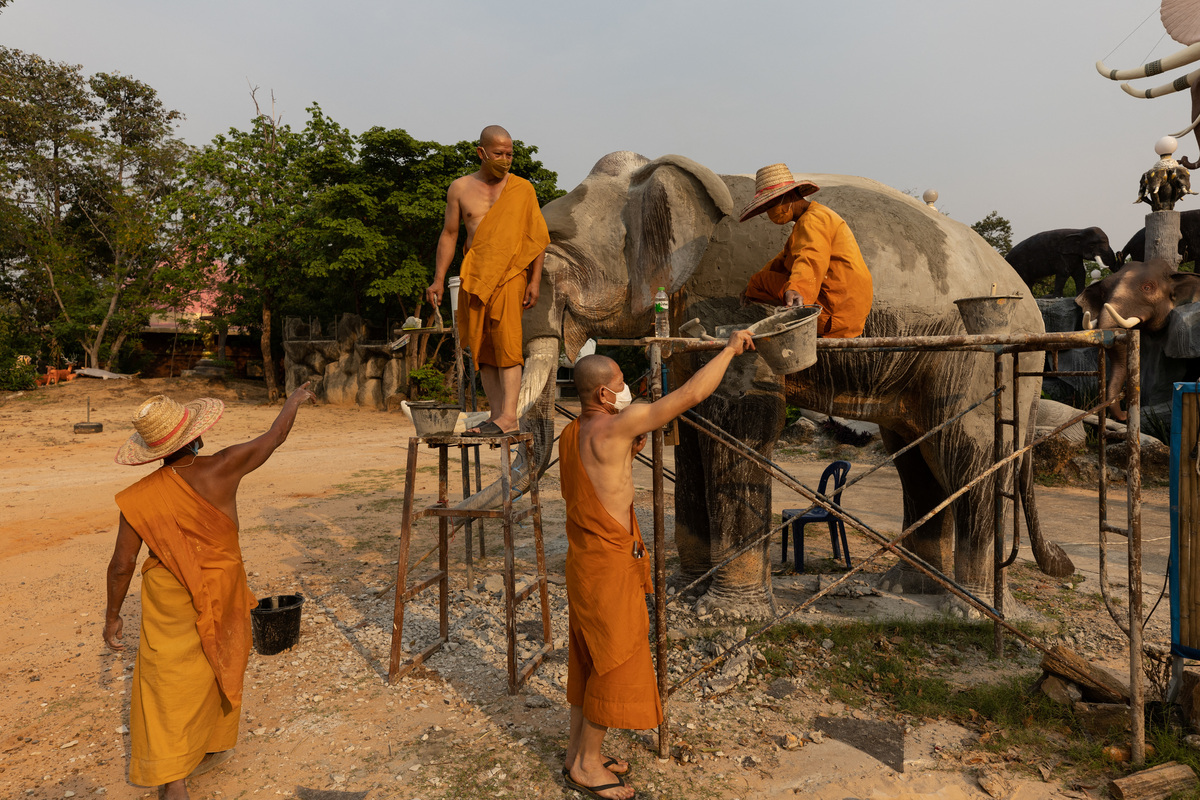
Buddhist monks work on an elephant sculpture at a temple in front of the elephant cemetery at Ba Ta Klang elephant village in Surin, Thailand April 7, 2022. The families in Ban Ta Klang, the epicentre of Thailand's elephant business located in Surin province, have cared for elephants for generations and have a close connection to them. REUTERS/Jorge Silva
"Some days we make some money, some days none, meaning there's going to be less food on the table"," said Pensri.
"I don't see a light at the end of the tunnel."
($1 = 36.4200 baht)
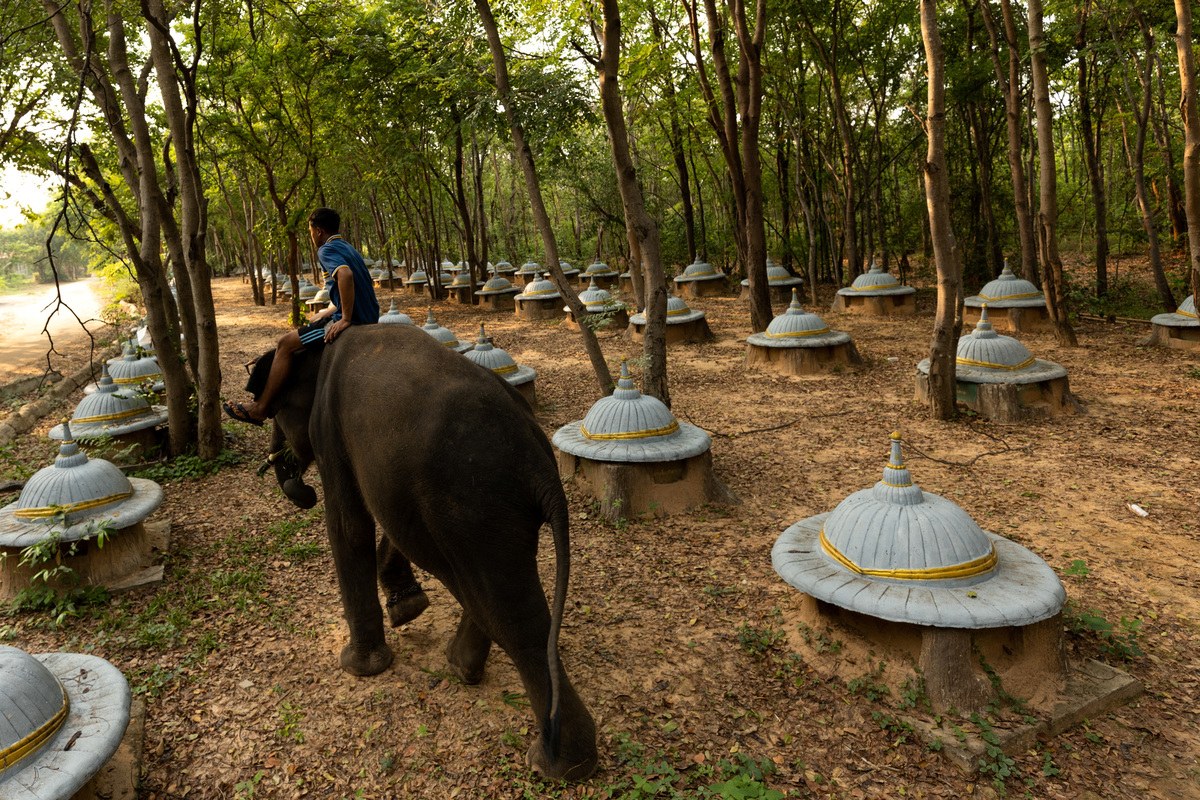
A mahout rides an elephant between the tombs of an elephant cemetery at Ba Ta Klang elephant village in Surin, Thailand April 7, 2022. Each tomb contains the ashes of an elephant that once lived in the village. REUTERS/Jorge Silva
(Reporting by Chayut Setboonsarng; Additional reporting Panarat Thepgumpanat; Editing by Ana Nicolaci da Costa)
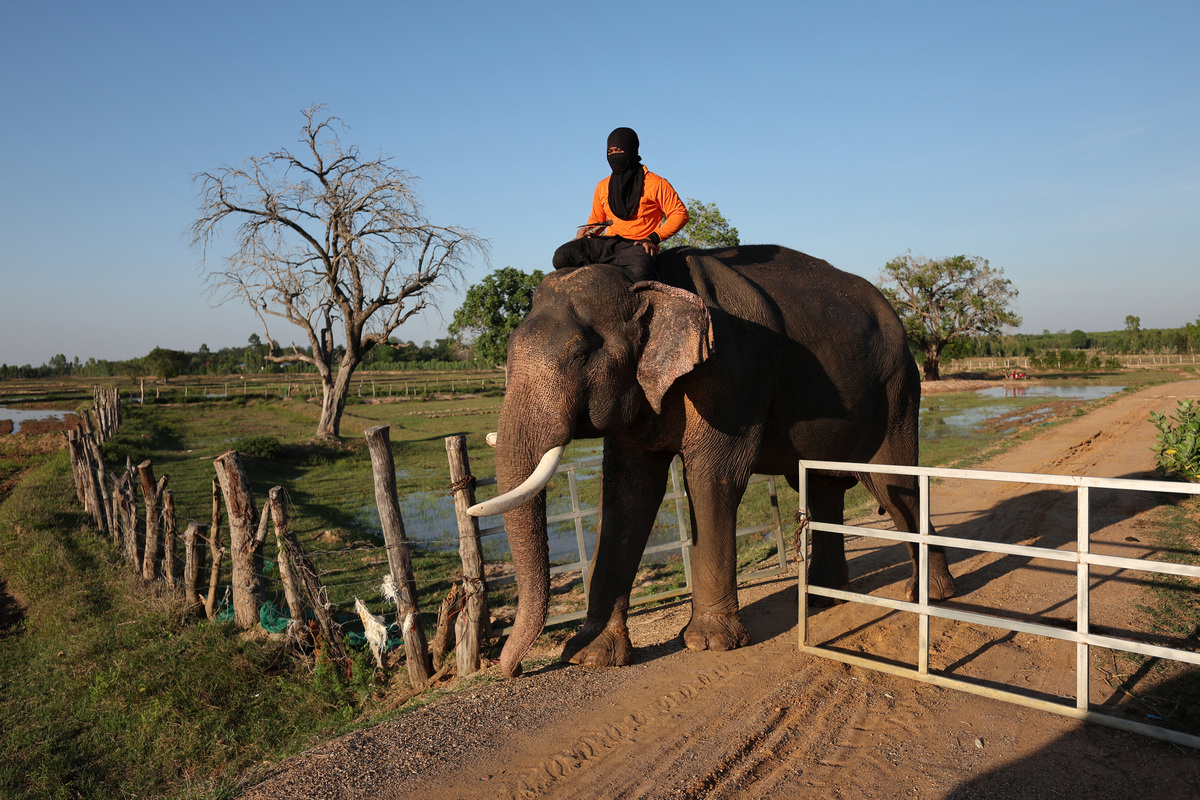
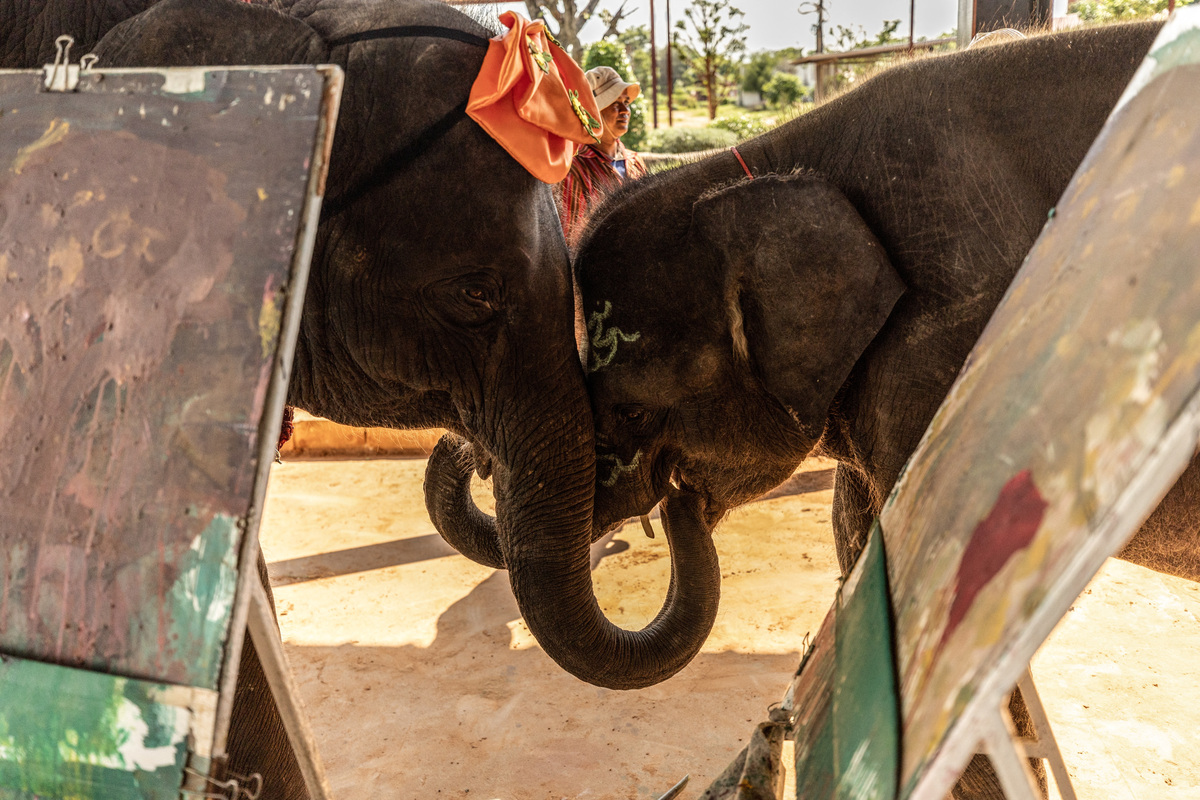
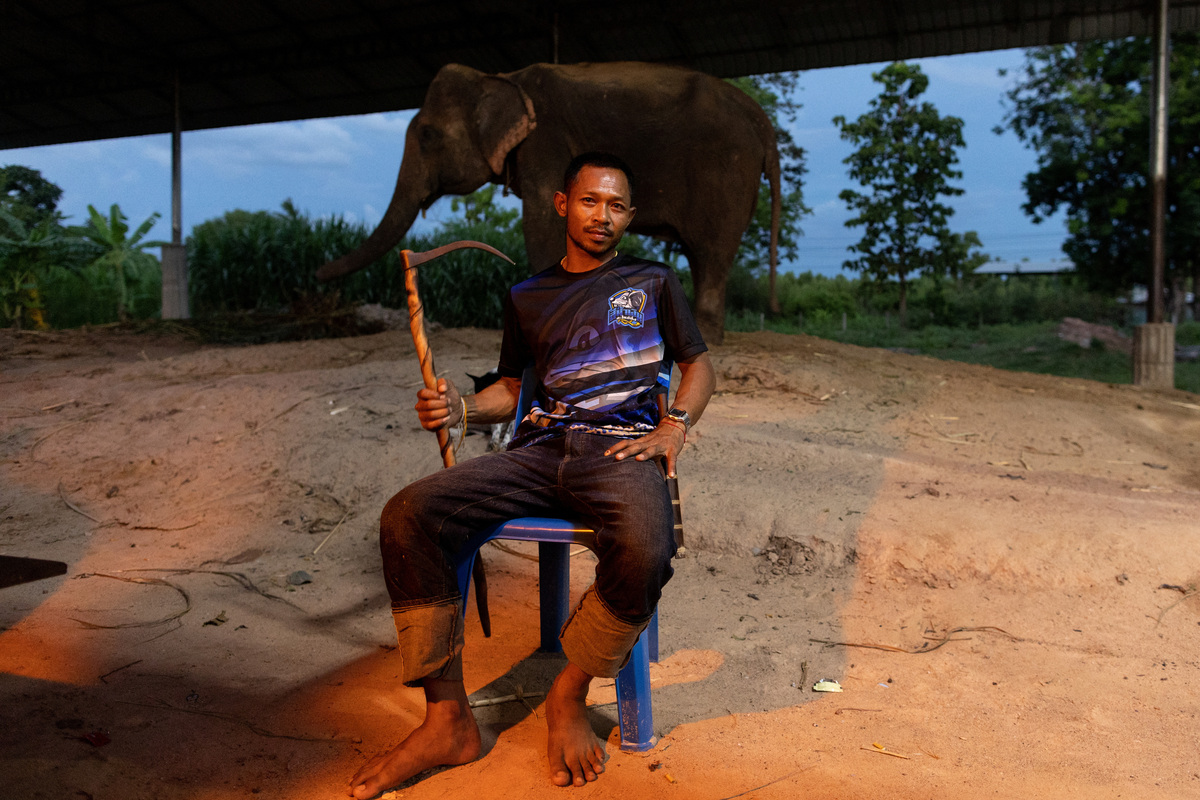
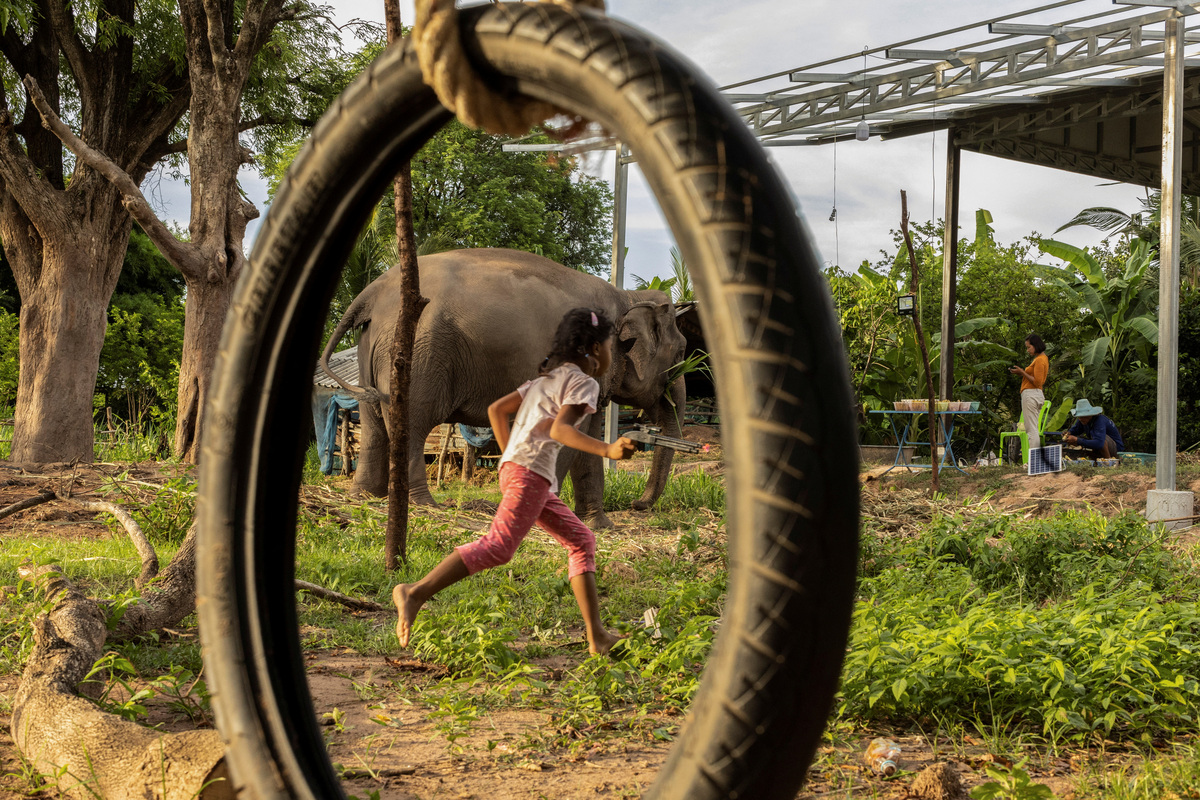
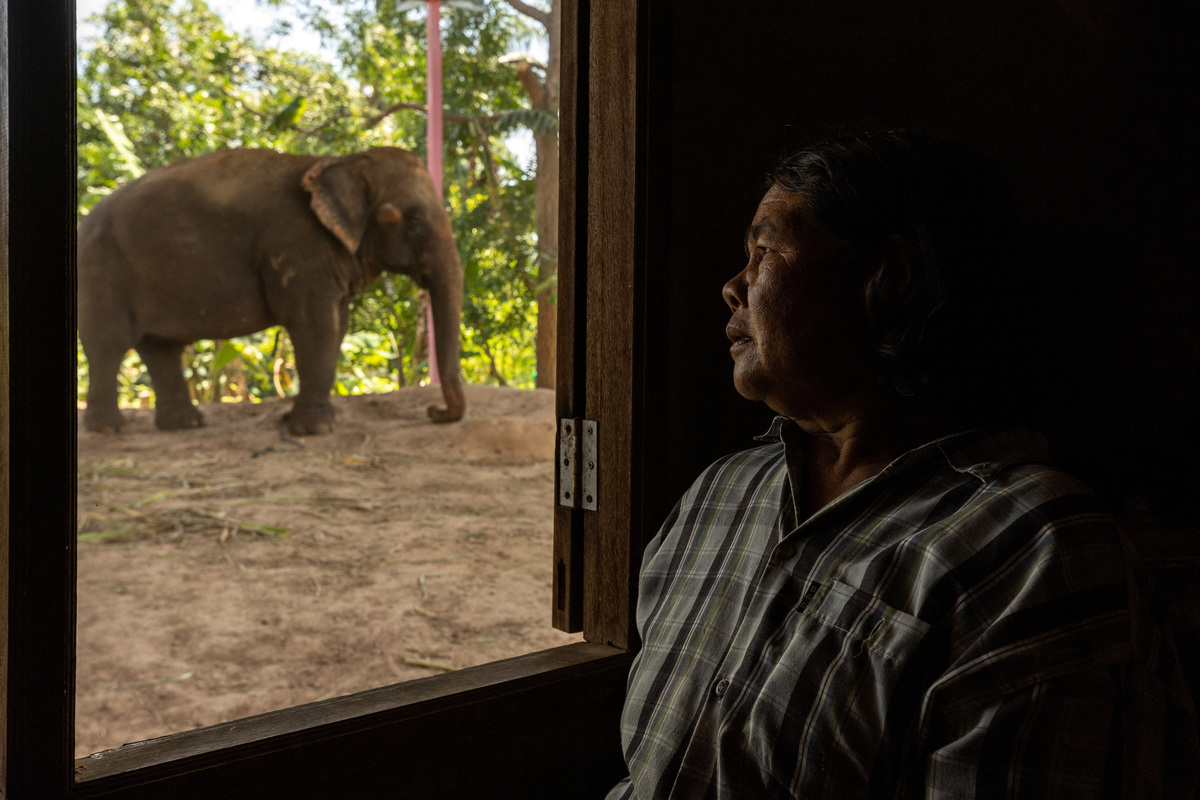
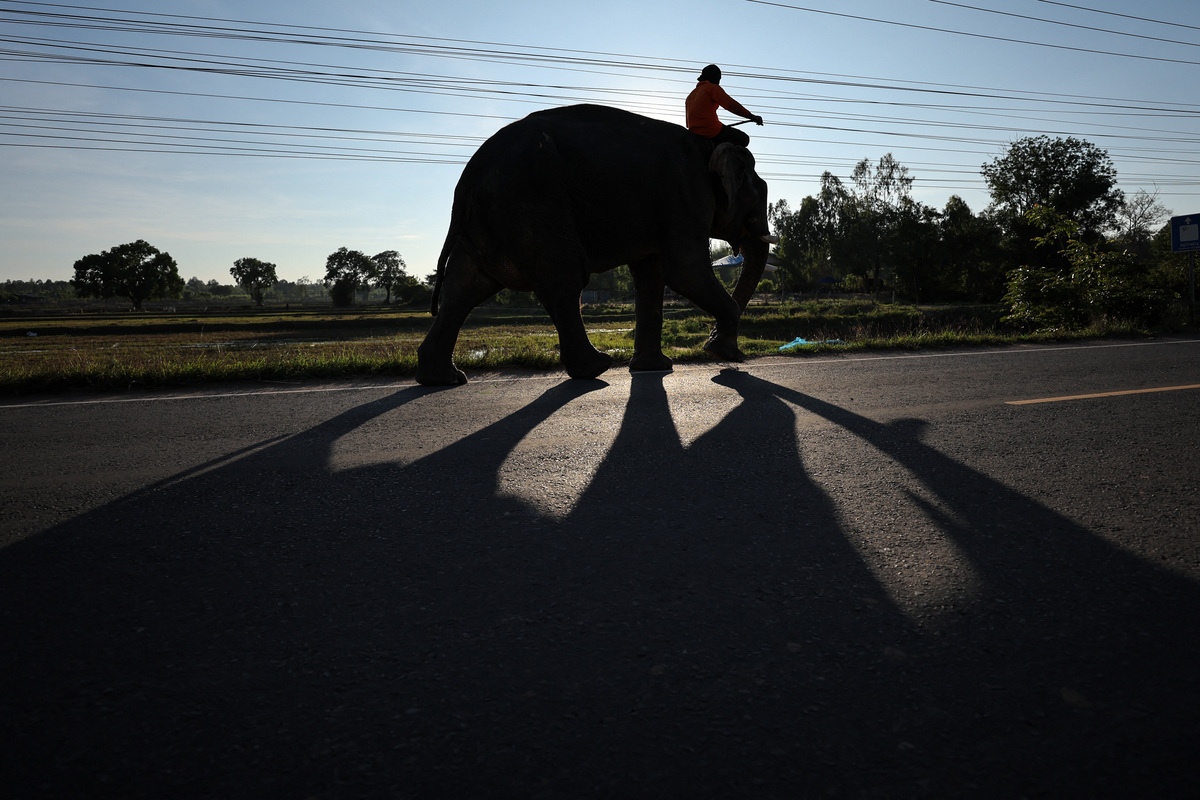
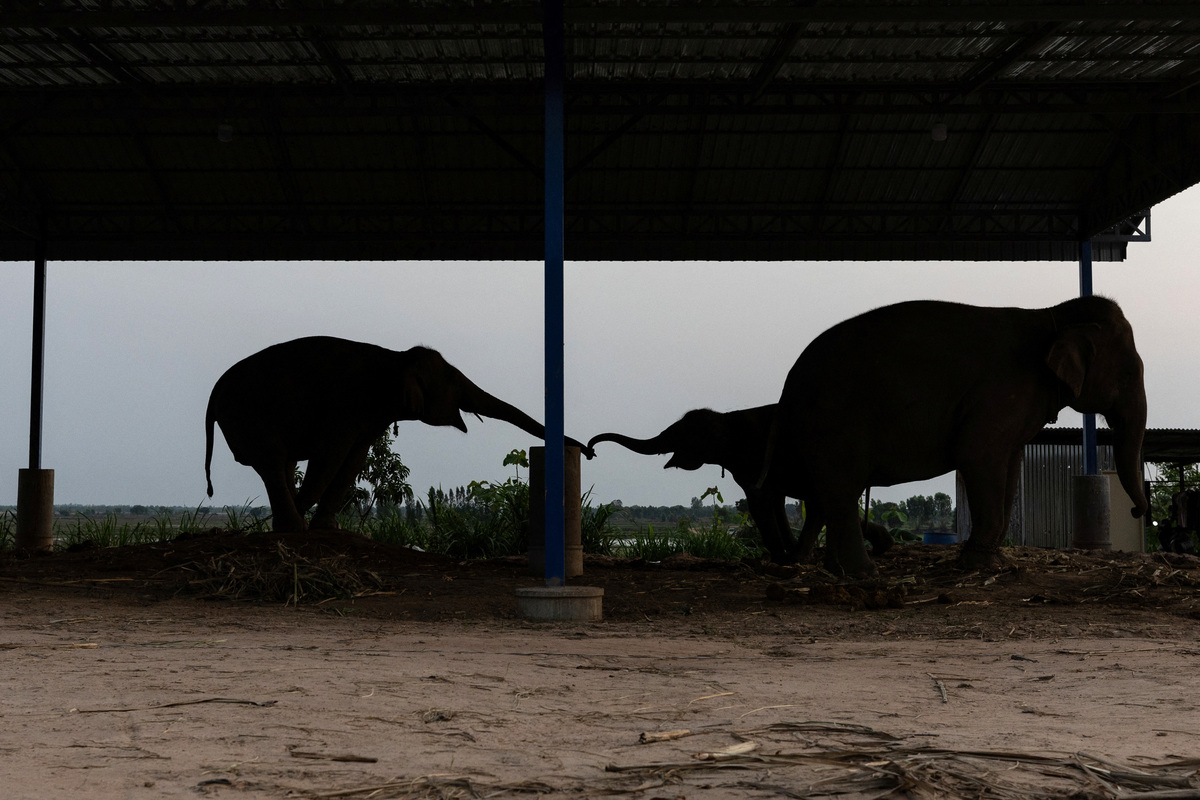
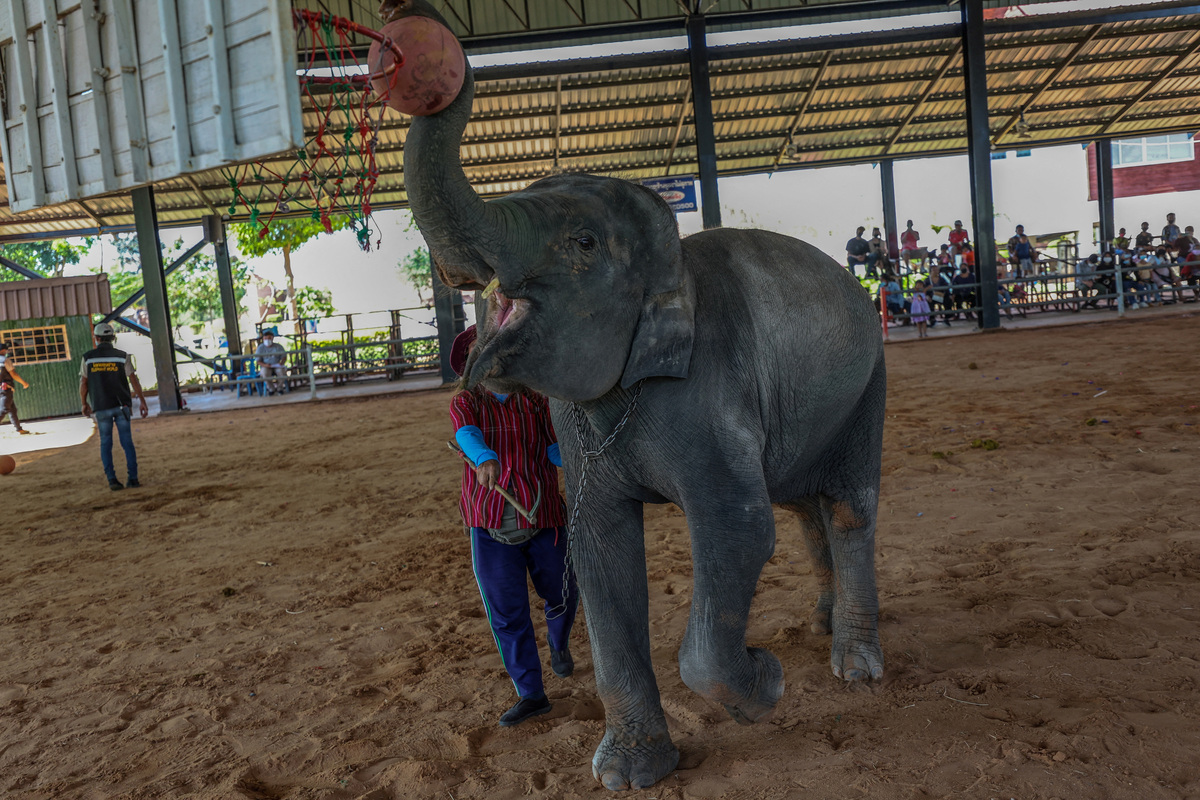
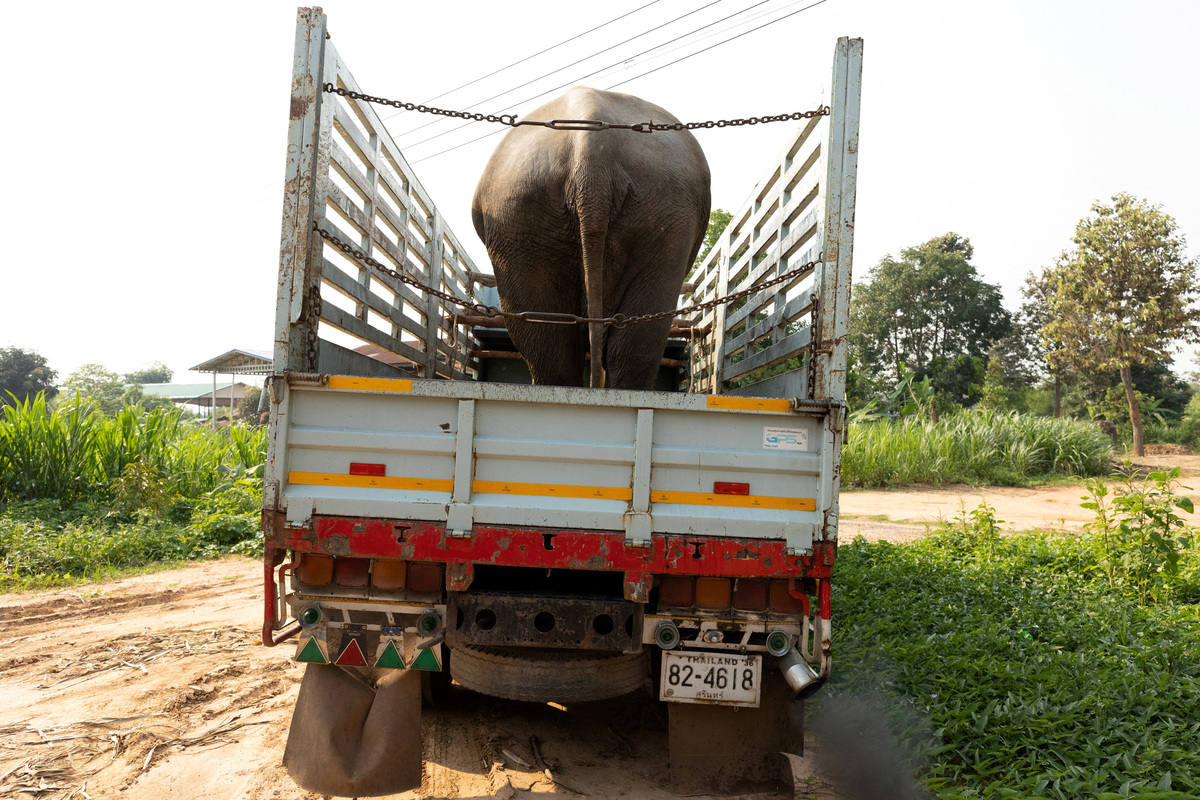
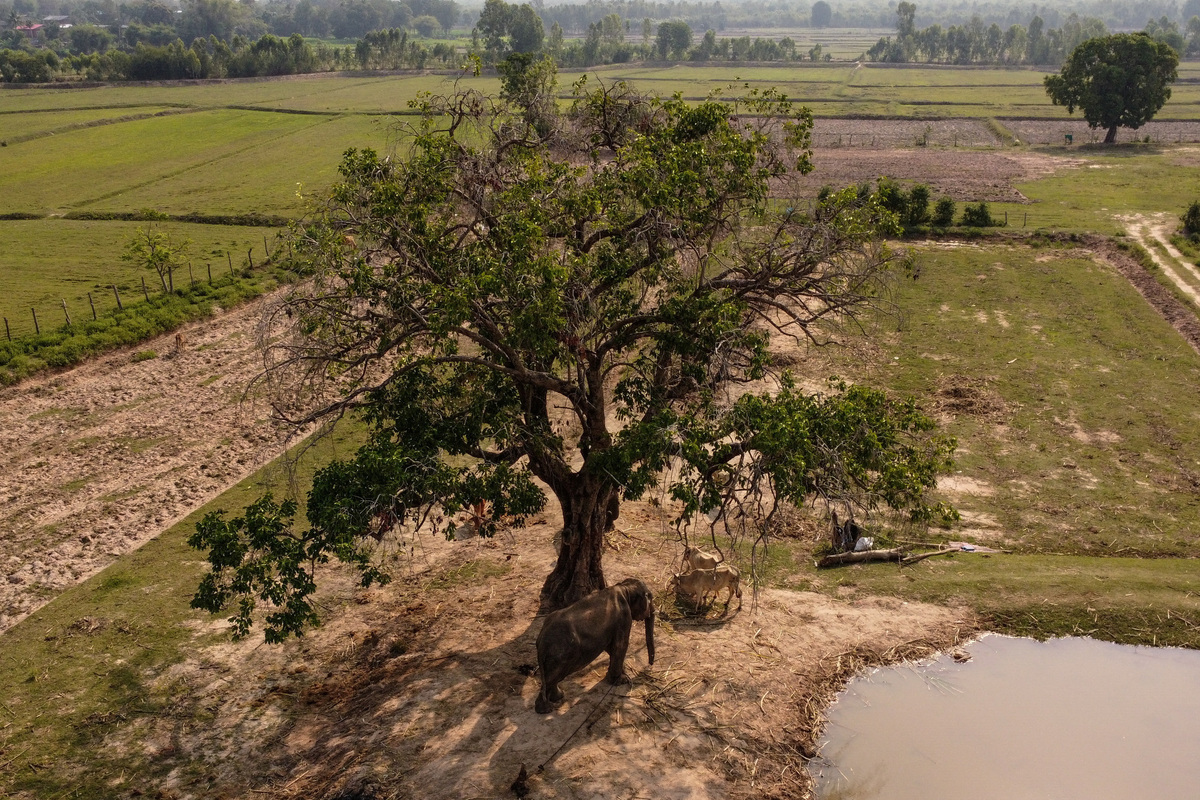
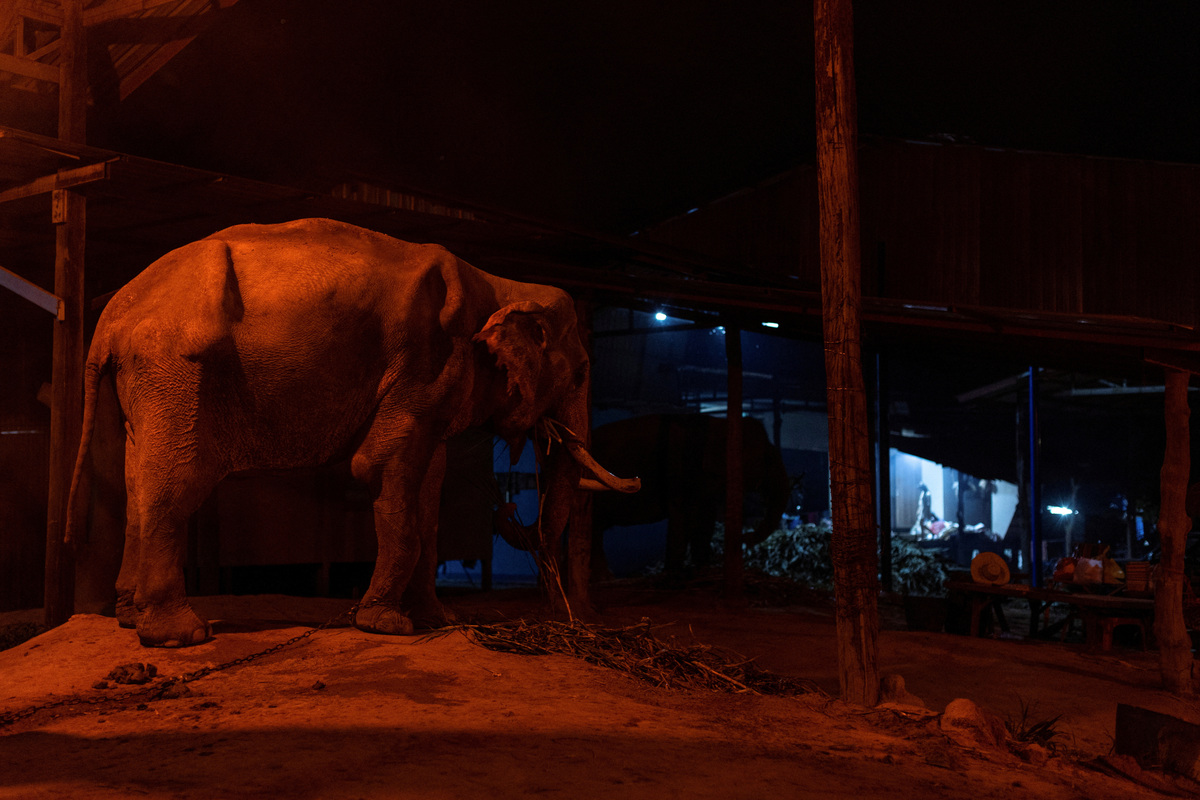
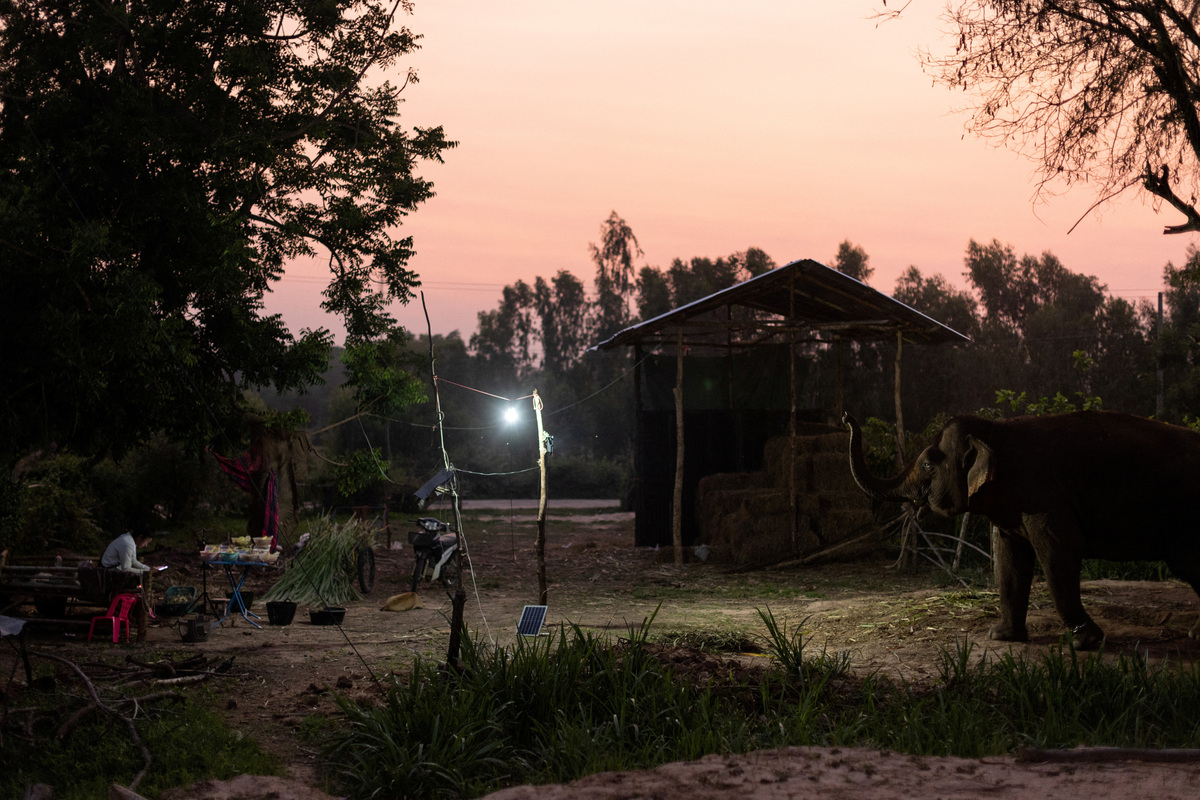
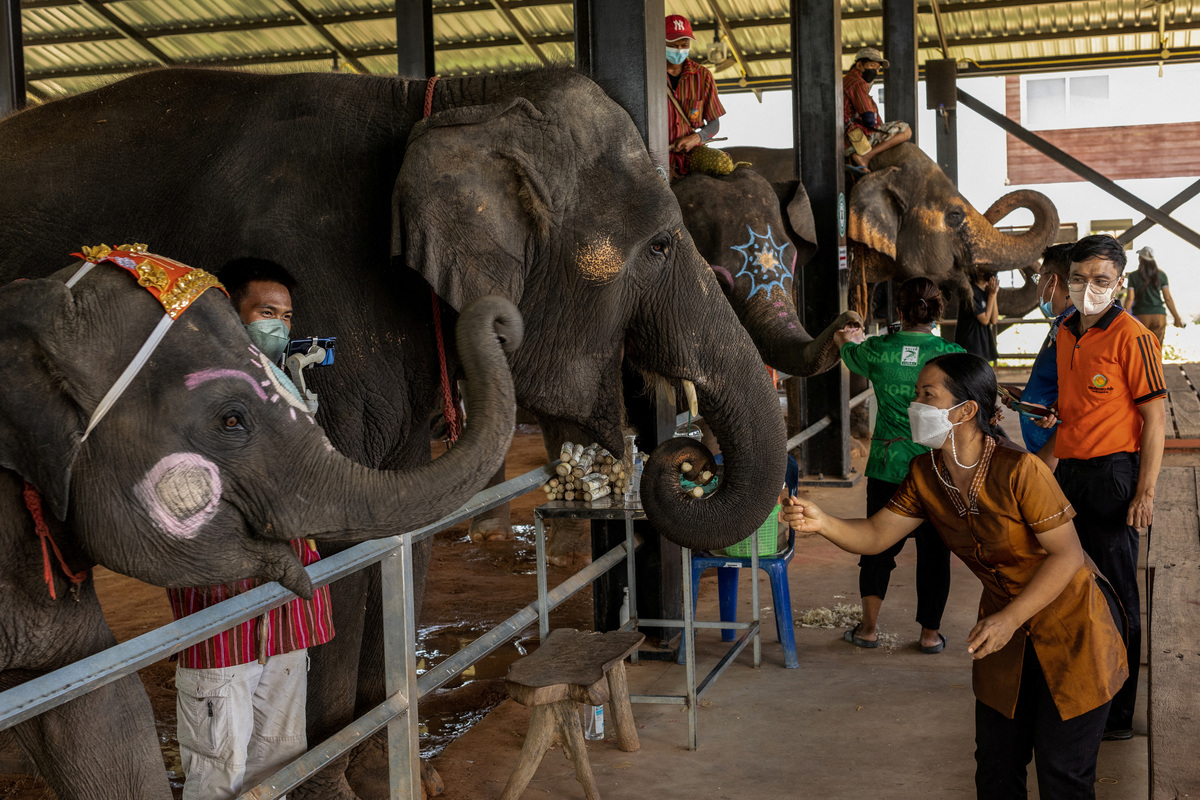
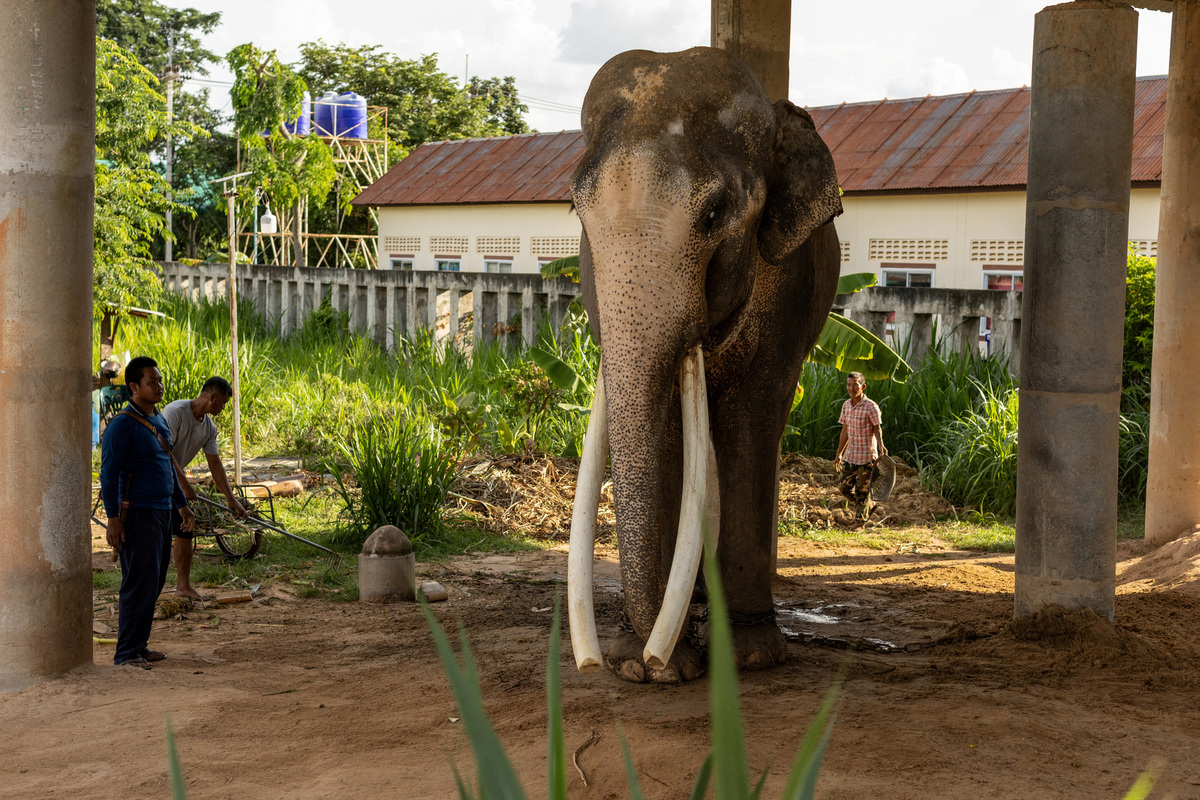
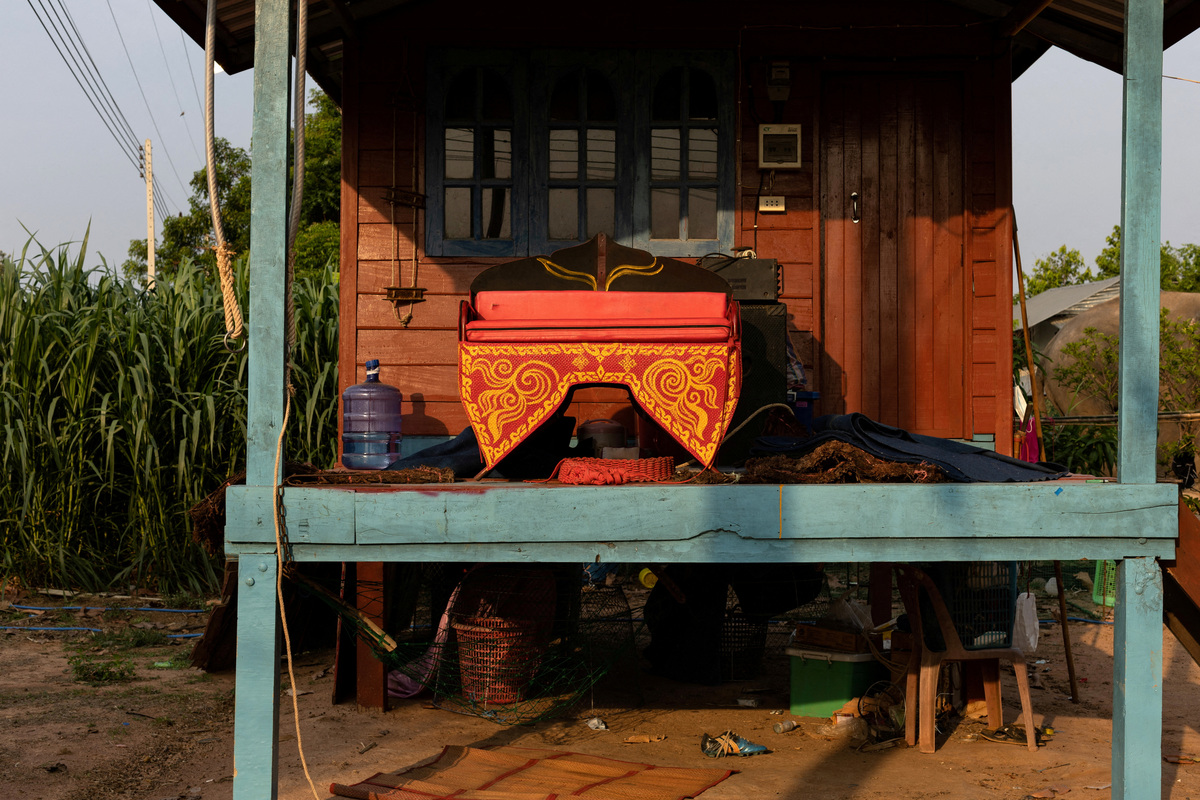
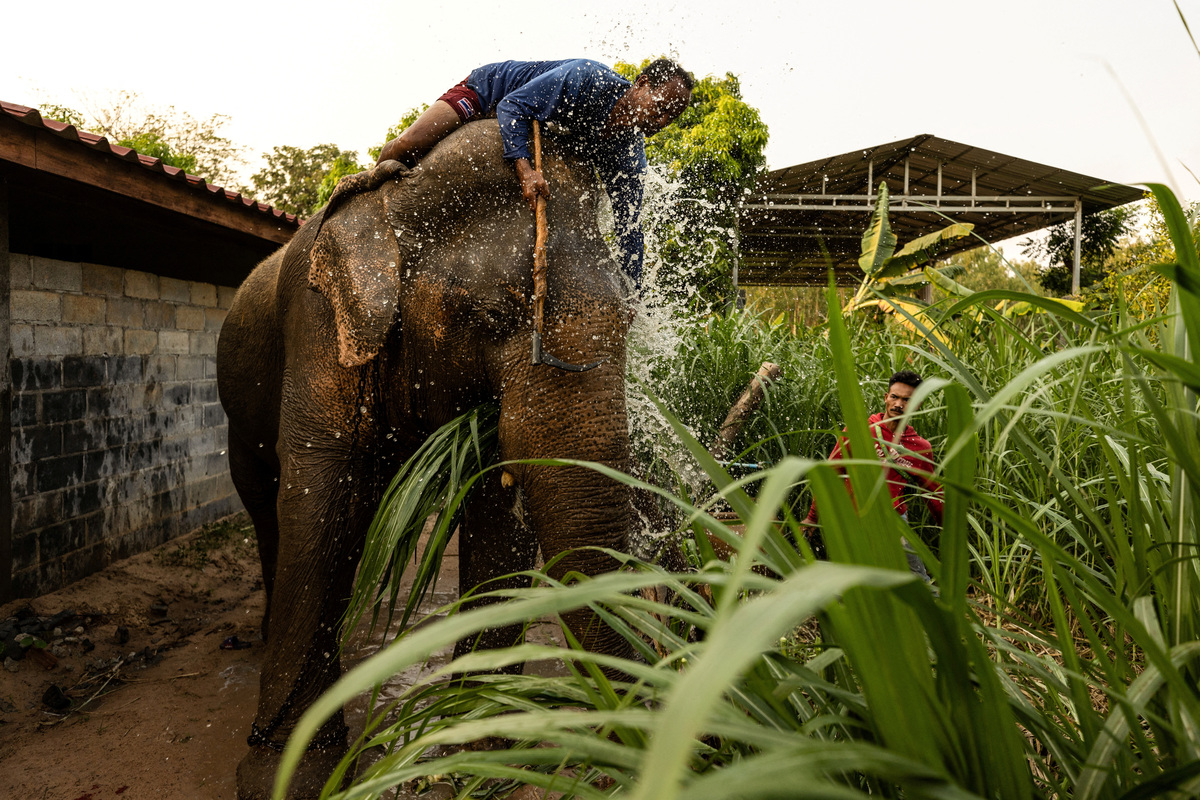
Kaennapa Suksi prepares her phone to live-stream on social media in the backyard of her house with her elephants at Ba Ta Klang village in Surin, Thailand April 7, 2022. "We worked in Pattaya as an elephant taxi taking tourists around," Kaennapa Suksi said. "The COVID crisis forced us to return home. But we don't have space for elephants, or space to grow food for them. Social media helps us to survive. It helps to connect other people, and for them to experience our real life and obstacles." REUTERS/Jorge Silva A mahout with his face covered rides on an elephant while training for tourist shows at Ba Ta Klang elephant village in Surin, Thailand April 5, 2022. Only 400,000 foreign tourists arrived in Thailand last year compared with nearly 40 million in 2019. REUTERS/Jorge Silva Two elephants touch each other after performing in a painting show for local tourists at Ba Ta Klang elephant village in Surin, Thailand June 16, 2022. Only 400,000 foreign tourists arrived in Thailand last year compared with nearly 40 million in 2019. REUTERS/Jorge Silva Elephant mahout Wit, 26, poses with his bull hook while training an elephant at Ba Ta Klang village in Surin, Thailand June 16, 2022. The families in Ban Ta Klang, the epicentre of Thailand's elephant business, have cared for elephants for generations and have a close connection to them. REUTERS/Jorge Silva A girl runs past an elephant while Pailin Rayayoi, a 35-year-old elephant owner, starts her live-stream on social media in the backyard of her house at Ba Ta Klang elephant village in Surin, Thailand June 16, 2022. Live-streaming is a new - and insecure - source of income for elephant owners, who previously relied on tourism to earn a wage. REUTERS/Jorge Silva Elephant owner Pensri Sapmak, 60, sits inside her house as one of her elephants rests in the backyard at Ba Ta Klang elephant village in Surin, Thailand April 6, 2022. "Without elephants we don't earn any money," Pensri Sapmak said. "We have owned elephants since my parents' time, and we are bound together, like family members. My father captured wild elephants in the jungle. I want to be with them forever." REUTERS/Jorge Silva An elephant's shadow is cast on a road at Ba Ta Klang elephant village in Surin, Thailand April 5, 2022. The families in Ban Ta Klang, the epicentre of Thailand's elephant business located in Surin province, have cared for elephants for generations and have a close connection to them. REUTERS/Jorge Silva Chained elephants reach to touch their trunks under a roof at Ba Ta Klang village in Surin, Thailand April 7, 2022. The families in Ban Ta Klang, the epicentre of Thailand's elephant business, have cared for elephants for generations and have a close connection to them. REUTERS/Jorge Silva An elephant is forced to play basketball during a show for local tourists at Ban Ta Klang elephant village in Surin, Thailand April 5, 2022. Only 400,000 foreign tourists arrived in Thailand last year compared with nearly 40 million in 2019. REUTERSAn elephant rides in a truck at Ban Ta Klang village in Surin, Thailand April 8, 2022. Thailand has about 3,200 to 4,000 captive elephants, according to official agencies, and about 3,500 in the wild. REUTERSAn elephant is chained next to a tree while being tamed at Ban Ta Klang elephant village in Surin, Thailand April 8, 2022. Thailand has about 3,200 to 4,000 captive elephants, according to official agencies, and about 3,500 in the wild. REUTERSAn elephant with bones showing through its skin is seen outside a mahout's house at Ban Ta Klang elephant village in Surin, Thailand April 5, 2022. Thailand has about 3,200 to 4,000 captive elephants, according to official agencies, and about 3,500 in the wild. REUTERSElephant owner Pailin Rayayoi, 35, sits in front of her unemployed elephant Bai Bau as they live-stream on social media in the backyard of her house at Ban Ta Klang elephant village in Surin, Thailand April 6, 2022. "My two elephants used to work in Pattaya and Phuket," Pailin Rayayoi said. "Both of them were 'taxi' elephants for riding. Now we have been unemployed for three years already. That's why we are selling fruit on social media." REUTERSTourists feed elephants during a show at Ban Ta Klang elephant village in Surin, Thailand June 16, 2022. Only 400,000 foreign tourists arrived in Thailand last year compared with nearly 40 million in 2019. REUTERSA local woman sitting in a restaurant wears a ring made from ivory, at Ban Ta Klang elephant village in Surin, Thailand June 16, 2022. Thailand has about 3,200 to 4,000 captive elephants, according to official agencies, and about 3,500 in the wild. REUTERSMahouts stand next to 53-year-old male elephant Thong Bai at Ban Ta Klang village in Surin, Thailand June 16, 2022. Thong Bai is a very popular elephant, his owner said, as he has been used as a model to promote local beer brand Chang, which in Thai means elephant. REUTERSAn elephant seat, called a howdah, is seen outside a mahout's house at Ban Ta Klang village in Surin, Thailand April 7, 2022. The families in Ban Ta Klang, the epicentre of Thailand's elephant business, have cared for elephants for generations and have a close connection to them. REUTERSA mahout named Im bathes his 70-year-old male unemployed elephant Kam-Sang at Ban Ta Klang village in Surin, Thailand April 6, 2022. The families in Ban Ta Klang, the epicentre of Thailand's elephant business, have cared for elephants for generations and have a close connection to them. REUTERS
Sign up to read this article
Read news from 100’s of titles, curated specifically for you.