Get all your news in one place.
100’s of premium titles.
One app.
Start reading
Radio France Internationale
World
RFI

How Iran is enforcing an unprecedented digital blackout to crush protests

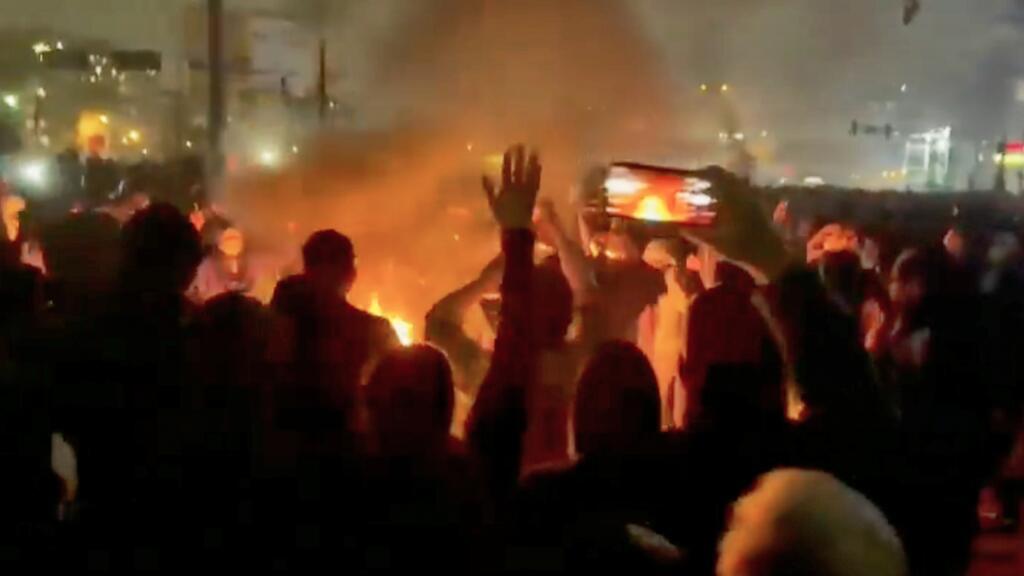
An image taken from a video shared on social media shows protesters gathered around a bonfire in the streets of Tehran, as Iran remains largely cut off from the outside world, Friday 9 January 2026. AP

As protests continue across Iran, authorities are enforcing a near-total digital blackout – cutting internet and phone communications – as rights groups warn that hundreds of demonstrators have been killed. The shutdown is choking the protest movement and limiting what can be seen, verified and reported beyond Iran’s borders.

The blackout is making it far harder for protesters to communicate and for images and eyewitness accounts to reach the outside world. It has also disrupted daily life in Iran, where banking, payments and many basic services rely on digital networks.
For more than two and a half days, Iran has been largely cut off from the outside world and from itself. The flow of information inside the country and abroad has slowed to a trickle, with most Iranian websites inaccessible from outside Iran.

The nationwide shutdown began late on Thursday and quickly spread across the country. The independent monitoring group NetBlocks said the blackout had lasted for more than 60 hours, with national connectivity stuck at around 1 percent of normal levels.

“This censorship measure represents a direct threat to the safety and wellbeing of Iranians at a critical moment for the country’s future,” the organisation said.

Data published by the US-based internet infrastructure company Cloudflare also showed a massive collapse in online traffic coming out of Iran.

France's Iranian diaspora divided over deadly protests back home

Protesters targeted

The demonstrations began on 28 December in Tehran, triggered by shopkeepers protesting against the rising cost of living and the collapse of the national currency. In the early days of the movement, the authorities focused their restrictions on urban areas and centres of unrest.

In Tehran, internet cuts targeted neighbourhoods known for protests, including Narmak, Molavi and the Grand Bazaar. The severity of the restrictions varied depending on location and internet provider.

In an analysis published by Filter Watch, a project that monitors online censorship in Iran, Nargès Keshavarznia from the human and digital rights group Miaan described how the shutdowns were closely synchronised with moments of mobilisation.

Internet access dropped sharply during protest gatherings and sometimes eased when streets emptied.

Earlier in the protests, Iran’s National Information Network, a domestic intranet developed since 2016 to allow the country to function while disconnected from the global internet, often remained accessible.

While international traffic was heavily restricted, some internal services continued to operate. That changed on Thursday night.

“Overall, all communication is impossible,” Amir Rashidi, an Iranian expert on cybersecurity and digital rights, told RFI, saying conditions had sharply worsened.

“It’s not just the internet that’s cut, but also phone communications, whether mobile or landline, inside the country and to or from abroad.”

Rashidi said the situation was constantly changing from one region to another, but making a phone call had become extremely difficult. “Sometimes you dial a number, you hear ‘beep, beep, beep’, and then nothing,” he said.

‘We're fighting a daily battle': Iranian women dare to shed hijab in public

 Shutdown unprecedented

To get around the restrictions, more Iranians have turned to Starlink, a satellite internet service that allows users to connect without relying on local networks. In recent days, however, these devices appear to have been targeted by jamming attempts.

“Iran seems to have strengthened its ability to control these techniques for restricting internet access,” Valère Ndior, a law professor at the University of Western Brittany and a specialist in digital governance, told RFI.

Iran has repeatedly shut down communications during periods of unrest, notably during the 2019 protests, in 2022 after the death of Mahsa Amini – a 22-year-old woman who died in custody after being arrested by Iran’s morality police – and during the conflict with Israel in June 2025.

But Rashidi said the current blackout goes further than anything seen before. Even the National Information Network is down, he said, a situation without precedent.

“This national internet was one of the key tools of control for the Iran,” Rashidi said. Usually, he explained, people could still move within a closed internal network even if access to the outside world was blocked.

“Normally you can’t leave the building, but you can still move from room to room,” he said. “Now you’re stuck in a single room. You can’t even change rooms.”

The authorities are therefore accepting the paralysis of their own infrastructure to shut down every channel of communication, a sign that they believe “their survival is at stake”, Rashidi added.

South Africa’s joint drills a show of influence in the Indian Ocean

Unseen repression

Despite the blackout, protests have continued. A small number of videos circulating on social media, likely shared via satellite connections, show crowds marching in Tehran, Mashhad and other cities. The images could not be fully verified.

The digital silence has heightened fears of a violent crackdown taking place out of sight.

The Centre for Human Rights in Iran, a US-based non-profit, warned on Sunday that “a massacre is under way in Iran”, saying it had received “direct testimonies and credible reports” of hundreds of protesters killed.

The Norway-based group Iran Human Rights also reported that at least 192 demonstrators had been killed over two weeks of protests.

Other NGOs have warned the true number of deaths may be even higher, with some hospitals reporting more than 500 fatalities and rights advocates warning that the blackout is hindering efforts to document casualties accurately.

Beyond repression, the blackout is hitting daily life and the economy. “Cash machines don’t work, banks aren’t operating normally, people can’t cash cheques or access their money,” Rashidi said.

Ndior said it was still too early to measure the full impact, but warned that “the economic cost could run into hundreds of millions or even billions of dollars”.

Meanwhile, the X account of Iran’s supreme leader, Ali Khamenei, continued to post messages. On Saturday evening, he wrote: “If God wills it, soon God will spread a feeling of victory in the hearts of all the Iranian people.”


This article was adapted from the original version in French by RFI's Aurore Lartigue

Sign up to read this article
Read news from 100’s of titles, curated specifically for you.
Already a member? Sign in here
Related Stories
Top stories on inkl right now
One subscription that gives you access to news from hundreds of sites
Already a member? Sign in here
Our Picks
Fourteen days free
Download the app
One app. One membership.
100+ trusted global sources.