Holding a wintertime event in Wellington is not without its fair share of weather-related risk, as Labour can now testify.
The party’s election-year congress had its Saturday crowds thinned by the wild winds and rain that led to a suite of flight cancellations and road closures.
But several hundred attendees braved the weather, making their way to the capital’s Tākina convention centre to hear about the party’s plans to take back power come November 7.
Party president Jill Day opened proceedings with a positive tone, sharing feedback she had received from Labour members about the reasons for their support.
“Labour people care: we care deeply, we care about our communities, we care about democracy, we care about our future, and we care about each other…
“People matter. Not just the wealthy, not just the powerful, not just those who already have every opportunity – all people matter.”
Day said the country faced a choice between backing Labour’s vision of shared success, or the current coalition’s approach that placed greater faith in individuals than collective action and saw public services as costs rather than investments.
“Too many New Zealanders are becoming invisible: invisible when they cannot afford a doctor’s appointment, invisible when they are working hard but still struggling, invisible when they are looking for work, invisible when they are worried about their children and grandchildren.”
The election would be won not with fear, division or anger, she said, but hope.
If that suggested a high-minded approach to the campaign, it was somewhat offset by Labour deputy leader Carmel Sepuloni’s following remarks, which saw her attack Prime Minister Christopher Luxon more than she promoted her own leader Chris Hipkins.
Sepuloni accused Luxon of treating New Zealanders as “a cost to be cut instead of the investment they truly are”, citing the Government’s decision to overhaul the pay equity regime among other policies.
“I’ve got four words for National, and they are: ‘Not on our watch’.”
Sepuloni said the cost of living was the top issue raised in Labour MPs’ discussions with voters, with too many people “standing still or going backwards” under the coalition.
“Christopher Luxon is probably the most out of touch Prime Minister that we have seen in our lifetimes. Apparently, he only pays $60 a week for his grocery bill, but how would he know? I cannot imagine him having to check his bank account to make sure there is enough before he pays.
“He’s the man who said he’s entitled to his entitlements, and then made decisions to reduce the entitlements to state housing tenants and beneficiaries.”
Rather than hanging New Zealanders out to dry, a Labour government would rebuild opportunity, restore fairness, and ensure that hard work paid off, she said.

A panel of new Labour candidates gave the party a chance to show off its diversity. Upper Harbour candidate Hannah Pia Baral, who moved to New Zealand from the Philippines in the 1980s, told the audience about her mother working three jobs to support her children in a new country, while Taupō candidate Chris Flatt (the Dairy Workers Union national secretary) offered an impassioned defence of the union movement.
“I’ve worked for 23 years representing workers. We’re often told that we’re supposed to be somehow apologetic for that, but the union movement is transformative. It changes lives, it makes things better, and it makes conditions better for workers.”
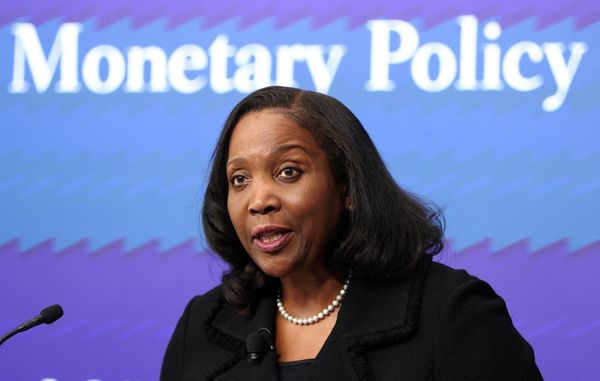
But the star of the day was arguably finance spokesperson Barbara Edmonds, who has (with Hipkins) borne the brunt of National’s efforts to dig fiscal holes in the party’s policies.
As Finance Minister, Edmonds said, she would deliver the “hope” associated with the party’s vision to create better jobs, make healthcare affordable and tackle the cost of living, while also facing the “reality” of making the numbers add up.
“That’s what we hear from National all day long: it doesn’t add up, they say, and you know what? They’re right – their numbers don’t add up.
“It doesn’t add up that you can work 40 hours a week, and still struggle to cover rent. It doesn’t add up that a parent skips a trip to the doctor so their kids can eat. It doesn’t add up that we raise our young people, we teach them, we train them, and then we watch as they board a plane to build their lives somewhere else.”
The Government was trying and failing to cut its way to growth, when it needed to invest in New Zealanders’ futures.
“These choices don’t just happen on a spreadsheet in the Beehive, they’re felt in people’s lives. They push up costs, they weaken our communities, they cost jobs, and they leave every one of us with less…
“People are working as hard as they ever have, but are still falling behind. A secure, well-paid job, a doctor you can afford, a home of your own with bills you can actually pay – these are not just economic goals, they are the foundations of a dignified life.”
The country had a choice not just between two parties, Edmonds said, but two futures: “A country that cuts or a country that grows, a country that sells what it owns or a country that backs what it could become.”
Hipkins is due to speak to the party faithful on Sunday afternoon, unveiling another new policy as Labour attempts to wrest back the initiative following National’s own conference.
He will have slightly clearer skies, and an opportunity to convince the electorate that the party has the wind at its back as the election draws closer.