
From drafting emails to quick social posts, AI can be a great starting point in a pinch. But, if you've ever used it to write, you already know that the output is often stiff, way too polished and the tone can feel robotic. That's why I firmly believe that it can never truly replace humans and our enormous creativity.
I am a huge believer in the idea that whatever you give AI is what you get out. Keeping your work authentically yours is key. So, if you're using AI to write anything from start to finish, you're in a world of trouble. You're going to get AI slop at best.
That's why I cannot stress enough avoiding the "help me write" feature that you'll see in Google Docs or even prompting your favorite chatbot to write something for you. It will be obviously generic, slightly corporate and unmistakably not you.
However, if you change one word and how you use AI all together, you'll see a huge improvement. Instead of asking AI to “help me write,” ask it to "mirror" you. The difference will be immediate.
Welcome to Amanda's AI Lab, where she dives into all the new AI models and tests them out to see which features are really useful, and which are just slop.
Why “help me write” produces generic results

As the world readies itself for an AI takeover, I find solace in comparing AI to a self-checkout. Sure, it can do a lot of things a human can do, but one wrong move leaves you waiting for someone to come fix the problem so you can start over.
The same thing goes for leaning on AI for writing. When you tell AI to “help,” you’re giving it permission to take over. That's a huge no-no in my book because most models interpret that as:
- Produce a safe, polished default
- Remove stylistic risk
- Prioritize clarity over personality
- Avoid anything too bold or opinionated
In other words, boring. That’s why the output often feels like it came from a corporate handbook instead of a human brain. For instance, when I let Gemini write my emails, it cuts out a lot of my energy and overall hyper personality. Okay, that might be a good thing, but anyone who really knows me can tell I did not type the words. Using AI to write might output something that's technically correct and gets the point across, but it's emotionally forgettable.
The one-word swap that changes everything

Let me be clear, I am not encouraging you to use AI to write full books, college essays or even to take control of that presentation you're working on. However, if you're leaning on it to edit something you wrote or need to draft a quick email, instead of something like: "Help me write an email about a delayed shipment," try: "Mirror my voice in an email explaining a delayed shipment."
By using the word "mirror" you're encouraging the AI to take what it knows about you base on your conversations (memory should be enabled to make this truly work) and rewrite so it sounds like you. The AI will then match your tone with more warmth or humor depending on how you write.
That one shift tells AI its job isn’t to replace you — it’s to reflect you. And in an era where even big tech CEOs insist AI will be replacing us, it's important to stay authentically you.
What happens when you ask AI to “mirror” you
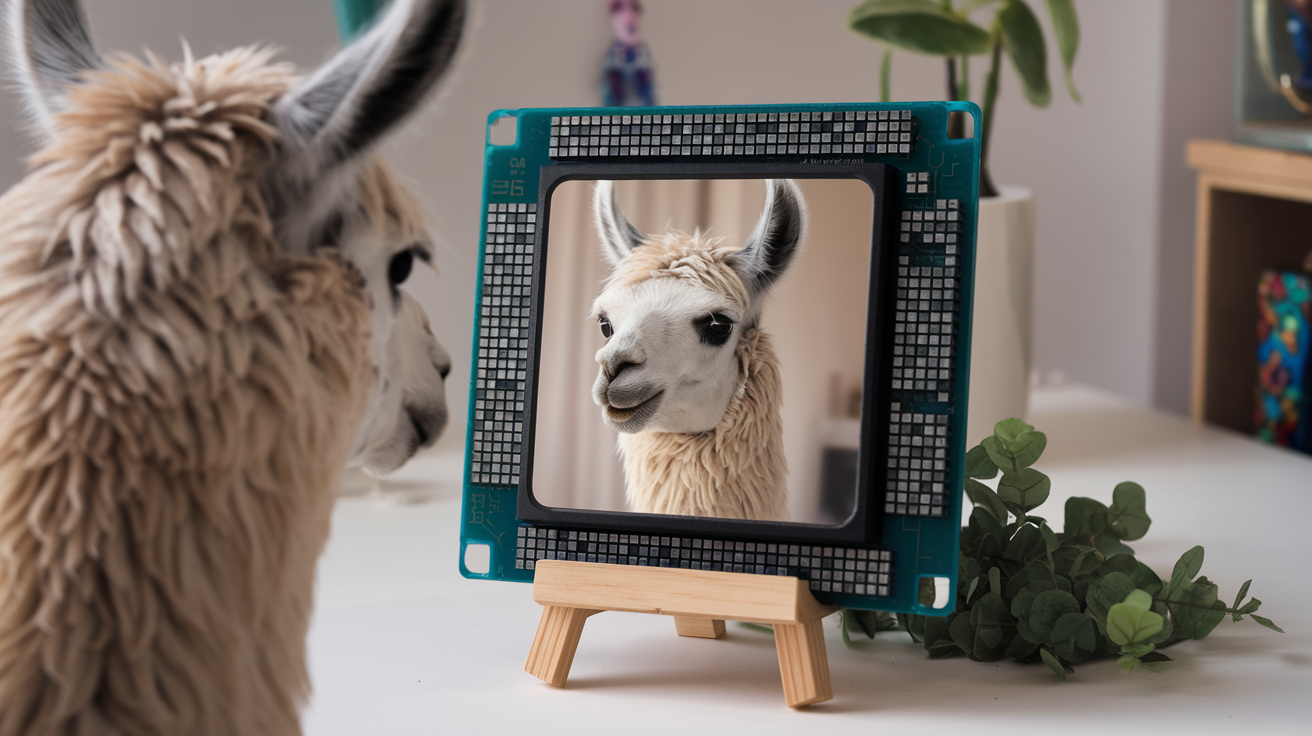
This word swap works well with just about any chatbot with memory. When I tested this swap across multiple tools, the results were noticeably different:
- More personality. The writing kept quirks and natural rhythm.
- Less robotic phrasing. Fewer phrases like “I hope this message finds you well.”
- Stronger confidence. The tone sounded intentional rather than neutral.
- Better emotional alignment. It felt like something I’d actually send.
You can make it work even better with a simple formula. If you want consistently strong results, try it with:
- Emails
- Social posts
- Newsletters
- Difficult conversations
- Professional messages
- Captions and bios
Bottom line
The reason this trick works so well is because you're not asking AI to create a voice (or use the generic one it has). You’re asking it to reflect yours. AI isn’t just responding to what you ask. It’s responding to the role you assign it.
That small shift turns AI from ghostwriter into creative partner. And the output stops sounding like everyone else on the internet. You’ll still get the speed and structure — but the voice will finally sound like yours.
Follow Tom's Guide on Google News and add us as a preferred source to get our up-to-date news, analysis, and reviews in your feeds.