
A sofa occupies so much visual space that the color you pick greatly affects the room's atmosphere. Going the safe route and treating it as a neutral placeholder can be a missed design opportunity, while a bold trend may be a choice you tire of quickly. So what's the happy medium? I find that it always helps to start by identifying the colors you either don't like, that compete negatively with your scheme, or that feel a bit outdated.
It's not that any sofa color trend is inherently 'outdated', but a few are often used without enough consideration. For instance, my mind instantly goes to a forest green sofa — it's often labeled as dated 'millennial' green because it is considered an overused or 'safe' choice. However, when used with intention, forest green is a sofa color with staying power and can look really elevated. It's all about navigating the fine line of sofa colors that make a statement and elevate a scheme, without overwhelming it or blending in.

Rather than shouting or disappearing, interior designer Andrew Griffiths says, "I like a sofa to anchor the room. It doesn't need to shout, but it should bring depth and character. When a sofa color is selected to be inoffensive or non-committal, the room has nothing to say." So, to put all of this food for thought into tangible advice, below are four sofa colors designers say to be wary of in 2026, and what to look for instead.
1. Dove Gray and 'Greige'
Gray has become quite the taboo color in interior design trends in the past 10 years. We are still fighting the aftermath of the monochromatic, go-with-anything, gray interiors of the 2010s. And unfortunately, cool dove grays are still a tricky sofa color choice.
Andrew Griffith explains, "While choosing gray makes sense to a lot of people as a safe answer to 'what if I don't love this in five years', but that caution is exactly what makes a space forgettable." Dove Gray became the default 'safe' choice for so long that it can leave a room feeling flat unless it's paired with a very rich material palette. "Done badly, and it reads as corporate and cold — suited to an office lobby, not home," Andrew.
There are a few ways to make a gray sofa feel cozier and colors that work similarly in a room without feeling so bland. First of all, decorating with gray will always be more effective with a warm undertone — think taupes and rich charcoals. These make the room feel more inviting.
"I actually owned a gray sofa myself," says interior designer Georgina Wilson. "Seven years ago they felt like a timeless, safe choice, but I've found mine has aged in a way that feels flat and lifeless. The color seems to lose warmth over time, and instead of developing character, it just starts to look a little tired." A richer, warmer fabric with more depth will ground a room.
Or ditch gray altogether and go for a new neutral more in line with today's color trends. "Deep, earthy, slightly unexpected neutrals: aubergine, chocolate brown, rust, inky blue or a warm ochre. These read as considered because they behave like neutrals in a room — they ground a space and let you build around them — while still having real depth and warmth," says Andrew.


2. Out of Place Purple
Purple sofas, especially the aubergine variety, have definitely gained attention in the design world over the past year — they feel unexpected, yet rich and comforting in hue. But it's the question of whether these purple couches will be a trend that's expected to fall as quickly as it rose.
On the one hand, a moody aubergine sofa, when done well, is the ultimate style indicator. "The plum velvet sofa from our Parklands project is a good example: it's dramatic against a pale wall but never feels like a 'statement piece' you'll tire of, because the color itself is quiet in tone even though it's rich in depth," explains Andrew. Such a bold sofa color is all about intention.
However, it's worth proceeding with caution. Georgina says, "While it can look striking initially, it's a color that many people tend to tire of fairly quickly." And that is the last thing you want when planning your living room seating arrangements. If you are going to go purple, make sure you choose it because you love it and because it goes well with your scheme. Otherwise, it can feel random, and the color will date quicker.
Because a sofa is such a large investment, "I prefer colors that I know I'll still enjoy living with many years later," says Georgina. Perhaps a deep red will have more longevity since red is a primary color, or a brown leather sofa can feel very classic and stylish when done well.


3. White as a Safety Net
Okay, it feels like stark whites always make the outdated colors list. They tend to read as "cold, impractical, and disconnected from the warmer, more layered interiors people tend to feel most comfortable in," explains Andrew. And a stark white sofa falls directly into those categories — it's often used as an afterthought color, it can create a jarring contrast in otherwise layered schemes, and frankly, it's hard to keep clean.
So while picking a white sofa just because you want something neutral is an outdated design choice, white as a sofa color in general doesn't have to be. As Andrew says, "Color is only one part of the story though — texture, finish and shape have just as much impact." So, it's more about how you incorporate a white sofa.
"My biggest controversial take is probably that I absolutely love a white sofa, even with a busy household, three children, a husband and a constant stream of guests," says Georgina. "I've owned several white sofas over the years, from an IKEA Ektorp through to more premium pieces, and I've genuinely loved every one of them. To me, white is one of the most timeless sofa colors you can choose," she adds.
This is because such a neutral color allows the architecture of the sofa to shine, works beautifully with changing interiors, and never really dates. Plus, slipcovers also make white a far more practical option than many people assume, allowing you to refresh the look whenever needed. "The key is making sure the sofa itself has beautiful proportions and a comfortable, sculptural form because the simplicity of white really highlights the shape," says Georgina.


4. Orange
Lastly, the bolder you get with your sofa color, the more of a gamble you are taking. While it's always a good idea to show off your personal style, picking a bold or energetic color for such a staple piece often leads to a design choice that will date quickly. And orange is one of the biggest offenders.
Georgina says, "Perhaps it's my most personal take, but I'm a hard 'no' when it comes to orange velour sofas. It instantly reminds me of the 1980s." Once loved for its warmth and natural-leaning hue, orange can read quite harsh in interiors. Especially as color in 2026 moves towards something more personalized and grounded. "While there are always exceptions, I find it dominates a room and makes it much harder to create a space that feels calm and enduring," says Georgina.
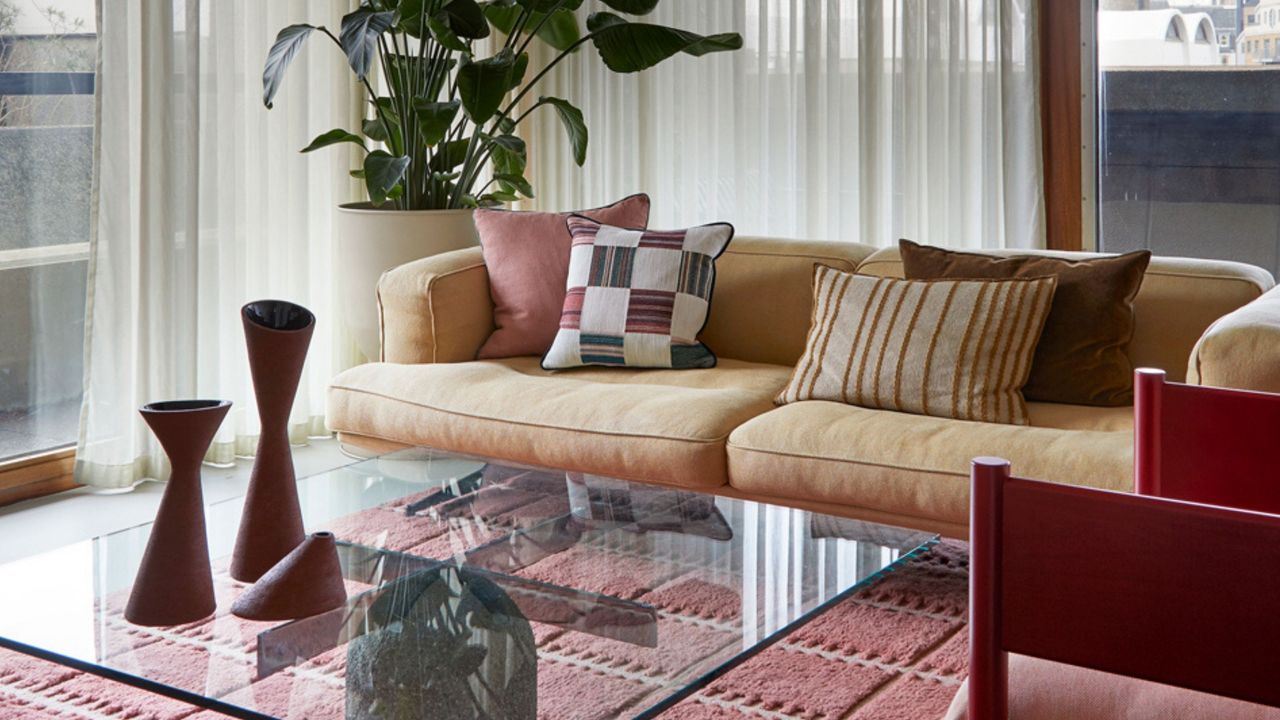
Instead, a caramel-colored tan or subtle yellow sofa will age more gracefully. Andrew advises looking for "Something where the color itself is quiet in tone even though it's rich in depth." For example, Andrew styled an ochre linen sofa at his Barbican project: "It's warm rather than loud. It’s an optimistic color, but still understated enough to live with for years."


"I always start with the atmosphere we want to create rather than the color itself. A sofa should relate to the materials, the quality of light, and the mood of the room, not follow what's fashionable," says Andrew.
For more inspiration like this, be sure to subscribe to the Livingetc newsletter.