
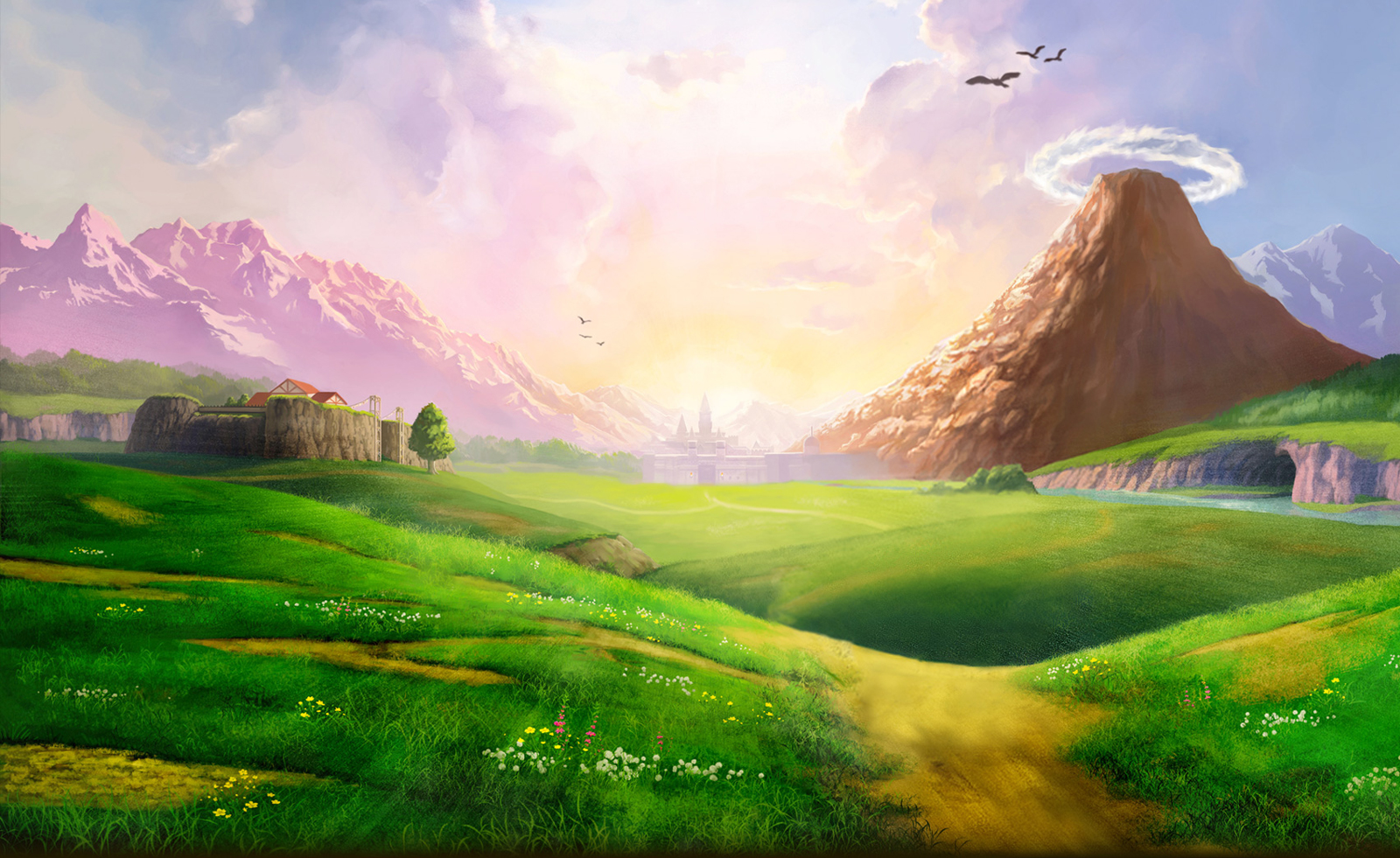
Just like a mesmerised Luke Skywalker looking up at that dual sunset in Star Wars, or Peter O’Toole’s awe-struck TE Lawrence gazing at the never-ending, red desert glow of Jordan’s Wadi Rum valley in Lawrence of Arabia, the first time that child hero Link explores Hyrule Field to kick-start his adventure in 1998’s Legend of Zelda: Ocarina of Time is a revelatory experience.
In the previous Zelda games, the limitations of 2D technology meant Hyrule Field was far too blocky and had grass that resembled green Lego bricks. However, the roleplaying series’ leap from 2D to 3D via the extra processing power of the Nintendo 64 console meant Hyrule Field suddenly felt like a living, breathing place, where you could spontaneously stumble upon grottos filled with hidden treasure, talk to intrepid joggers, and receive floating hearts from scantily clad fairies who lived inside kaleidoscopic caves.













