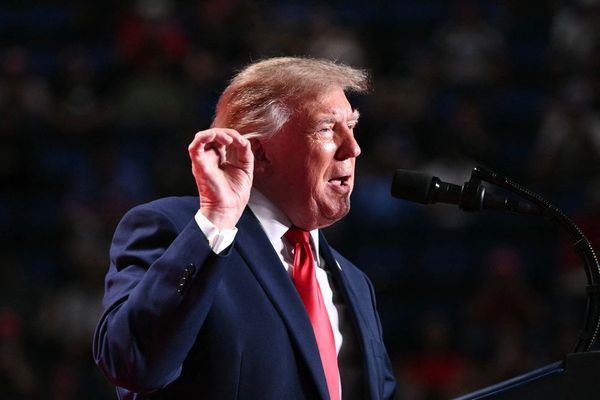
Sir Keir Starmer pinned his hopes on a “radical agenda” to set a “new direction for Britain” as he faced the prospect of a bid to oust him as Labour leader and Prime Minister.
He said the King’s Speech was guided by “Labour values” and would “end the status quo that has failed working people”.
The package of measures set out by the King in the House of Lords includes plans for digital ID, an overhaul of special educational needs provision in England, backing for green energy schemes and plans to end the “feudal” leasehold system.
In a Commons appearance after scores of his own MPs called for him to quit and with Health Secretary Wes Streeting thought to be plotting a leadership challenge, Sir Keir defended his approach.
The conflict in Iran, coming on top of the Ukraine war, was a pivotal moment for the UK, he said.
The Prime Minister told MPs: “Faced with challenges, we don’t retreat from our Labour values. We use them as our compass.
“Strength through fairness, so we will keep supporting those who need it most, including by creating a new national programme to redistribute surplus food so that no one in this country needs to go hungry because of the conflict overseas.”
The King’s Speech contained 37 Bills, including some in draft form and those carried over from the previous parliamentary session.
Measures in the King’s Speech include:
– A new law to strip disgraced peers like Lord Peter Mandelson of their titles.
– Plans which could lead to the banning of state-linked groups like Iran’s Islamic Revolutionary Guard Corps (IRGC).
– A package of laws to ease the burden of regulation and make it faster to build new energy infrastructure.
– Controversial plans to limit access to trial by jury to serious cases, with some trials conducted by judge alone.
Sir Keir said that rather than the “politics of grievance and division” the speech offered a “more hopeful course”.
“A course that sees the conflict in Iran, a war on two fronts, not as something to wring our hands about, but as an opportunity we must take to shape our country’s future, to end the status quo that has failed working people, to build a stronger, fairer Britain.”

The Prime Minister wants to forge closer ties with the European Union, with a major summit planned this summer and progress expected on a youth experience scheme for under-30s.
He said: “We will, as a defining act of this Government, rebuild our relationship with Europe – Britain back at the heart of a stronger Europe.
“That is good for growth. It will reduce the cost of living and strengthen our security.”
Sir Keir started the day by having a short Downing Street meeting with Mr Streeting, who is rumoured to be considering resigning to launch his leadership challenge.
Tory leader Kemi Badenoch mocked the Health Secretary about his leadership ambitions, saying he “has been a bit distracted lately” adding: “Why don’t you just do your job?”
She added: “There’s no point in giving me dirty looks. We all know what he’s been up to.”

Mrs Badenoch said Sir Keir was “in office, but not in power” – the phrase used by Norman Lamont to describe John Major’s administration in 1993 after his exit as chancellor.
The Leader of the Opposition said: “In the past 48 hours, nearly 100 Labour MPs have called for the Prime Minister to resign. Four ministers have quit.
“It is clear his authority has gone and that he will not be able to deliver what little there is in this King’s Speech.”
In his speech setting out Sir Keir’s programme, the King told the peers and MPs gathered in the House of Lords the Government would “defend the British values of decency, tolerance and respect for difference under our common flag”.
Charles said the Government would “harness the potential of the pride felt across the country for its communities” and “take urgent action to tackle antisemitism”.