Get all your news in one place.
100's of premium titles.
One app.
Start reading
The Conversation
The Conversation
Rosemary Purcell, Professorial Fellow, Centre for Youth Mental Health, The University of Melbourne

Sports need better game-day mental health protocols to protect athletes – here’s how

Last Thursday night at the MCG, fans witnessed a gripping game of AFL football between Carlton and Collingwood.

But it was something rarely seen during a match that has gripped attention since: a player who appeared to be struggling on a very public stage, accompanied by a statement from his club that he had experienced a “mental health episode” during the game.

The public response has been extraordinary and unrelenting. There’s been a barrage of articles, podcasts, debate and social media chatter, all chiming in with a perspective on what might have, or what should have, occurred.
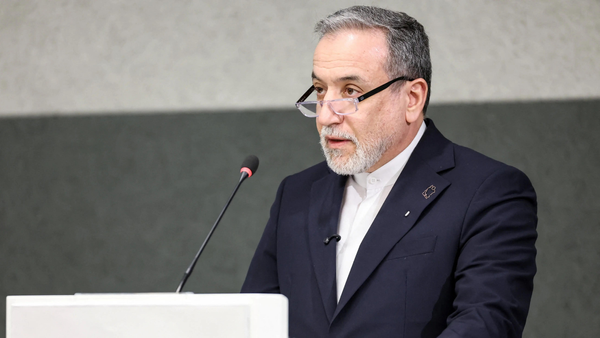
We argue more restraint is needed when it comes to speculating about sensitive and complex clinical issues, while strong on-field safeguards are needed to support players with mental health challenges.

Mental health challenges in elite sport

Elite athletes are particularly susceptible to a range of mental health difficulties because of additional stressors that come with the demands of high-performance sport.

Major sporting bodies in Australia and overseas, including the AFL, have developed comprehensive strategies to respond to and improve mental health within their sporting environments.

There is also evidence-based guidance on how to manage mental health crises among elite athletes, such as suicidal risk or intoxication.

However much of the attention to managing mental health in elite sport has focused on the periods outside of the game or event (that is, before and after) rather than during competition.

Mindful of the intense stress that comes with competing on the world stage, the International Olympic Committee developed guidance for managing mental health at major sporting events such as the Olympics or world championships.

These protocols support pre-, during, and post-event planning, including the need for mental health risk assessments, and mitigation and management plans to address any acute issues or emergencies that may arise.

While we are ultimately looking in from the outside, the events on Thursday night suggest there is more work needed to effectively respond to mental health issues unfolding during play.

How sports can improve

Sports have developed and refined protocols for managing physical injuries during games, such as potential spinal or head injuries. But Thursday night’s incident suggests they also need clear, actionable protocols for managing mental health issues during competition.

This could include having team psychologists, who already know the players from a mental health perspective, on site for all games to detect and respond to those experiencing difficulties.

All relevant staff members, including doctors, psychologists and coaches should be aware of and skilled to implement such protocols, including when removal from play is warranted.

Hopefully such protocols are rarely needed as sports work to improve mental health support programs for players and coaches, who also experience mental health challenges of their own.

Nonetheless, they are necessary given the prevalence of mental health challenges in elite athletes, which may go unseen or unspoken.

In which case, if, or when, another player experiences a similar mental health episode during a game or event, our sporting codes will be equipped to respond in an effective and timely way.

The media’s role

Athletes sharing their mental health experiences can have a beneficial social impact by enhancing awareness and normalising help-seeking.

Done safely, sports journalists and other media commentators also have an opportunity and a platform to positively shape these public narratives about mental health.

However, what occurred this week is different: some narratives may be damaging by contributing to uninformed speculation on complex clinical issues.

Mental health conditions cannot and should not be diagnosed through public discourse.

Media have a duty of care to responsibly report on these issues to ensure existing mental distress is not worsened for the affected athlete or their loved ones.

While media guidelines exist for reporting on suicide and mental ill-health, the events of the past week warrant increased training and accountability for how journalists and media personalities report on and discuss highly complex and confidential clinical issues in the public domain.

Instead of trying to delve even further into what happened to the player, attention should now shift to reviewing sports’ governance to prevent another athlete going through the same thing.

The Conversation

Rosemary Purcell/Orygen has received funding from sports, including the AFL, to develop evidence-based resources. She is a member of the IOC's Expert Consensus Group on Mental Health in Elite Athletes and has previously worked as an external consultant to the IOC on mental health.

Courtney Walton has previously worked as a psychologist employed by the AFL. He has worked on consultancy research projects and co-authored research publications with several sports including the AFL.

This article was originally published on The Conversation. Read the original article.

Sign up to read this article
Read news from 100's of titles, curated specifically for you.
Already a member? Sign in here
Related Stories
Top stories on inkl right now
One subscription that gives you access to news from hundreds of sites
Already a member? Sign in here
Our Picks
Fourteen days free
Download the app
One app. One membership.
100+ trusted global sources.