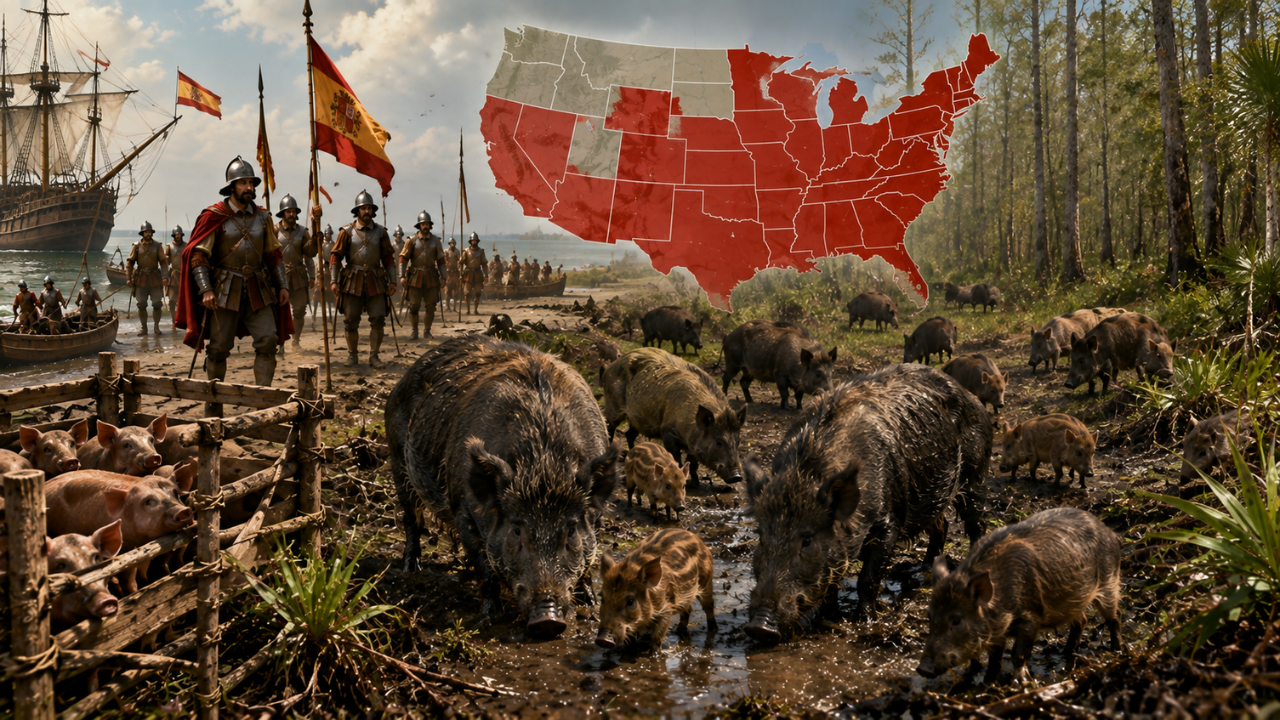
When Spanish explorers brought pigs to what is now the southeastern United States in the 1500s, the animals were intended as a practical source of food rather than a threat to native ecosystems. Centuries of escapes, free-ranging livestock and later introductions of Eurasian wild boar changed that. According to the US Department of Agriculture’s Animal and Plant Health Inspection Service, more than 6 million feral swine are estimated to occupy at least 35 US states. Their expansion has also been helped by people moving pigs into new areas, sometimes illegally, while their ability to breed quickly makes established populations difficult to contain. The animals now affect far more than farmland. They root through crops and pasture, damage fences and water systems, compete with native wildlife for food, disturb soil and habitat, and can carry dozens of diseases and parasites affecting livestock, pets, wildlife and people.
Get breaking news anytime, anywhere. Download the TOI app now!