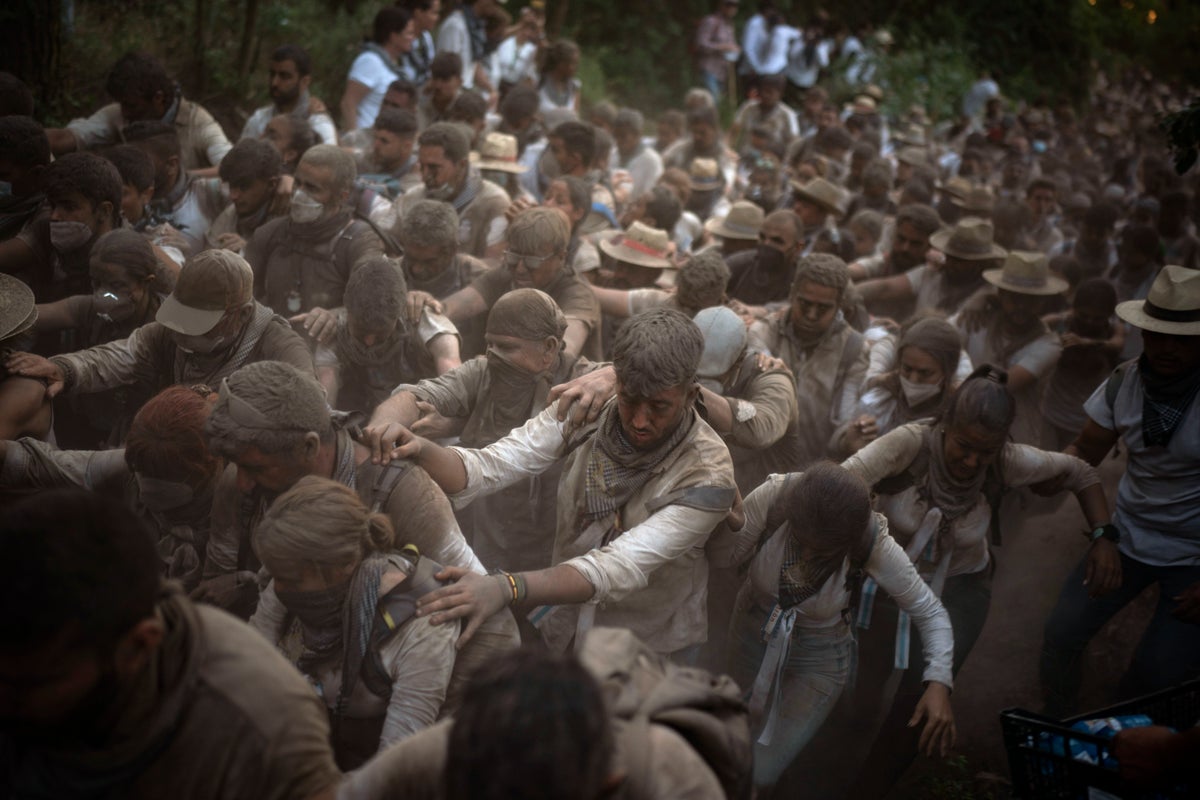
After a two-year hiatus forced by the pandemic, tens of thousands of pilgrims — many of them outfitted in tiered flamenco dresses, crisp riding suits and wide-brimmed Cordoba hats — descended on the tiny Spanish village of El Rocío to take part in riotously colorful and ancient festival, la Romería del Rocío, or the Rocío virgin pilgrimage.
For several days, droves of people — entire families or groups of friends — wind their way across different country paths and roads, many of them on foot while others go by horse or in elaborately decorated horse-drawn wagons or caravans, kicking up clouds of dust in the sun-baked countryside of southern Andalucía as they go.