
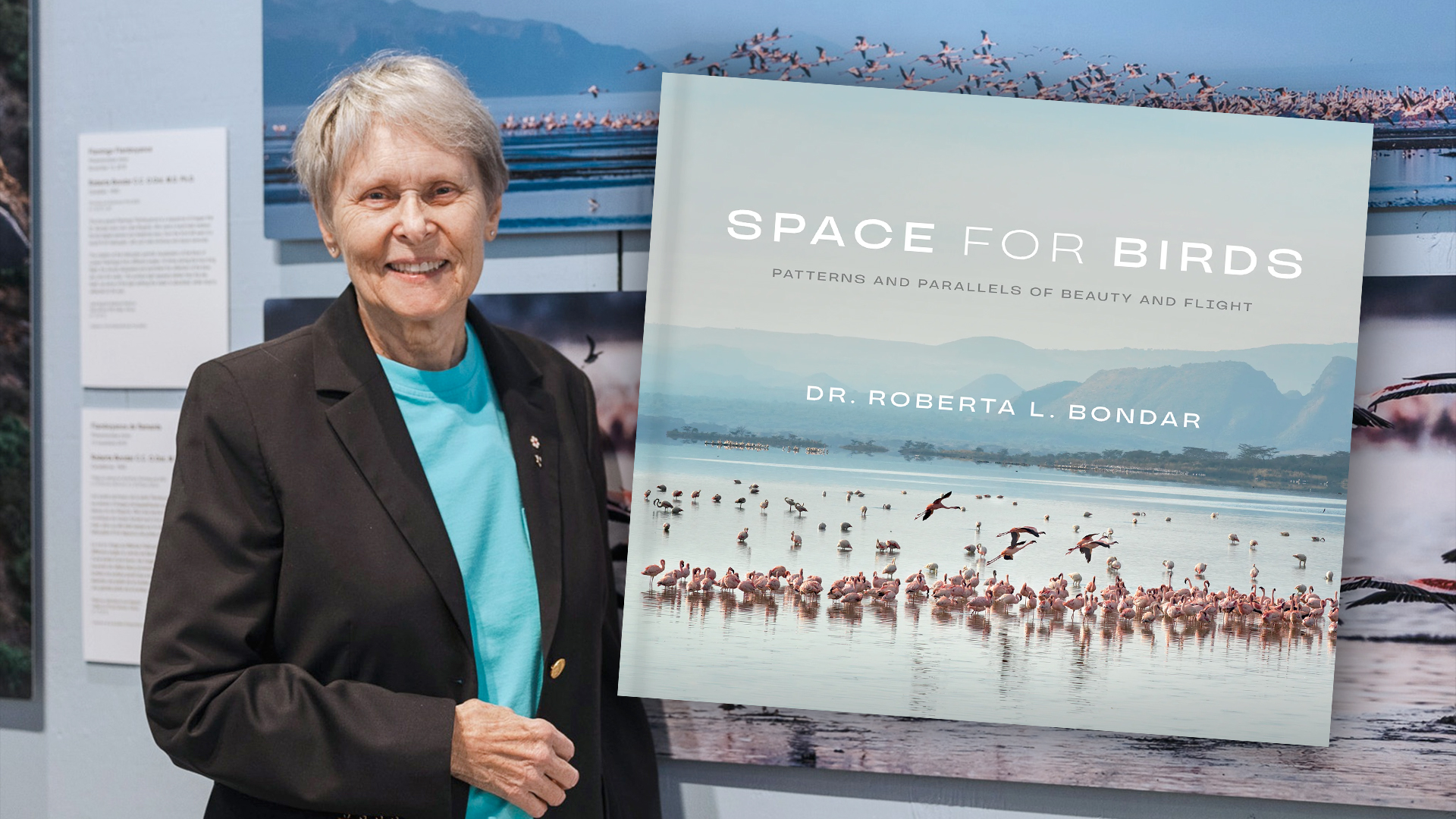
Roberta Bondar knew that she would not be able to hear birds, let alone seen them from space, but when she really thought about it, their absence struck her deeply.
So much so, that ever since becoming Canada's first woman in space in 1992, Bondar has focused her cameras on natural environments, most recently in support of AMASS (Avian Migration Aerial, Surface, Space), a research project also known as "Space for Birds."
"The idea that I could look down, look across the planet and just put myself in a mindset that I couldn't see life and I couldn't hear it was a jarring thought. When I came back, I wanted to photograph and try to share the importance of various environments on our planet to our life as human beings as we are on a planet and it would be kind of nice if we paid a bit more attention about conserving some of it," Bondar, who on STS-42 also became the first neurologist in space, said in an interview with collectSPACE.com.













