Get all your news in one place.
100’s of premium titles.
One app.
Start reading
Dot Esports
Dot Esports
Jacob Wolf

Sources: G2 and Cloud9 allegedly colluded to prevent sale of Perkz to Fnatic, but Riot investigation finds no harm

Two of the most popular teams in Western League of Legends allegedly colluded to prevent the sale of a star player—but both have escaped punishment after a top-level Riot Games investigation determined no harm was done to the player, sources tell Dot Esports.

Editor’s Note (2026):
This article was first published on Nov.10, 2021, and has been updated to reflect the implications of the controversy and how it relates to the evolution of Riot Games’ policies.  

A clause in G2 Esports and Cloud9’s buyout agreement signed in late 2020 for Perkz prevented the team from selling him to Fnatic for a period of three years, beginning in November 2020 and lasting through the end of the 2023 season, according to a copy of that buyout agreement obtained by Dot Esports.

Fnatic filed a complaint with Riot’s LEC office over the past few weeks asking them to investigate the clause, sources said. Riot’s LCS department previously approved the G2 and Cloud9 buyout agreement after it was signed in November 2020. The issue was elevated to Riot’s global esports department given the involvement of teams in both the LEC and LCS.

Following the investigation, Riot Global determined the clause did not affect the star mid laner’s team options for the 2022 season, sources familiar with the investigation told Dot Esports. Riot Global found it did not impact Perkz’s 2021-22 offseason prospects due to disagreements between Fnatic and Cloud9 over the cost of the buyout and Perkz’s desired salary. Perkz will instead join Team Vitality after Cloud9 and that team came to an agreement, sources said.

Perkz will join a Vitality team who is also acquiring top laner Alphari from Team Liquid in a separate buyout and signing former MAD Lions AD carry Carzzy to round out its roster, according to sources. Perkz and Alphari’s move to Vitality was first reported by Esportmaniacos.

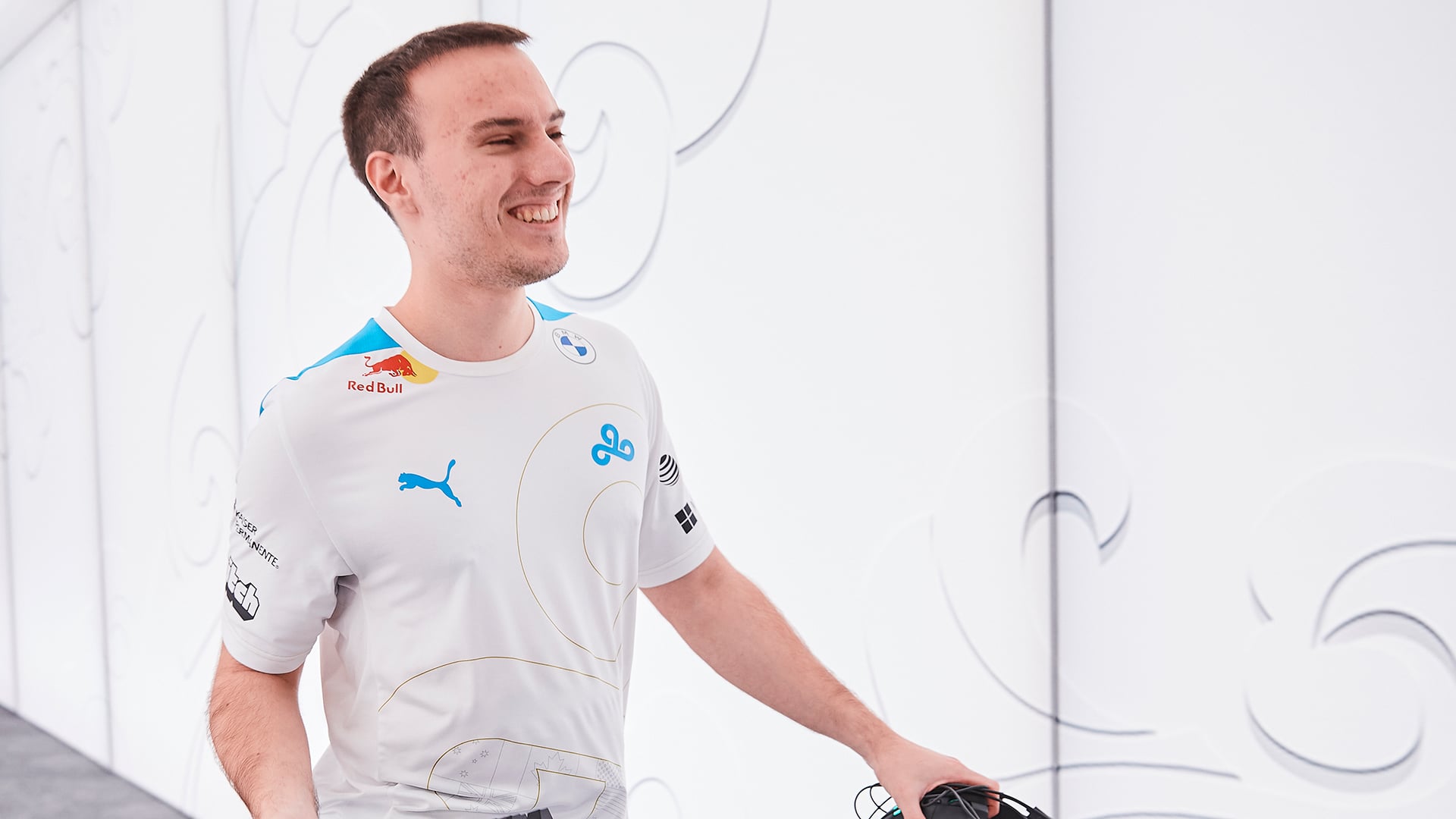
Photo via Riot Games/Michał Konkol

Moving forward, Riot will not allow clauses of a similar nature to exist in future agreements, according to a source. Riot, Cloud9, and G2 Esports declined to comment on Nov. 10.

G2 founder and CEO Carlos “ocelote” Rodríguez Santiago spoke publicly about his decision to not sell Perkz’s contract rights to Fnatic ahead of the 2021 season in a December 2020 talk show with commentators Christian “IWDominate” Rivera and Duncan “Thorin” Shields. 

“Imagine Perkz would have ended in Fnatic, what happens right after is the whole Fnatic team renews,” Rodríguez said. “Do I want that? No, because I want to have all my options open. Does that make me a bad person? Go f*ck yourself if that’s what you think, so you’re incredibly f*cking naive if you think that you can build a world-class, number one team that fights for trophies by letting everybody… It’s just not gonna f*cking happen.”

Rodríguez later reiterated that sentiment in a September 2021 tweet. “Perkz to fnatic is quite possibly the single trade I would go out of my way to never allow to happen,” he said. 

Precedence for a buyout restriction of this nature does not exist in League esports, although it could violate the Sherman Antitrust Act of 1890 in the U.S. due to it restricting trade. Legal jurisdiction over this particular case would be unclear, however, since Cloud9 is based in the U.S., G2 is based in Germany, and Fnatic is based in the U.K. 

Antitrust law differs in each country, though there is significant history around similar cases in the U.S. In the ‘80s, MLB owners were accused of colluding to lower player contract lengths and prevent players from changing teams without the previous team’s consent. In all three instances across the 1985-87 seasons, an independent arbitrator sided with the players. MLB owners paid a collective $393 million in damages over multiple years to the players for their grievances. 

Buyouts in esports frequently do not operate the same way they do in traditional sports. In the NBA, MLB, and NFL, when a player is bought out or traded, their existing contract and its terms and salary are assigned directly to the purchasing team. In esports, a buyout often results in the termination of the player’s existing contract and the negotiation of a new deal between the acquiring team and the player.

Photo via Riot Games

In the case of Perkz, Cloud9 negotiated a new contract with him in November 2020 after agreeing to buy him out from G2. That deal consisted of a three-year term and was worth just shy of $9 million total, according to sources. He was the second highest paid player in the LCS behind only former TSM support SwordArt, who signed a two-year, $6 million contract in November 2020 as well.

Perkz notified Cloud9 of his intention to leave the team in the later stages of the 2021 season, as reported by Dot Esports last month. He preferred a return to Europe to be closer to his family after he was unable to travel back to Europe as much as anticipated during the COVID-19 pandemic. Prior to Cloud9’s Worlds quarterfinal matchup against Gen.G on Oct. 25, Perkz informed his teammates that he wouldn’t be returning to the team in 2022. 

On Nov. 10, 2021, the LCS Players Association announced via Twitter it is “independently investigating the circumstances of this report and will fight any agreement that illegally or unethically restricts player movement or alters player bargaining power.”

The LCSPA did not issue a formal “conclusion” with penalties, but its involvement pressured Riot to take a stand. Riot’s global esports team ultimately ruled that the clause did not impact Perkz’s 2022 offseason prospects, and committed to prohibiting similar anti-competitive restrictions in future transfer agreements.

Perkz spent two seasons with Team Vitality in the LEC. He continued to be regarded as one of the region’s veteran mid laners, though Vitality fell short of qualifying for the Worlds during his tenure.

Team Heretics mid laner Perkz plays in the LEC studio in 2024
Photo by Wojciech Wandzel via Riot Games

Ahead of the 2023-2024 season, Perkz joined Team Heretics. However, his stint with Heretics was cut short after he was reportedly benched following a dispute with management. In June 2025, at just 26 years old, Perkz officially announced his retirement from professional play, closing the chapter on a decorated career that spanned more than a decade.

Why the Perkz clause matters in 2026

While Riot’s global investigation concluded that the G2-Cloud9 clause did not ultimately harm Perkz’s team options during the ’22 offseason, the issue carries renewed significance to this day due to major structural changes across the League of Legends esports ecosystem.

In 2025, Riot relaxed its long-standing restrictions on betting sponsorships, allowing teams in its top-tier leagues (LCK, LCS, LPL, LEC, and LCP) to enter official partnerships with licensed esports betting platforms. The shift marked a pivotal commercial evolution for Riot, aligning League esports more closely with traditional sports that operate within regulated wagering environments.

Riot Games logo with League of Legends stadium, phone, and stats in the background.
Images via Riot Games and Business of Esports, remixed by Dot Esports

In that context, transparency around player contracts, transfer clauses, and inter-team agreements now carries broader implications than it did back in 2020. While the Perkz clause was ultimately deemed non-impactful from a competitive standpoint, undisclosed restrictions between teams could raise integrity concerns in an ecosystem where betting markets rely on public information and competitive independence. Player movement, roster stability, and transfer negotiations can influence odds-making, futures markets, and team valuation throughout a season.

The case also highlights Riot’s evolving governance standards. The clause was initially approved at the regional level in 2020 before being escalated to Riot’s global esports department. Following the investigation, Riot moved to prohibit similar clauses in future agreements. In 2026, that decision appears more consequential, as centralized oversight and standardized contract practices are increasingly becoming important in the esports scene with the entry of more regulating bodies.

The fallout of the Perkz controversy shows how rapidly League esports has matured. What began as a dispute over competitive rivalry between Western organizations now sits within a global ecosystem that includes regulated sponsors, integrity monitoring, and heightened scrutiny over competitive fairness. Even if no formal violation was found at the time, the Perkz clause has become an early example of the governance questions that continue to shape League of Legends esports.


Sign up to read this article
Read news from 100’s of titles, curated specifically for you.
Already a member? Sign in here
Related Stories
Top stories on inkl right now
One subscription that gives you access to news from hundreds of sites
Already a member? Sign in here
Our Picks
Fourteen days free
Download the app
One app. One membership.
100+ trusted global sources.