Get all your news in one place.
100’s of premium titles.
One app.
Start reading
Times Life
Times Life
Nidhi

Son Says “Not My Mother” After 25 Years Because She Chose Christianity

After more than two decades of separation, what should have been a joyful reunion turned into heartbreak and controversy. Sushila Murmu, a woman from Jharkhand, was recently traced by volunteers after being missing for over 25 years. But when her long-lost son learned she was now a Christian, he refused to take her home.

Her story highlights deep social, emotional, and religious tensions — and raises broader questions about family, identity, and the meaning of belonging in a changing society.

A Life Lost and Found

Sushila Murmu, now in her seventies, disappeared from her native village in Dahupagar in Jharkhand’s Godda district more than 25 years ago. How she ended up in Kolkata remains unclear, but she was found wandering in the city in 2001 and was brought to a shelter home in south Kolkata run by the Missionaries of Charity.

Over the years, the shelter became her refuge. She lost much of her memory and could not clearly remember how she had traveled to Kolkata. However, fragments of her past - including memories of her husband and son stayed with her, and volunteers kept hope alive that her family could one day be found.

The Search and Discovery

Son doesn't accept his Mother

Through the efforts of volunteers, including members of the West Bengal Radio Club, Murmu’s identity and her village were eventually linked back. Photos of her were circulated, and local contacts helped trace her to Dahupagar village under Poriahat police station in Jharkhand. This led to her being connected with her son, Madan Besra, after more than 25 years.

For most families, such a moment would be emotional and joyous. But in this case, the reunion took a tragic turn.

The Son’s Refusal

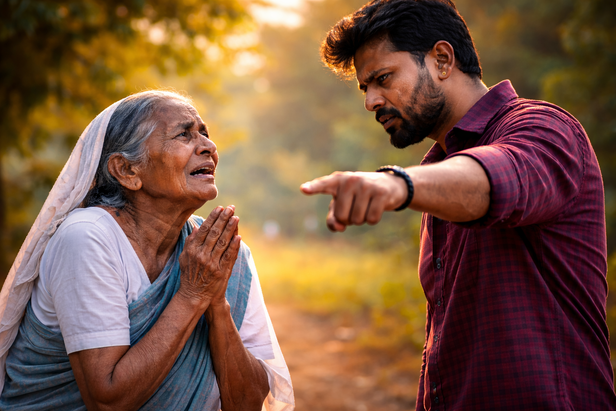
When Murmu and her son finally spoke through a video call, it was the first direct communication between them in at least 25 years. But the moment quickly turned painful. Her son told her that he would not take her back unless she changed her religion. He insisted she renounce Christianity and return to Hinduism, citing family tradition and beliefs.

Put simply, he said: “If she doesn’t get converted into Hinduism, there will be trouble at home,” according to volunteers involved in the case.

Murmu, however, stood firm in her faith and replied that she would not leave her religion. That was their final exchange.

Why Religion Played a Role

Murmu’s conversion to Christianity occurred before her marriage. After her husband, a Hindu farmer, died, villagers in Dahupagar allegedly ostracized her because of her faith. Neighbours reportedly refused to let her continue living there simply because she was Christian. This social rejection is believed to be part of the reason she left, and later became lost in Kolkata.

Her son’s reaction seems rooted in this long-standing social context and family history. For him, her religious identity became an obstacle to welcoming her back. Whether his decision was motivated by fear of community pressure, personal belief, or social norms, the result was the same — a heartbreaking rejection.

Sign up to read this article
Read news from 100’s of titles, curated specifically for you.
Already a member? Sign in here
Related Stories
Top stories on inkl right now
One subscription that gives you access to news from hundreds of sites
Already a member? Sign in here
Our Picks
Fourteen days free
Download the app
One app. One membership.
100+ trusted global sources.