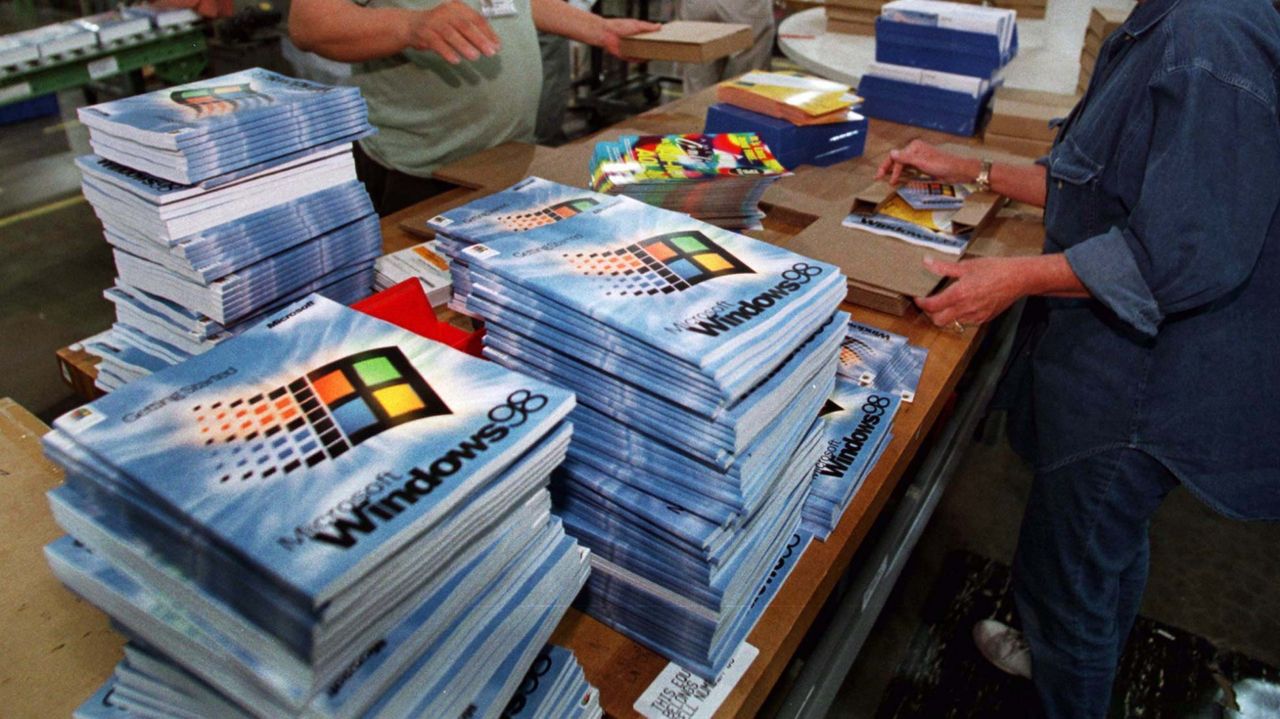
Have you ever wondered whether it's possible to run Windows 98 on internet appliances like the Compaq iPAQ IA‑2 or Netpliance i‑Opener? Well, Dave Luna (Dad's Computer Lab on YouTube) might have just gotten us closer to the answer.
Luna wanted to run Windows 98 on his 2000 iPAQ IA‑2, which originally shipped with Windows CE and MSN dial‑up — a service that, surprisingly, still exists (via HACKADAY). As you might expect, the process was tedious since internet appliances were built mainly for web browsing and email, with very limited hardware.
There's only so much you can do with 256 MB RAM, multitasking or running modern apps on this system is seemingly going to be an uphill task. Not forgetting the slow CPU, which would struggle with practically anything beyond basic internet surfing.
So how did Luna get Windows 98 to run on his iPAQ IA‑2 Internet appliance? It's worth noting that Internet appliances shipped restricted BIOS settings that prevented booting from external drives or alternate media. As such, the IDE connection on the mainboard was inconsequential.
To get around this, Luna used the 16 MB flash drive that held the original OS, writing MS‑DOS to it and then chain‑booting Windows 98 — since the flash drive isn’t a standard IDE device either, it required another workaround.
Consequently. Luna managed to boot Windows 98 from an IDE drive by tricking the system into treating it like an ATAPI device, bypassing the BIOS limitation
While Luna’s clever boot‑chain hacks let him bypass the IA‑2’s BIOS and hardware restrictions to run Windows 98, the project is seemingly more of a fun retrocomputing experiment than what you'd call a practical PC with only a 266 MHz Geode GX1 CPU and up to 256 MB of SDRAM to work with. But hey, you can play DOOM on the device.
💬 Why did the Internet appliances concept flop?
Internet appliances launched in the late 1990s through the early 2000s and were primarily designed for web browsing and email.
While Internet appliances were marketed as cheaper, simpler alternatives for non‑technical users, the concept failed because the Internet appliances were too restrictive, making it difficult for users to upgrade software or hardware.
Additionally, these appliances were tied to ISPs like MSN or AOL, requiring a subscription. As broadband spread, they quickly became obsolete. With this in mind, the appliances were essentially niche products, making it difficult for them to gain mainstream traction.
While the concept never really took off, I can see how it set the stage for modern devices like Chromebooks.

Join us on Reddit at r/WindowsCentral to share your insights and discuss our latest news, reviews, and more.