
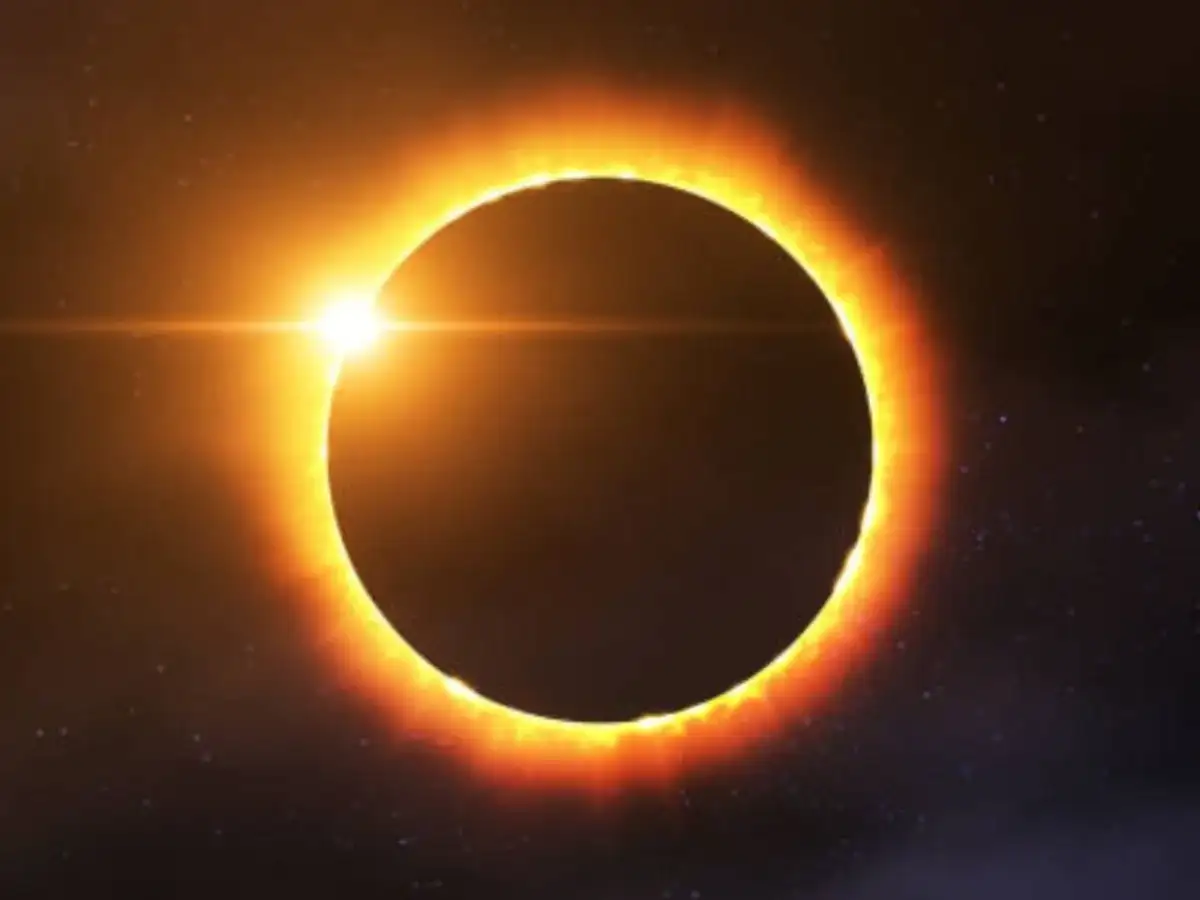
In August 1868, astronomers gathered in India to observe a rare total solar eclipse. What began as an effort to study the Sun's atmosphere would lead to one of the most intriguing discoveries in astronomy: evidence of an element that had not yet been found on Earth.
Among the scientists was French astronomer Pierre Jules Janssen. During the eclipse, he directed a spectroscope at the bright solar prominences visible around the Moon's darkened disc. The instrument revealed a strange yellow spectral line that appeared close to the familiar lines produced by sodium, reported TOI.














