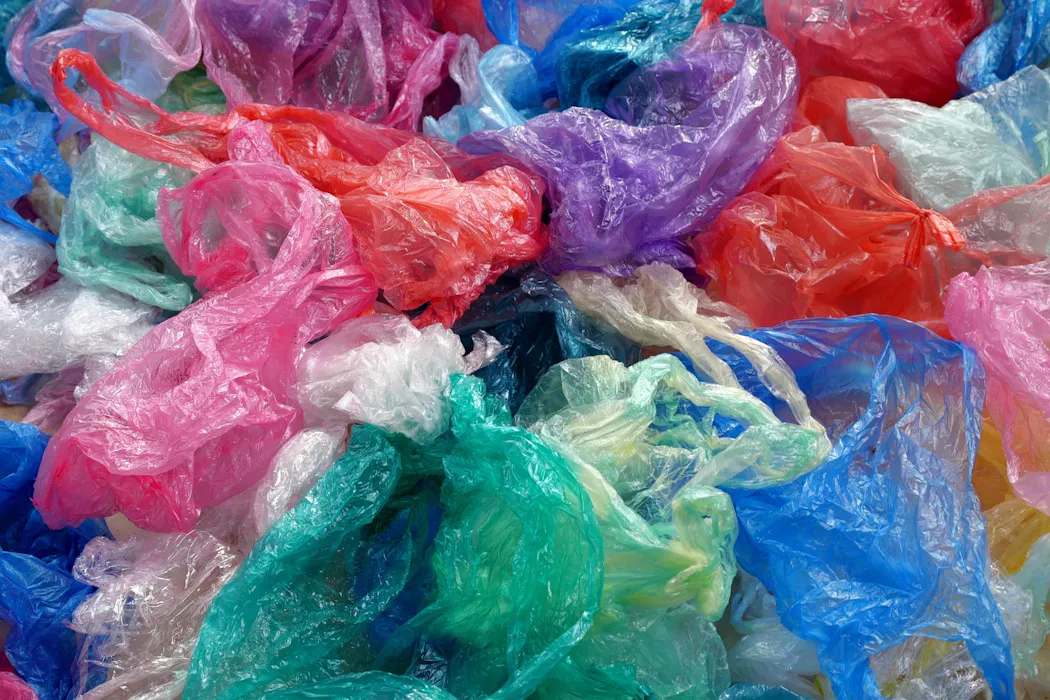
Mandatory kerbside collection of soft plastic (crisp packets, bread bags, plastic wrap) has just been pushed back from 2027 to 2030.
On July 16, the UK government’s Department for Environment, Food and Rural Affairs (Defra) quietly confirmed this change. The reason, according to Defra, is that the facilities and infrastructure just aren’t ready to accommodate the material. Currently, only 7% soft plastics are recycled in the UK, illustrating that recycling urgently needs improving and simplifying.

Earlier in 2026, many Brits were left confused when mandatory weekly food waste collection legislation came into effect. Months since that change, one-quarter of councils are still not meeting the requirements.
With soft plastics, the government has moved its own deadlines by three years when the system genuinely isn’t ready. But households didn’t get that option.
Simpler recycling rules were introduced through the 2021 Environment Act to streamline the number of bins households are required to separate their waste into, provide frequent food waste collections and introduce plastic films into standard recycling streams. The goal is to make our lives easier and recycling processes more efficient.
But the waste itself keeps arriving. For the first time in history items are being produced with the sole purpose of being thrown away. Every week in the UK we throw away an estimated 1.6 billion pieces of plastic packaging, mostly food and drink packaging.
Extended producer responsibility for packaging (pEPR) is a UK government scheme that charges producers fees based on the packaging they put on the market. Run by a scheme administrator that operates within Defra called PackUK, this is built on the polluter pays principle: the idea that whoever creates the problem should fund the fix, not the public.
That should mean producers are financially responsible for helping us deal with what they sell us. In practice, there’s a mismatch. The pEPR fees are charged per tonne, so lighter packaging is cheaper to report, regardless of whether it’s actually easier to recycle.
Take a pack of mince: switching from a rigid plastic tray to a flexible pouch can lower a producer’s pEPR fee exposure, even though the flexible pouch is the one material stream the UK still can’t recycle at scale.
Producers are being financially nudged toward exactly the material stream the government has just admitted it can’t process.
Now it is the public’s problem to solve, one supermarket trip at a time. Drop-off schemes at certain supermarkets are quietly doing more heavy lifting than they get credit for, taking soft plastic off householders’ hands without asking them to store yet another separate bag, and taking on the downstream cost of dealing with it themselves. Although in some cases, your efforts may be in vain.
The same tension is coming for absorbent hygiene waste (nappies, period products, wet wipes). None of these can be collected in food or dry recycling streams so they now compete for space in a residual black bin. According to my calculations based on waste collection frequency data from environmental charity Wrap, more than half of England households only have their black bins collected fortnightly.
What are polluters paying for?
And the money that’s supposed to close this gap? Earlier this year, after several delays PackUK paid councils £1.4 billion in producer collected fees. But that funding is not ringfenced for waste services. PackUK’s only real lever if a council spends it elsewhere is a vague threat to claw back future allocations.
Given how short an electoral cycle is, and how much easier it is to point to a visible win today than a waste truck bought two years from now, that isn’t much of an incentive.
Councils are being held to a stringent standard when PackUK is still struggling to get clean, consistent tonnage data out of producers in the scheme’s first year.
The uncomfortable truth is that our whole system is built to reward recyclability. But recycling is really not a circular solution. Most plastics can only be recycled a few times before they become too brittle to be useful.
What actually matters is how much we’re manufacturing in the first place. So while we were told to sort our recycling, it’s now time producers are told to stop producing excess packaging that ends up being thrown out.
So next time you’re unwrapping something, ask not just “can this be recycled” but “did it need to exist in this form at all”. Policy needs to stop treating recyclability as the finish line and start pricing packaging on what it actually costs the places that have to deal with it, weighted by real harm, not just by weight on a scale.
Producers need to be held to the same standard of urgency that the government is demanding of households. And we, as shoppers and citizens, can start by refusing to accept that convenience for a company should mean inconvenience, or a dirtier street, for us.
This article was originally published on The Conversation. Read the original article.