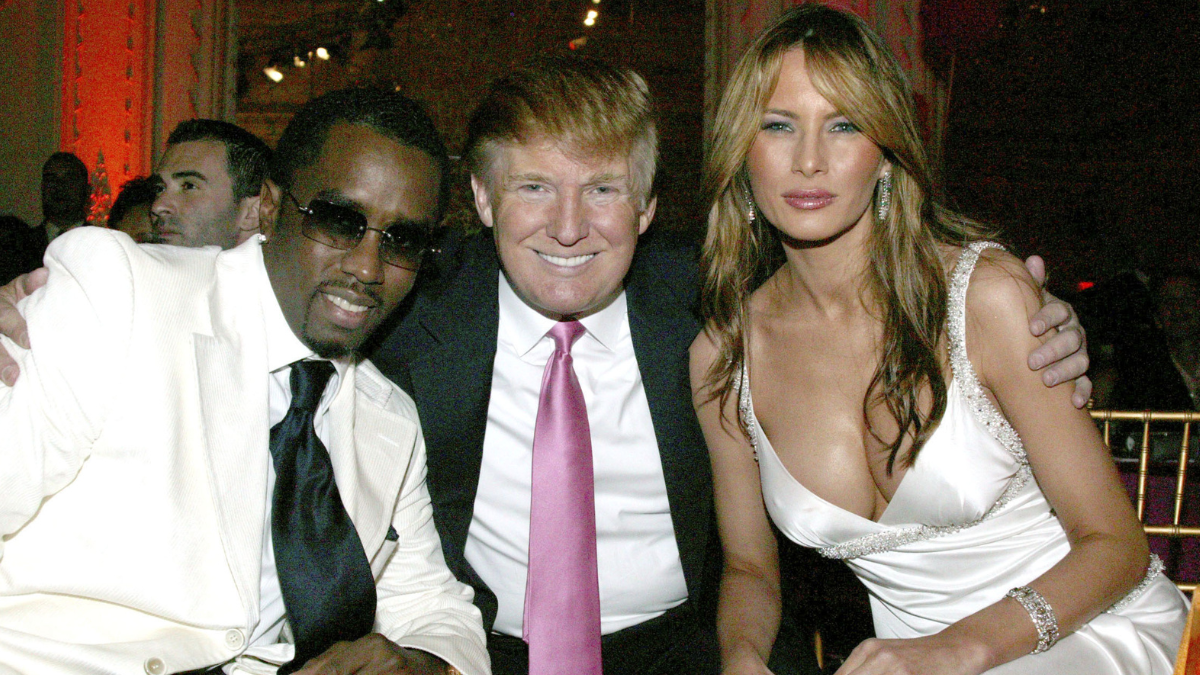
For the first time in a fairly long while, Donald Trump actually urged people to look into his past. Ironically, his latest accusations of racism prompted him to take a step back — not to self-reflect or question how he got here, but to cast himself as the victim. He posted a video montage featuring Diddy and various Black celebrities he has been photographed with over the years, captioned: “How quickly they forget.”
The stunt was met with near-universal mockery online. One Instagram user sarcastically commented, “Well, I guess that clears everything up then,” while another added, “A lot of pics with Epstein too but apparently you hated him… funny how that works.” In this day and age, the idea that having Black acquaintances somehow immunizes someone from racism is embarrassingly outdated.

Racism has always been a descriptor, not an insult. When a post circulates depicting the first Black U.S. president and his wife as monkeys, that is racist— full stop. Trump himself was quick to distance himself from that post, though notably he stopped short of apologizing, which was the bare minimum people expected. That same urgency has never applied to his own past offensive rhetoric.
In his attempt at damage control, Trump shared images of himself alongside Will Smith, Rev. Jesse Jackson, Oprah Winfrey, and Diddy — some dating back nearly 40 years. When you’re forced to resurrect decades-old photos to prove you have influential Black people in your orbit, it reads less like a defense and more like desperation. It even raises eyebrows about whether a Diddy pardon is more plausible than previously thought.
But if Trump wants people to revisit his history on race, there’s no need to dig that far back. During his 2024 campaign, he claimed Haitian immigrants should be deported because they were “eating dogs and cats.” Later, he flirted with Nazi-era rhetoric by saying immigrants were “poisoning the blood of our country.”
Those views translated directly into policy once he returned to office. One of his first actions was rolling back Biden-era diversity initiatives that emerged after the killing of George Floyd—policies intended to address gaps in civil rights left unresolved since the 1960s. Trump framed those efforts not as progress, but as a threat.
And that’s before revisiting the long-documented history: the Department of Justice suing Trump Management in 1973 for refusing to rent to Black tenants, a case he settled in 1975 without admitting guilt or apologizing. Or his 1989 full-page newspaper ad calling for the execution of the Central Park Five — despite flimsy evidence — an act he has still never apologized for. His silence now, amid far more disturbing allegations involving Epstein, is especially glaring. The president has gone from saying mere allegations deserve a death sentence to arguing that a paper trail and three million-page files exposing co-conspirators should be ignored because the stock market is thriving.
Trump seems to believe people forget easily — and that this forgetfulness is why he’s accused of racism. The reality is the opposite. People remember. That’s exactly why these accusations persist.