
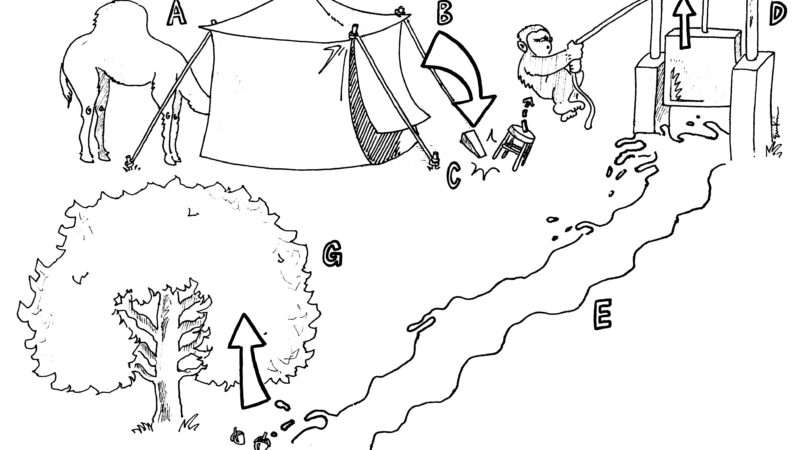
[This month, I'm serializing my 2003 Harvard Law Review article, The Mechanisms of the Slippery Slope; I'll begin here with a slightly reordered introduction, which generally summarizes my analysis, but if you want more details, you'll get them in later posts.]
Consider one classic slippery slope claim (more shortly on why it makes sense to so label it): the claim that gun registration (A) might lead to gun confiscation (B). (This was written before D.C. v. Heller (2008) held that gun confiscation is unconstitutional; but Heller, which is a 5-4 decision, may be seen as potentially vulnerable to overruling in the future, and in any event may leave room for confiscation of particular categories of weapons.) Setting aside whether we think this slippery slope is likely—and whether it might actually be desirable—it turns out that the slope might happen through many different mechanisms, or combinations of mechanisms:













